

It is not just the sufferers of torture who suffer but their families and more surprisingly often their torturers. Usually their sense of anger and hatred are suppressed for their whole lives but occasionally instead of retribution, unconditional forgiveness is given. Such a man, Eric Lomax, cast off those demons to confront his nightmares both real and imagined.
I first “became acquainted” with Eric Lomax in the mid-1990s when I encountered his harrowing book, “The Railway Man.” But this “encounter” was via a circuitous route. Sometime before hearing about the “Railway Man”, I had attended a book launch by a fellow compatriot of Eric Lomax.
Main picture: Eric Lomax and Takashi Nagase
In his lecture he spoke of harrowing torture, unspeakable horrors and barbaric depredations and privations of their Japanese capturers. As they were constantly reminded, due to their dishonourable and despicable act of surrendering, the Japanese were allowed to treat them abominably. He also told of his continual mental suffering and anguish and the demons that all the survivors had to bear. Even after 40 years he was a tormented man yet the Japanese government refused to offer a mea culpa however muted. Instead they were in denial regarding these events.
Then I “met” Eric Lomax by reading his anguished tome, “The Railway Man”. How had this man managed to overcome that blind hatred and forgive his tormenter, Takashi Nagase after 40 years?

Emaciated POWs
Like many youths of this era, joining the army of the declaration of war with Germany in 1939 when he was 20 years old, was an escape from a humdrum existence. In his case it was as a postal sorting clerk in Edinburgh. He joined the Royal Signals Corp and was commissioned as a second lieutenant in December 1940.
Unlike many of his fellow officers who would be encamped in Britain until D-Day in June 1944 or alternatively posted to North Africa to engage the Deutsches Afrika Korps (DAK) under Ervin Rommel in North Africa, Eric was posted to Singapore. In spite of superior forces, to avoid unnecessary civilian deaths, General Percival elected to rather negotiate an honourable surrender to the Japanese in February 1942.
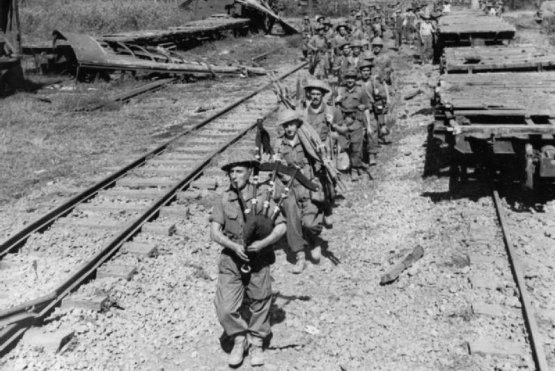
Instead of an indolent time spent in a POW camp like most POWs in Europe, this was to become a three year ordeal in a hell of despicable dimensions. It commenced with a forced march to Changi Prison. Many men died due to thirst and exhaustion. But this was just the commencement of their hell. They were transported by train to Kanchanaburi Thailand where they were set to work to build the Burma Railway as it came to be known.
With only rudimentary tools, this railway line had to be carved through forests and mountains. In effect, the men were the machinery. With unachievable targets, the Japanese engineers only had one solution: back breaking work 12 hours a day 7 days a week. If a man could stand in the morning, he was declared fit for work and was forced to perform as a fit man.

Bridge over River Kwai
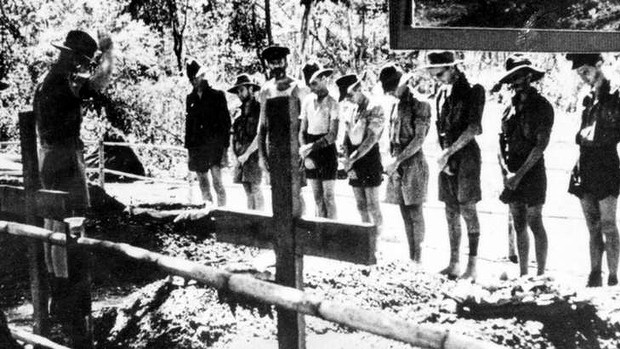
By these expedients progress was made. But the effect on the men’s health was deleterious. Without a lack of proper diet to sustain them, men rapidly succumbed to dysentery, typhus and other diseases. The first duty of the prisoners every morning was to bury the dead. Ultimately a third of the original cohort of POWs was to die from ill-treatment or lack of medical care.
Eric instigated the building of a radio receiver from stolen parts over a period of months. In 1943 this clandestine radio was uncovered. Lomax and five other prisoners were tortured by the Kempeitai. Being an officer, Eric was forced to endure the harshest punishment including what is now known as waterboarding.
Chief amongst his torturers was a diminutive Japanese interpreter by the name of Takashi Nagase. He was merciless in the beatings that he administered without compassion to Eric. In Eric’s scarred brain, the haunting image of Takashi Nagase would appear sporadically as a vivid evocative reminder of his past. Finally Eric Lomax was then transferred to Outram Road Prison in Singapore for the remainder of the war.
Like the majority of those who experienced the unspeakable depredations of the Japanese, he was unable to adjust to civilian life on his return to the UK. Within 3 weeks of his return he married his sweetheart, Agnes – Nan to everybody. He joined the Colonial Service and was relocated to the Gold Coast – now Ghana – for 10 years. By this time he had two daughters and a son who had died shortly after birth.
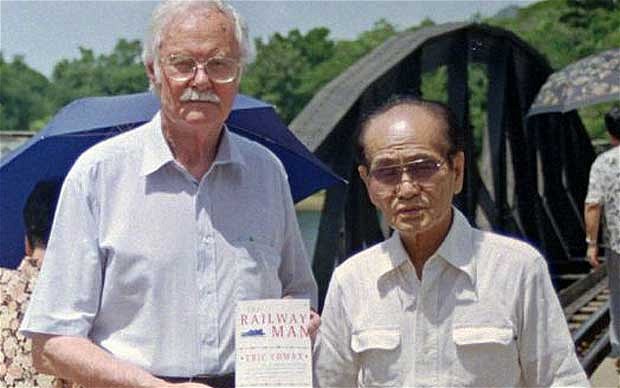
Lomax and Nagase after their reconciliation
His marriage had not been a success. The main culprit of those problems was none other than Eric himself. He refused to discuss the war and his ill-treatment. His daughters vividly recall his inability to be emotionally attached to another human being.
The title of the book, the Railway Man was significant for two reasons. Apart from being involved in the Burma Railway, Eric had since a callow youth an enduring fascination with railway engines, timetables and all the related paraphernalia. He was the archetypal train enthusiast.
Then came the event which would force the door ajar to allow for his eventual reconciliation with his former bête noir, Takashi Nagase. Whilst on a railway journey in 1980, he perchance happened to sit in a compartment where, sitting opposite him across the table, there was British-born Canadian nurse Patricia “Patti” Wallace. In spite of being 17 years his junior, Eric’s encyclopaedic knowledge of the minutiae of life and his friendly demeanour, an instantaneous repport was established. There was an intellectual connection that Eric had never experienced before.

It was only after Eric had alighted from the train that a realisation dawned on him: he wanted to meet Patti again. Knowing her holiday plans, he re-arranged his plans and followed her trail.
After finding her alighting at a station, he invited her for coffee. Ten minutes later over coffee, a lifelong love was sealed by a kiss. Eric followed his dream, leaving Nan several months later and marrying Patti in 1983.
Like soul mates and kindred souls they were inseparable. Then the inevitable happened. Eric suffered a relapse. Tormented visions of Takashi Nagase would flash before his eyes. Eric could no longer cope. His demons were back. Like with Nan, he would not confide in Patti about his past. He was like an island of despair and misery. He was sufficiently self-aware that his behaviour was placing a strain upon their marriage but his mental torture was rampant, raging at inappropriate times. His previous marriage had foundered under the pressure of his appalling nightmares, mood swings and erratic behaviour

Charmaine Lomax, Eric’s daughter from his first marriage with Patti Lomax
Patti resolved to take action in order to save their marriage. She surreptitiously contacted the leader of the survivors’ support group, Findley. Initially unwilling to assist her as he well knew that it would be a can of worms. Furthermore he was also aware that Eric was deeply troubled – perhaps even disturbed – mentally.
Gradually but inexorably she gained his trust. Patti became a party to their world of anguish and torment. What Patti was unaware of was that Findley was also exposing his demons. He could bear it no longer. He snapped.
On the way back from one of those meetings, he clambered onto a railway bridge and committed suicide.
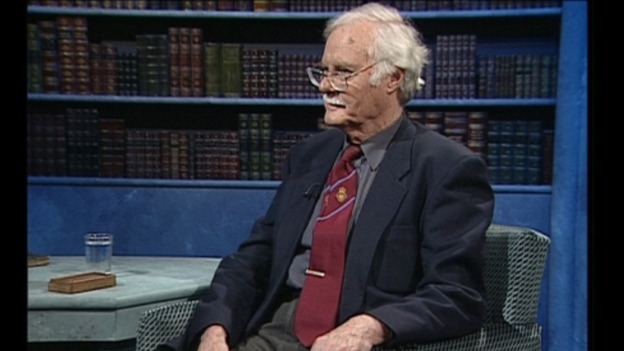
Eric was distraught and held Patti responsible. In order to save her marriage, Patti showed Eric an article which she had promised Findley that she would never reveal to Eric. The article contained the fact that Takashi Nagase was now a tourist guide on the Burma Railway.
Eric was resolute and as Findley had feared, was determined to confront his erstwhile torturer. For this trip Eric went prepared for all eventualities including a huge kitchen knife.
Eric waited until all the tourists had left for the night when he approached Takashi Nagase. Instead of the spritely Takashi of his youth, what confronted him was a frail grey haired man, a man who on all appearances would not harm the proverbial fly. Eric was conflicted. He forced Takashi to stare at it. Then the penny dropped. This was the unbreakable British officer who he had beaten to a pulp.
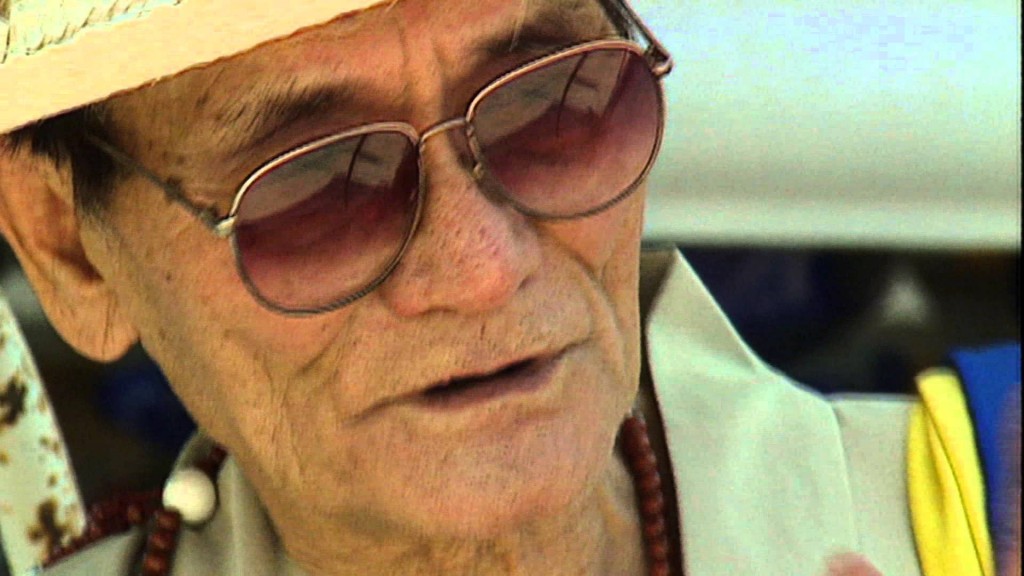
Takashi Nagase
Takaski attempted to excuse their behaviour by using the third person form of speech such as “They beat you.” Eric was inconsolable until Takashi after various attempts uttered the admission, “I beat you.”
Takashi had written a book on his own experiences during and after the war entitled Crosses and Tigers. Furthermore as an act of atonement, he had financed a Buddhist temple at the bridge to atone for his actions during the war.
After a tense stand-off, Eric relented and forgave Takashi for his actions. Both became life-long friends until his death in 2009. Subsequently Eric was involved in the filming of the eponymous movie, The Railway Man, but he never got to view the final product as he died in 2012 with his soul mate Patti by his side.

Eric might have overcome his war-time demons, but he never able to overcome his self-inflicted demons and repent for all the hurt that he had caused to his first family, his wife Nan and his two daughters. Nowhere are their travails mentioned.
His book did not even carry one line recognition of their existence and according to the producers of the movie, he refused permission for them to be mentioned in any way.
Ultimately Eric is a symbol of the human capacity for forgiveness.

Patti Lomax
But like all humans he was flawed in many ways.
In not reconciling with his former family or simply acknowledging that he was the progenitor of the family’s misery, those flaws are exposed.
Hi Dean
What a wonderful story! I did not read the book but saw the movie. Truly a remarkable man to forgive his torturer, brutal, as we know. Personally I do not think I would be able to forgive.
The chink(excuse the pun) in his armour being that he was unable to reconcile with his family. Nan was with him for many years, and so, their children. The lack of acknowledgement of their existence leaves me wondering.
I can say that he was/is a better man than me.