

These biographies have been created by ChatGPT. I included photographs from my collection to provide some colour and interest. The reason why I selected this father and son combination as my first blog created by AI was to assist me in disentangling the lives of two men with the same name. Fortunately for biographers, even though William Junior’s son was also christened William, he was not prominent in Port Elizabeth affairs and exited the scene by relocating to Cape Town. Secondly, William Junior married my second great aunt, Adelaide, who was Rev Francis McCleland’s daughter.
William Fleming Senior (1796–1861)
William Fleming was born in London in 1796 and arrived at the Cape of Good Hope aboard the brig Hottentot on 24 April 1818. Trained as an attorney, he initially practiced law in the Cape Colony, laying the foundation of a distinguished legal and civic career.

He married Frances Charlotte Andrews on 11 February 1828 at the Dutch Reformed Church in Uitenhage, where he was later appointed a Justice of the Peace (1836). The couple had ten children, including William Fleming Junior (b. 1833).
In 1842, the family relocated to Port Elizabeth, where William became a Justice of the Peace during the following year.
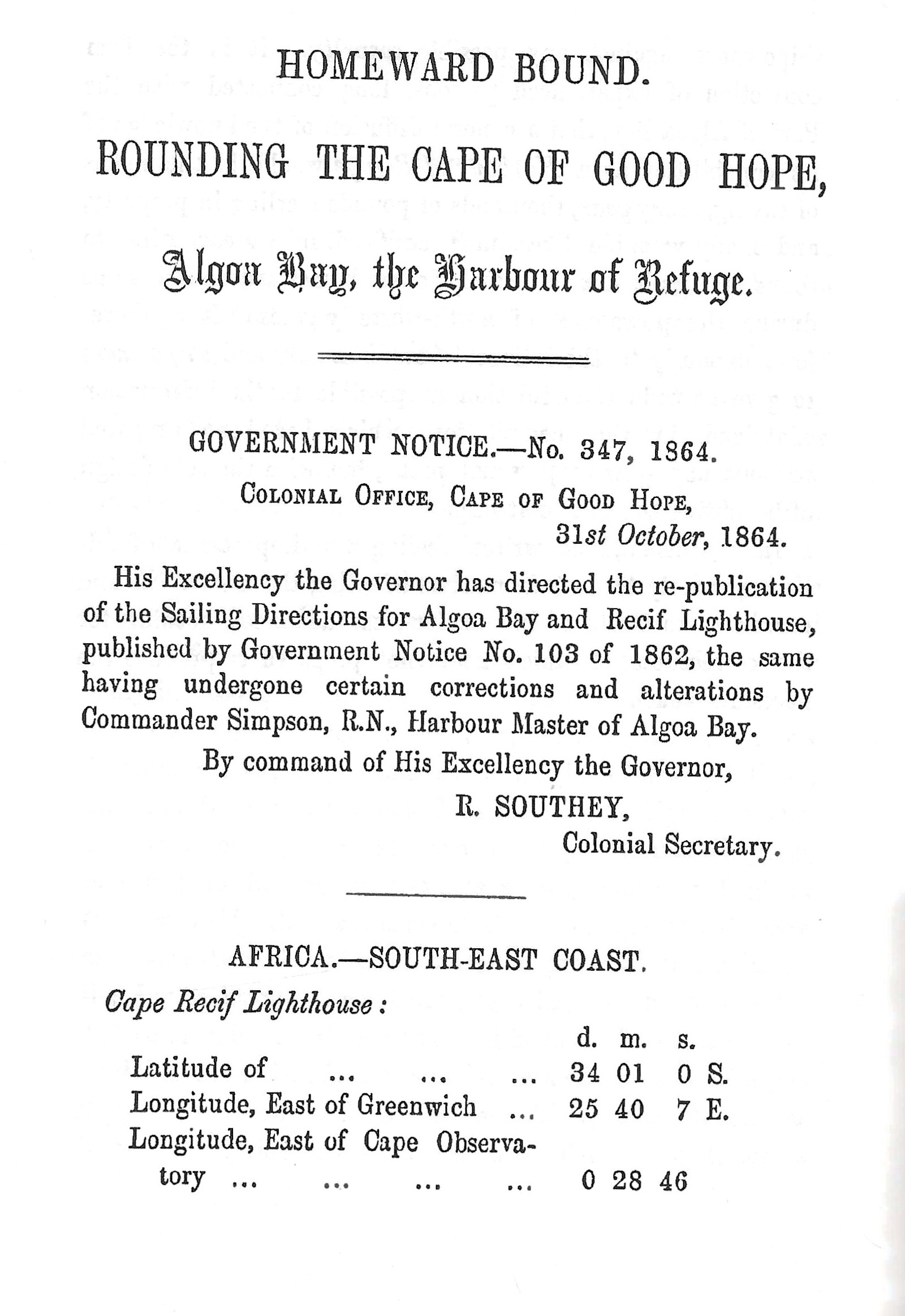
He co-founded the firm Heugh & Fleming, later known as Fleming & Co., with H.B. Christian eventually joining as a partner. This firm would evolve into Pagdens, one of Port Elizabeth’s oldest law firms. Fleming’s contributions to civic life were remarkable. He served as one of the first Municipal Commissioners in 1847, was a founder and chairman of the Guardian Assurance & Trust Company (1853), and a member of the Commission for Improving the Port and Harbour of Algoa Bay. He chaired both the Chamber of Commerce and the Port Elizabeth Trust Bank, and served on numerous boards, including the Prison Board, St Mary’s Church Committee, the British and Foreign Bible Society, and the Port Elizabeth Water Company.
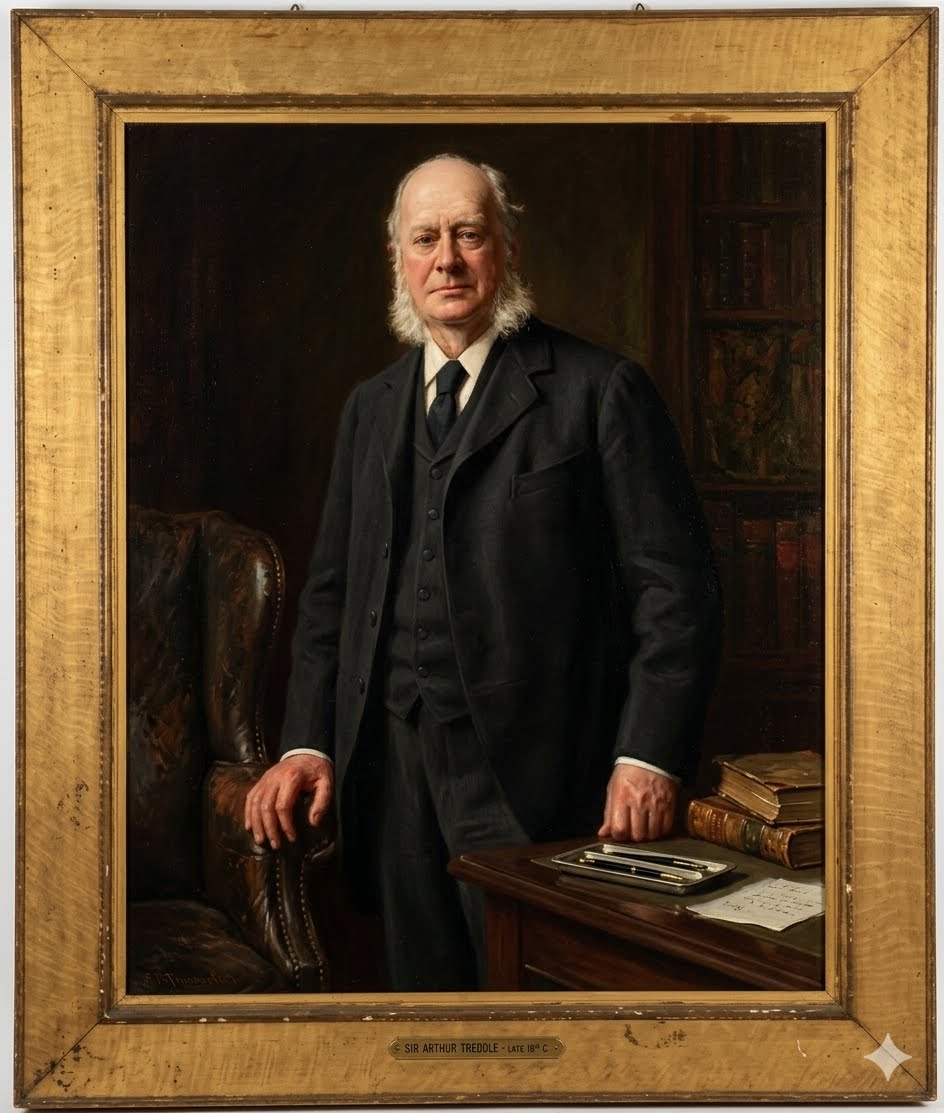

As a Member of the Legislative Council from 1854 to 1858, Fleming contributed to the political shaping of the young colony. In 1851 he built an elegant residence at 20 Bird Street, valued at £4,000 by 1864—then the grandest home in Port Elizabeth.
It hosted Prince Alfred in 1860 during his royal visit. He was remembered by historian Margaret Harradine as “courteous, possessing a breadth and liberality of views, having a fine, manly figure, living a pure and spotless life.”

Fleming died on 15 June 1861, leaving a legacy of integrity and civic leadership. Fleming Street in Port Elizabeth, part of land owned by Heugh & Fleming, was named in his honour.

William Fleming Junior (1833–1894)
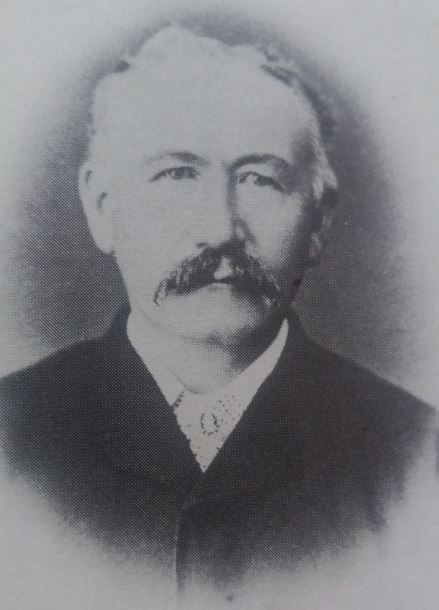
William Fleming Junior was born in Uitenhage in August 1833, the son of William and Frances Fleming. He was educated at the Government Free School in Port Elizabeth, where he won first-class prizes in Grammar and Geography in 1846, and later at the High School in Edinburgh, Scotland, where he and his brother Charles excelled in literary studies.

On 21 January 1858, he married Adelaide McCleland, daughter of Reverend Francis McCleland, the first Colonial Chaplain to Port Elizabeth. The wedding took place at St Mary’s Church, and the couple would have five children: one son (William III) and four daughters (Elizabeth, Frances, Alice, and Mabel Katherine).
After returning from Scotland, William joined his father’s merchant business and inherited it upon his father’s death in 1861. He went on to mirror his father’s civic path, becoming a Justice of the Peace, member of the Chamber of Commerce, the Harbour Board, and captain in the Port Elizabeth Volunteer Rifle Corps (later Prince Alfred’s Guard). He also served on the Provincial Hospital and Grey Institute committees and was a devout member of Holy Trinity Church.
He was elected to the Legislative Council in 1869–70 and was renowned for his generosity toward the less fortunate. An amateur maritime artist, Fleming painted watercolours of ships calling at Algoa Bay. His granddaughter, Mrs. Lister-Wright, noted his friendship with maritime artist Thomas Bowler and the influence of Bowler’s style in his works.

In 1867, he was involved in importing stained-glass windows for Holy Trinity Church aboard the barque Balaklava, which tragically sank near Despatch Rock, resulting in their loss.
In 1874, William and Adelaide left Port Elizabeth for Europe after an emotional farewell from their community. They later settled in Wynberg, Cape Town, where William continued his public service as Justice of the Peace, Member of the Legislative Council, and Mayor of Cape Town (1881–1883). He died in London in 1894 during a visit abroad. Adelaide lived in Camberley, England, with their daughters Frances and Alice, and passed away in 1917.

Fleming’s life, like his father’s, embodied the spirit of civic duty and colonial leadership, leaving a lasting mark on both Port Elizabeth and Cape Town.
Assessment by Sir Lewis Michell
In his autobiography Sir Lewis provides his assessment of some residents of Port Elizabeth. Amongst them was William Fleming. Regrettabilly he does not indicate whether he is referring to the father or the son but as Fleming senior passed away in 1861 one can assume that he is referring to Fleming junior. He refers to William as being a “versatile genius” who concluded his career as the Town’s Mayor
Sources
Port Elizabeth: Social Chronicle up to the end of 1945 by Margaret Harradine: 1842, 1846, 1847, 1853, 1856, 1860, 1865, 1866, 1878, 1919.
Port Elizabeth of Bygone Days by J.J. Redgrave: 55, 65,102, 105
Looking Backs: 538, 696, 1016, 1017, 1895, 2175, 2218, 2336, 2643, 2781, 2906, 2874, 3016, 3492, 3802, 4315, 4475, 5019, 3019, 5020, 5021, 5022, 5023, 5027, 5028, 5116, 5338, 5491, 5501
Blogs: Port Elizabeth of Yore: William Fleming Senior & Junior
Addendums
Im the great great great grandson of William Fleming jr, i grew up with all pictures of him and others on the mantle piece. My mum said her great grandmother told her stories of black mambers taking down horses pulling the carriage. I have a few photos still one of an elderly lady with the date 1930 on the back and one of an army troop with william in India written on it. Is there anyone who I could email these pictures to verify who they are? My mother passed away this week so im trying to find out more family history.
Hi William
I wrote the article about William Fleming. I would appreciate if you have further information as I would love to include it in the blog. You are facing that we all face.While the older generation is still alive, nobody is interested in their stories but when they die, we scramble to find answers but there is nobody alive to assist them. William Fleming junior married my great great grand father’s daughter. Hence you and I are related
Dean McCleland
082 801 5446
deanm@orangedotdesigns.co.za