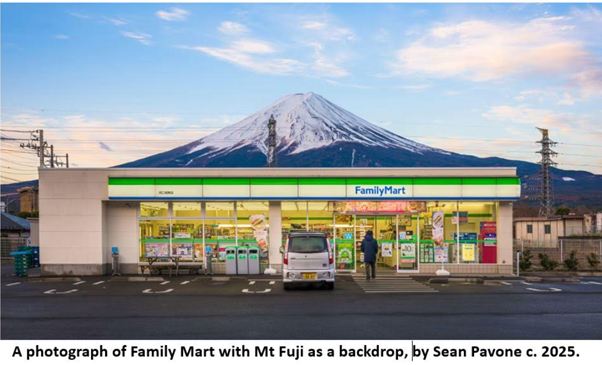
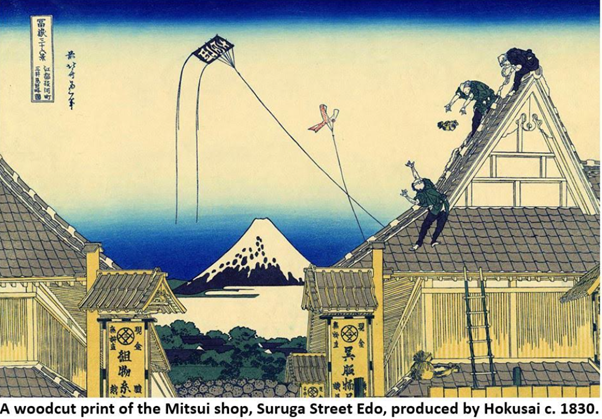
Probably the most iconic image of Japan is the beautiful ice-capped Mount Fuji, an extinct volcano. It was further immortalized by a series of landscape prints by the Japanese artist Hokusai produced c. 1830 and titled Thirty-six Views of Mount Fuji. These are a series of woodcut prints depicting Mount Fuji from different locations and in various seasons and weather conditions. The most famous is probably The Great Wave off Kanagawa. They were so popular that another ten were produced. Given that he produced these prints in his 70s, there’s hope for us pensioners yet.
Knock me down with a giant tsunami wave, but this iconic tourist touchstone has been supplanted by a modern consumer blight. As Lilit Marcus writes in a recent CNN article, “A group of tourists follows their guide into the building, where he explains the history and context of what they’re seeing, translating signs from Japanese into English. Wide-eyed in awe, the travellers politely ask if it’s OK to touch things and take pictures. Finally, they’re given free rein to wander around on their own, and they purchase gifts for loved ones back home. This isn’t a Shinto temple. It’s a Japanese konbini, or convenience store, called FamilyMart.”
Jesus, or more accurately, Hokusai wept.