

Perhaps it was because the English speakers were strangers in a new land, that their entrepreneurial talents were unleased, but whatever it was, they displayed it in their many endeavours. One little known fact was the attempt to establish its own maritime defence. In this case , the explanation could plausibly have been the naval attack on the settlement in 1799 by the French which highlighted the colony’s vulnerability.
Main picture: Firefight involving the La Preneuse
The precursor attack
1799 experienced numerous wars in terms of what was referred to as the Wars of the Second Coalition with the French, Russian, English and Batavians all being combatants. On the local front, the British were confronted by a series of Frontier Wars against the Xhosas while the resentful Dutch inhabitants were on the brink of a civil war.
On Friday 20th September 1799, General Dundas was in charge of the British troops stationed at Cradock Place while both British warships were at anchor in Algoa Bay off North End. As no attack was anticipated by the French, many naval personnel were afforded shore leave.
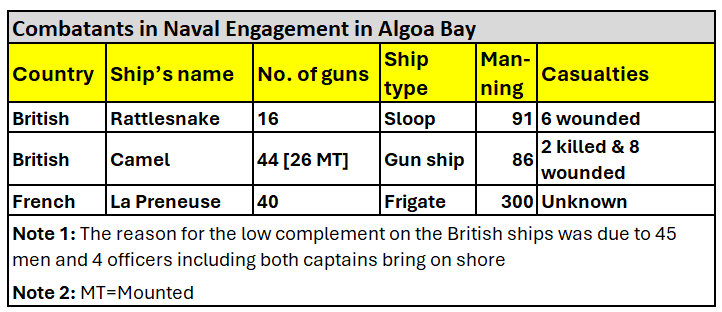
According to Soelen “Two British ships were sent to the Cape. One was the sixteen gun sloop, Rattlesnake, under Captain John Lee, the other the forty-four gun ship, the Camel under Captain S. Gooch. As the Camel was fitted as a store and troopship, only twenty-six guns were mounted, her lower gun deck being filled with stores .
A large 40 gun French frigate, the La Preneuse, captained by L ‘Hermite, whose guns had twice the calibre of the British ships arrived near sunset. Amongst her cargo she bore muskets and ammunition for the rebellious Graaff-Reinetters.
England had only captured the Cape four years previously in 1795. Both British ships had their gallant masts on deck, their top masts and most yards lowered. From both ships 45 men and 4 officers including both Captains were on the shore with the army. Therefore the Rattlesnake and the Camel only had 91 and 86 men respectively aboard their ships. With their captains on the shore probably enjoying a relaxing braai on the seashore, the naval battle would be under the command of First Lieutenants Fothergill and Shaw.
The La Preneuse was manned by 300 men. With her heavy guns and large crews, she was capable of obliterating both British vessels. Also in La Preneuse’s favour was the fact that the British were not expecting an attack. Inspite of being surprised by the unexpected attack, the British mounted a rigorous defence. The Rattlesnake and the Camel commenced their stiff defence at 20h30 in the evening which proceeded through the night until 3h30 the following morning. The Camel was roughly handled and had six feet of water in her hold and her rigging much cut up. Despite this, the Camel only suffered 2 killed and 8 wounded.
The La Preneuse’s losses could not be ascertained as she was driven to Mauritius where she was annihilated by HMS Adamant and HMS Tremendous.
Naval ambitions
By 1861, Port Elizabeth had made great strides in the town’s development handily beating Cape Town as the largest port in the Cape Colony in terms of exports. It was then that Captain C. Chapman used his experience gained in his commanding the Chittagong Naval Brigade in India propose to establishment of a similar improvised unit of seamen and mariners which could be mobilised in emergencies for the support of the military. Being in Command of the Screw Steamer Harbinger it placed him in a position to offer his services. In furtherance of his proposal, he published a notice in the Port Elizabeth Telegraph of the 18th July 1861 of a public meeting “to consider whether it is practicable to form a naval brigade in this town.”
The Notice attracted a great turnout and a provisional committee was elected which in addition to Chapman included five other sea captains: Simpson, Wheatland, Baxter, Allen and R.N.N. Watts as well as an ordinary civilian named T. Smith.
The Telegraph reported that “Upwards of thirty persons enrolled their names.” Two weeks later the Telegraph wrote that “In this town we have our Rifle Corps, our Artillery, our Cavalry and we may now add our Naval Brigade. The last named only now numbers between 50 and 60 members, all of the right stamp, strong, able-bodied British seamen many whom may die at their guns rather than yield to any foe, however powerful”
“Captain Chapman intends commencing almost immediately to exercise his men and Lieutenant Simpson R.N. has very kindly placed the Services at the disposal of his brigade to instruct them in his drill. Application will be made to to government for big guns.”
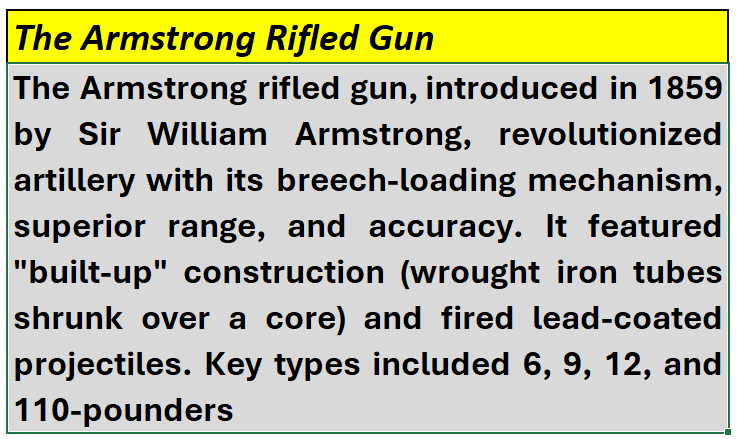
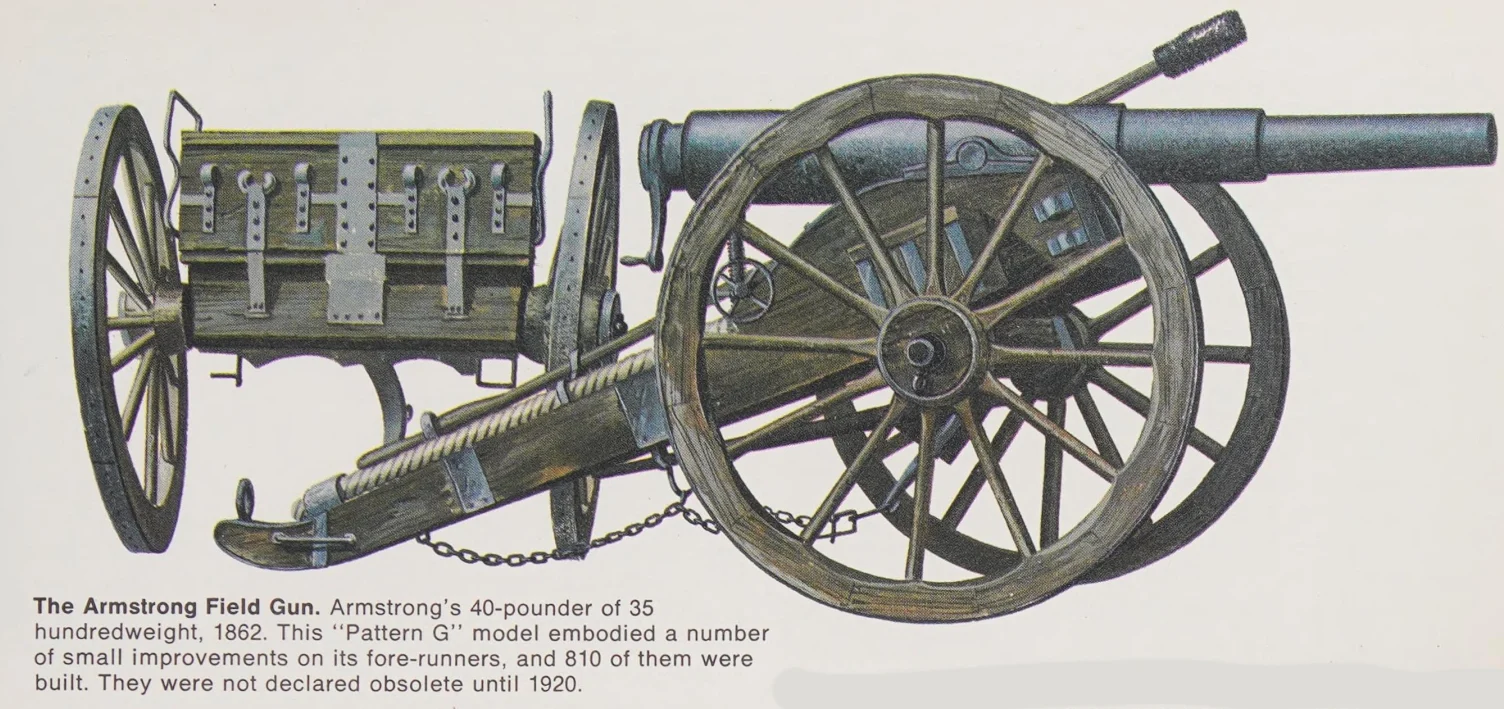
The article explained that since most of the members belonged to the shipping trade, the unit would not be involved in the frequent frontier campaigns. “Should however war with any maritime power break out, the Brigade would be ready. They would provide some service provided that the government furnished them with proper guns.” Their request was to be issued with “Armstrong Rifled guns – the larger the better and a good supply of powder and shot.”
Within another fortnight, the enrolment in the Port Elizabeth Naval Brigade was approaching 100. Proposed to be in command positions were Wheatland as Captain and second in command to Chapman. The Masters were Titterton, Barick and Smith; Midshipmen; Mr. Deely Lieutenant and Adjutant.
An application was made to the Admiral in Simonstown for the supply of four 14-pounder guns and there were hopes for more formidable weapons. A reply was sent to Captain Chapman what was described as ’a most courteous reply” but regretted that he was unable to accept the position of Honorary Commodore in terms of the conditions of service. Nonetheless progress albeit glacial, ws being made. Amongst the first requirements to be sourced was a Drill Hall. A local merchant offered the used of his store to fulfil this need.
No less a dignity than His Excellency Lieutenant-General Robert Henry Wynyard, Commander of the Cape Garrison and Lieutenant-Governor of the Colony, personally carried out an inspection of the Port Elizabeth Naval Brigade on 12th November 1861at which he promised to supply it with small arms and big guns.😊😊
Next on the list was a tender for clothing. A quote by Thomas Staines was accepted and Dr Rubidge was elected as medical officer. Chapman reported that he had collected £100. Dely was elected Lieutenant and Adjutant. Edward Kemsley was elected Paymaster. By now the Corps was meeting regularly for drill in the store of Wheatland and Smith.
Reports later emerged that wall as not well and that there was a move to dismiss Captain Chapman as being unsuitable. Lt. Simpson or W. Fleming were proposed as an alternative.
The corps was very anxious to obtain Armstrong guns as these would fulfil a vital need in protecting shipping.
The Corps was later attached to the Port Elizabeth Volunteer Artillery but retained its distinct features. A petition was submitted to the Governor to remove the Commanding officer, Captain Chapman but whether this request was actioned cannot be determined as the Corps was never again mentioned in the Blue Book.
Sources
Port Elizabeth: A Social Chronicle to the end of 1945 by Margaret Harradine (1996, E H Walton Packaging Pty Ltd, Port Elizabeth)
Port Elizabeth in Bygone Days by J.J. Redgrave (1947, Rustica Press)
Algoa Bay – In the Age of Sail (1488 to 1917) by Colin Urquhart (2007, Bluecliff Publishing, Port Elizabeth)
The Naval History of Great Britain – Vol 2 http://www.pbenyon.plus.com
SAS Donkin 1921 – 1992 The Navy and Port Elizabeth by Lt(S) S. van Soelen (Port Elizabeth, Express Litho Services.
Port Elizabeth in Bygone Days by JJ Redgrave [Wynberg, The Rustica Press, 1947)