
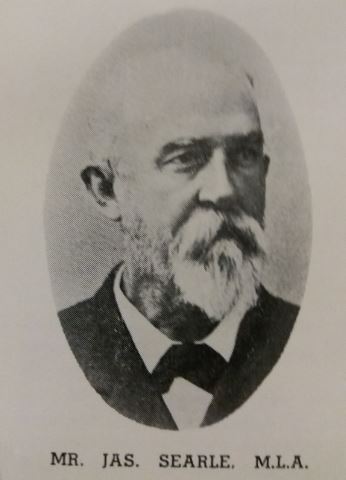
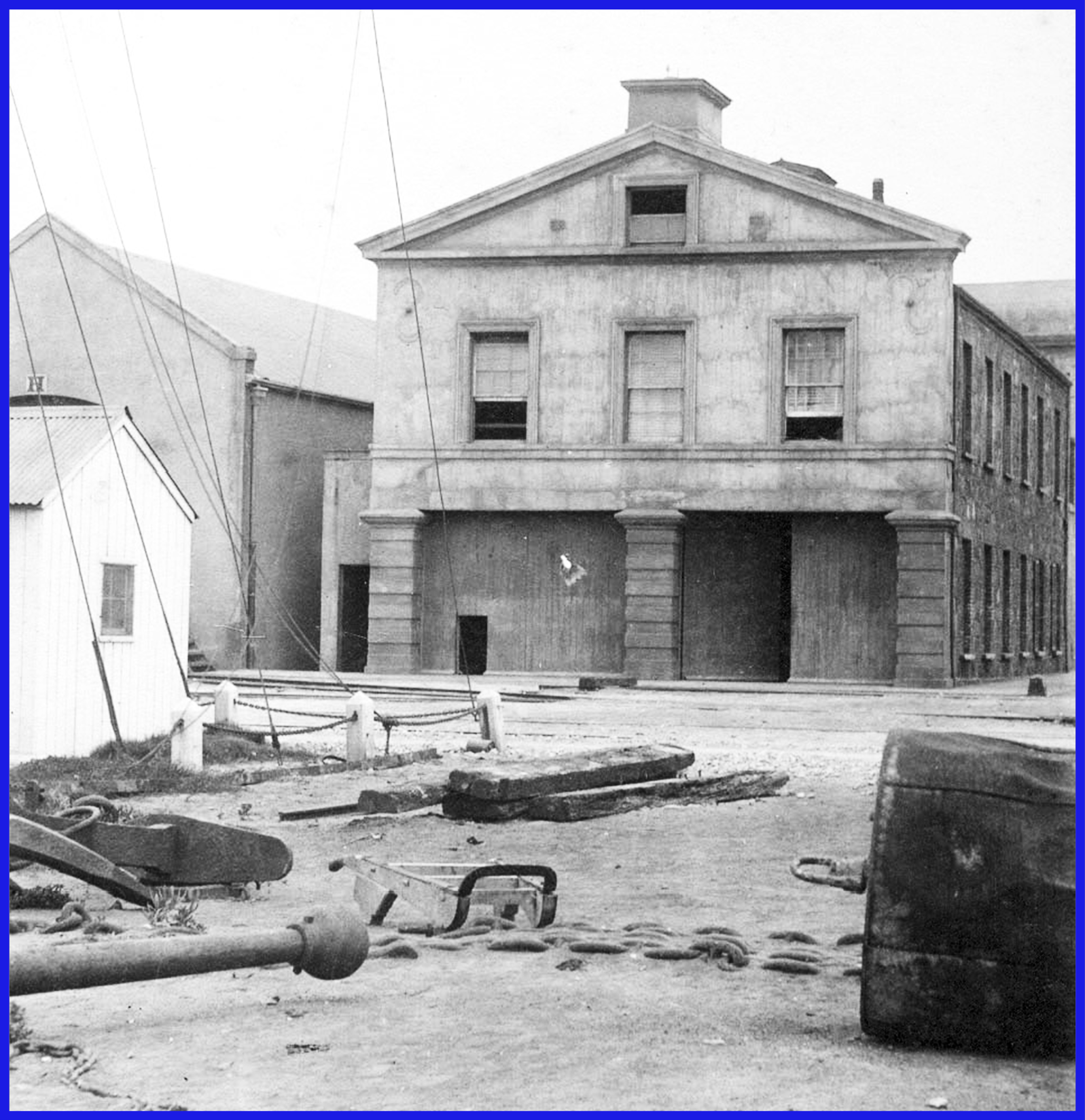
According to the book Port Elizabeth: A Social Chronicle to the End of 1945, the Union Boating Company was formed in February 1865. The chairman and directors were Joseph Simpson, J.H. Clark, G.C. Smith, C.T. Jones and F.S. Fairbridge and the Superintendent was James Searle. The company purchased the stock of E.B. Wheatland and leased the building used by him, and others adjoining and being built behind, between Commerce and North Union Streets.
Main picture: James Searle
In the history of Port Elizabeth, the Searle Family is prominent in two sectors viz boating in the first generation in the form of James Searle Senior and various diverse industries in the second generation by James Junior and Edward Merry Searle, two of his sons.
Predecessor to the Union Boating Company
With shipping business booming in the early 1860s, Wheatland and Smith commenced operations in March 1861 as The Wheatland & Smith Boating Co. Both men had long beach work experience. Wheatland was appointed as the Eastern Province Boating Company’s first superintendent in the 1840s. This operation was ultimately acquired four years later to launch the Union Boating Company in 1865.
James Searle Senior
James Searle Senior was born in Twickenham Middelsex in 1839. He answered the call of the sea when he was only thirteen years of age by entering the Royal Navy. He was a mere boy on the flagship H.M.S. Cumberland under Admiral Sir George Seymour when he participated in a naval action in the Baltic during the war with Russia during 1854-56. Later in a smaller ship he was at action in the Crimea. For his service he received two medals of which he was ever proud. His innate hatred of blowing his own trumpet would forever preclude him from wearing these decorations. At the close of the Crimean Campaign in 1856, the young Searle obtained his discharge from the Royal Navy and entered the Mercantile Marine. At the age of 20 James was invalided out of the Royal Navy after the Crimean War. In 1859 he emigrated to South Africa and ultimately settled in Port Elizabeth obtaining employment with the Port Elizabeth Boating Company. Without a harbour, Boating Companies were employed to load vessels at sea and to disgorge its load onto the sea shore. Despite being an archaic primitive procedure with duplicate loading and unloading process, this process had to be employed until such time as jetties or quays were constructed.
Creation of the Union Boating Company
The Union Boating Company was launched in 1865. 1900 shares at a price of £10 per share were made available to the public. It acquired E B Wheatland’s working stock as an initial basis for its operation. One of the major motivations behind its creation was the average yield of 22,5% by the three existing boating companies. One of the PE Boating Company boat captains, James Searle, was appointed the Union Boating Company’s first superintendent. The company attempted to advertise its presence by offering to hold the municipal wool sales in its store which was still being erected. Given the fact that the Town Council had already purchased a site on its own, it declined the offer and decided to build its own shed. James
James’s life after the Union Boating Company
Even though the rationale of the various Boating Companies competing for work in theory implied that customers obtained the lowest price, in reality it had the effect of increasing costs and turnaround times. As multiple customers’ goods would be in the same cargo hold in ship, the packers would have to search through the cargo for their customer’s goods. Instead of unloading one vessel completely in reality multiple trips had to be undertaken to clear the cargo.
It was now that James conceived the idea of amalgamating the several companies engaged in this type of work , James was appointed as Managing Director of the Associated Boating Company, a position that he held until for the first time he was elected to the Cape Parliament for the first time in 1899. During this time he was appointed as Chairman of the Port Elizabeth Harbour Commission and finally in 1899 as a Member of the Cape Parliament.
Legacy
For the period of fifty five years, Searle was the farsighted and inspiring leader in Port affairs. He also gained unrivalled knowledge of Algoa Bay, its peculiarities, its possibilities, and requirements and ceaselessly advocated its claims. For years he strove for the creation of Outer Works to make the harbour safe. He also trained thousands of black workers to perform harbour work. Due to his efforts the port obtained a reputation as the “harbour” for the quickest and safest discharge along the coast. Having an unprotected anchorage, all storms placed human lives at risk. Despite personal danger, Searle would gallantly assist in the rescue of stricken crew or passengers. Often he would use spare or unused lifeboats and attempt a rescue himself. The shipping magnet, Sir Donald Curry, was one of many other shipping owners whose first choice when a vessel was in distress, was to call upon the services of Searle.
Off to Parliament
In 1899, Henry B. Christian urged Mr. Searle to contest one of the two local seats in the Cape Parliament. He headed the poll and was returned with Sir Edgar Walton as his colleague and maintained his parliamentary connection until his death in 1914.
Naming tugs
Searle was probably the only man to have had three tugs named after him. The first tug, the James Searle ended its life as a river gun boat in Portuguese East Africa. The second James Searle was wrecked in a fog off Cape Recife whereas the third and last James Searle led a more prosaic life. For 53 years it sailed in the calm waters of the Port Elizabeth harbour. Unlike her earlier life, her final terminal frailty was being classified as unserviceable compelling her to endure the iniquity of being scuttled.
Parliamentary seat
James’s two sons, James junior and Edward Merry, who were both conceived with entrepreneurial zeal, founded the firm Edward Searle & Co. of which their father, James Searle senior, would play no part in its operation.
The saga of the landing of the obelisk
As a tribute to the life of his deceased friend, Kemp, the mercurial John Paterson purchased an obelisk in England to serve as an ornament on Kemp’s grave. Without forethought about the logistics of unloading an oversize obelisk into an unstable rocking surfboat at sea, Paterson purchased it while on business overseas. This foolish decision would lead to a series of spats with Kemp’s family as Paterson’s proposal regarding its placement was summarily rejected as being too flamboyant for a mere merchant.
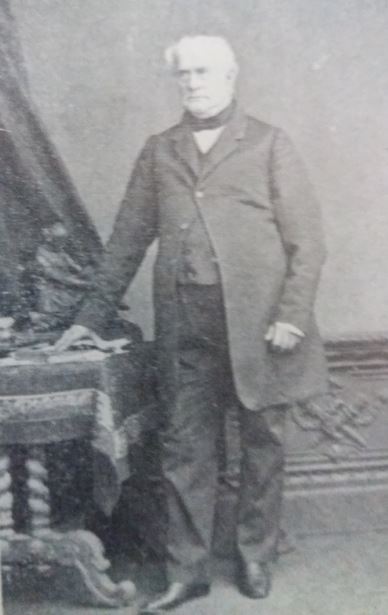
By all accounts, it was George Kemp’s father who put a spoke into the wheels of erecting this monolith on his son’s tomb. It is reported that he was furious, even incandescent maybe, if rumours are to be believed. In stern tones, he declared that George had been but a plain merchant and as such, that instead of an ostentatious monument, a plain white cross would be more fitting. It is told that the Grandpa Kemp advised Paterson to “throw that damned thing in the sea.” Grandma Kemp was equally vociferous in her opposition to the idea and claimed that such a heavy stone would sink in the grave. Instead of fulsome praise, Paterson had been comprehensively vilified when the Kemp family had looked the gift horse in the mouth.

Apart from the family being upset as they rightly believed that the gift was too ostentatious, Paterson was unfazed by its size and hence the difficulty of unloading it. This would be left in Searle’s capable hands.
Even Mary Paterson was to add her belated voice to the controversy by adding that “As far as I am concerned, it might well have been thrown in the sea. It was a white elephant from the first and the money might well have been better spent on the family.”
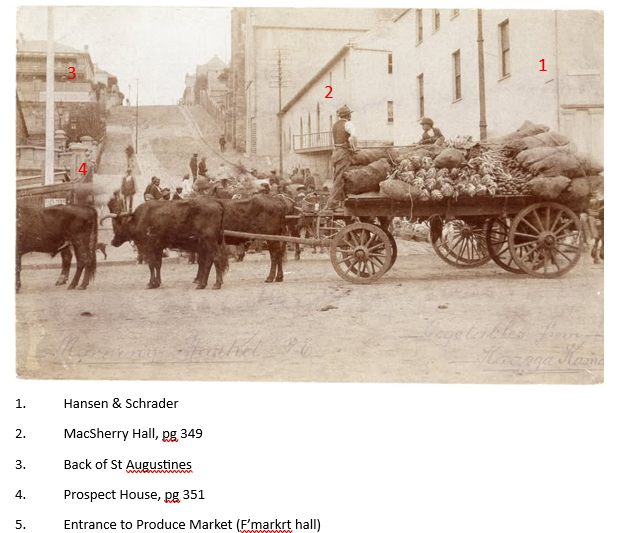
Hardly had the obelisk arrived in Port Elizabeth on the 25th April 1863 than controversy arose as various residents rejected Paterson’s revised proposal for its placement. This stemmed from Paterson’s raison d’etre for having the obelisk displayed in Market Square.
James Searle’s account
Hardly had Paterson been rebuffed by George’s father than the Rose of Montrose with the unwanted chunk of stone, would belatedly arrive in Algoa Bay. It was one matter to ship the huge lump of stone out on the Rose, but quite another matter to disembark it onto an unstable skiff in the Bay and then land it on the beach.
An account of how this laborious task was effected, is still extant. Posterity has been enriched by James Searle’s version of this event. James recalled that “George Kemp died in October 1862. Paterson, who happened to go to England, bought the stone at some exhibition, I understand, with the intention of placing it on Kemp’s grave. Old Joshua Kemp was a fine type of gentlemen, a good old sort, now almost extinct; one of the white beaver top hat and alpaca jacket breed. He was opposed to it from the start on the grounds that his son was not a public man, simply a merchant. And so a white marble tomb was substituted, and there it is besides Paterson’s wife on the west side of the Scotch burial ground.”
“Now comes the joke. In the meanwhile, the stone had been shipped on the barque Rose of Montrose in London with the clause ‘to be taken by ship by the consignee at his risk and expense and to find all gear.’ At that time, I worked one of the boats, but was generally sent on any special job. So after a lot of quibbling, I was sent off to rig the gear and to make ready to put the stone out. I went afloat in the afternoon, and it was late when I got the gear rigged. Seeing [that] it was such a fine night, on my own responsibility, I guaranteed the men a double day’s pay, if they got the thing out.
“So they got a lighter alongside and put it over. In those days, there were no appliances for heavy lifts. So we used to beach the boat at high tide and wait till the tide receded to discharge the boat. We got the boat on the beach, and when she was fast, went home. The Superintendent and I lived up Walmer Road opposite each other. On the way I tapped on his bedroom window and told him what I had done. Instead of getting any kudos, he told me [that] I had missed the opportunity of making a good tip as no one wanted the damn thing, and being night, I could have quietly slipped it overboard.
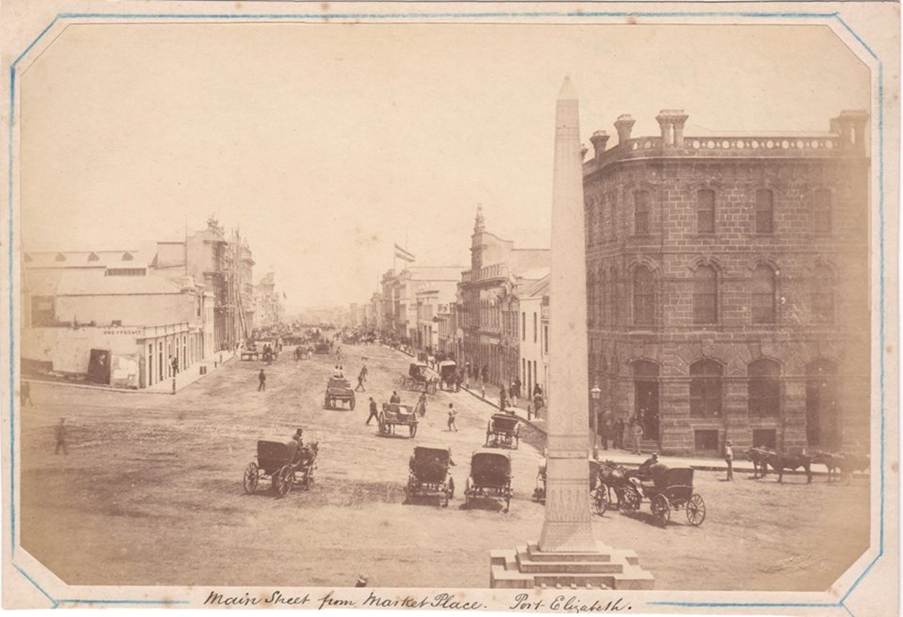
Anyhow I always reckoned [that] it was the best day’s work I ever did in Algoa Bay. I was young then and had some go in me, and landing that stone, made me a Superintendent in 1865. Well, the stone remained on the beach as a white elephant until the Prince of Wales got married later that year. A happy thought struck some loyal Johnny and it was given to the town. It is all bosh about not being able to get it up White’s Road. White’s Road was finished long before Prince Albert landed here in 1861, when we in the Naval Volunteer Brigade marched up like the loyal Britons we were, headed by old Harraden’s band.
An elegant solution
There it lay, unwanted on the beach. No one, including Paterson, wished to incur the expense of transporting it to a site in the town. It was the marriage of the Prince of Wales – Prince Albert – to Alexandra of Denmark on 10th March 1863 which came to the rescue. When the Council met to discuss the plans to celebrate this marriage, Paterson found a solution to the obelisk problem. Paterson magnanimously offered it to the town as a monument to commemorate this festive occasion. A special Marriage Festivity Committee was formed and told to erect it in the town. The Committee in turn contracted its erection in the town square to a Mr James Wyatt who was paid £105 to do so.
On 9th May 1863, a letter appeared in the Telegraph from the Town Clerk:
Gentlemen,
I have the honour to inform you that at a special Meeting of the Town Council held this day, the following resolution was agreed to: “that a deputation from the Festivity Fund Committee be informed that the Council will have much pleasure in taking over from the Festivity Fund Committee, the obelisk, now lying on the beach, and will remove and erect it in the Market Square at the cost of the Municipality in commemoration of the auspicious marriage of H.R.H., the Prince of Wales.”
Archibald,
Town Clerk
Dramatic boating incident
Despite the Union Boating Company’s vessels being involved in various rescue attempts, I have only included this incident. For a comprehensive list, refer to Colin Urquhart’s book entitled Algoa Bay in the Age of Sail.
In October 1892, the lifeboat and Brigade crews went on standby after stormy weather caused a Union Boating Co whaleboat, manned by 15 men, to capsize out at sea while returning from an anchored ship. Eleven of the men had been rescued by the combined efforts of three tugs and another whaleboat.
The end of an era
Progress always comprises and a negative and a positive side. The negative side encompasses the retrenchment of staff, the disposal of assets and the relinquishment of outmoded deeply-entrenched processes. Even though the existing loading and unloading meant duplicating processes, over decades it had been refined and streamlined. In July 1899, talks began between the Harbour Board and the all-powerful Associated Boating Co (formed seven years earlier by the amalgamation of the Union and Port Elizabeth Boating Companies).
After complaints about the company’s excessive charges and high profit margins, some local merchants called upon the Harbour Board to take over its services. There was a heated debate in the newspapers, and the company quickly reduced its landing fees. Negotiations continued with the company owners wanting the Board to buy them out ‘lock, stock and barrel’. This they eventually did in 1901, paying £ 160 970 for all plant, rolling railway stock, equipment and boats.
Margaret Harradine’s characterization of James Searle
By occupation, Searle was a seaman becoming the Superintendent at Union Boating Company and finally the Managing Director of the Associated Boating Co. Furthermore he was appointed a Harbour Board Commissioner and could be give a tribute as the Father of the Port and finally was appointed MLA in 1899.
James Searle by James Steward Crichon in Facebook
FWIW, James Searle was my great-great-grandfather. I am descended through the female line who, according to the customs of that era, were well provided for but did not inherit any part of his business interests but did, in my great-grandmother’s case, receive one of several houses that he commissioned to be built as a wedding present.
My great-grandmother was reputedly his favourite daughter. When, in 1914, he knew that his time had come he asked to be taken from his house nearby, The Anchorage, to what later became our family home on Twickenham Road near The Fort. James Searle spent his last hours there.
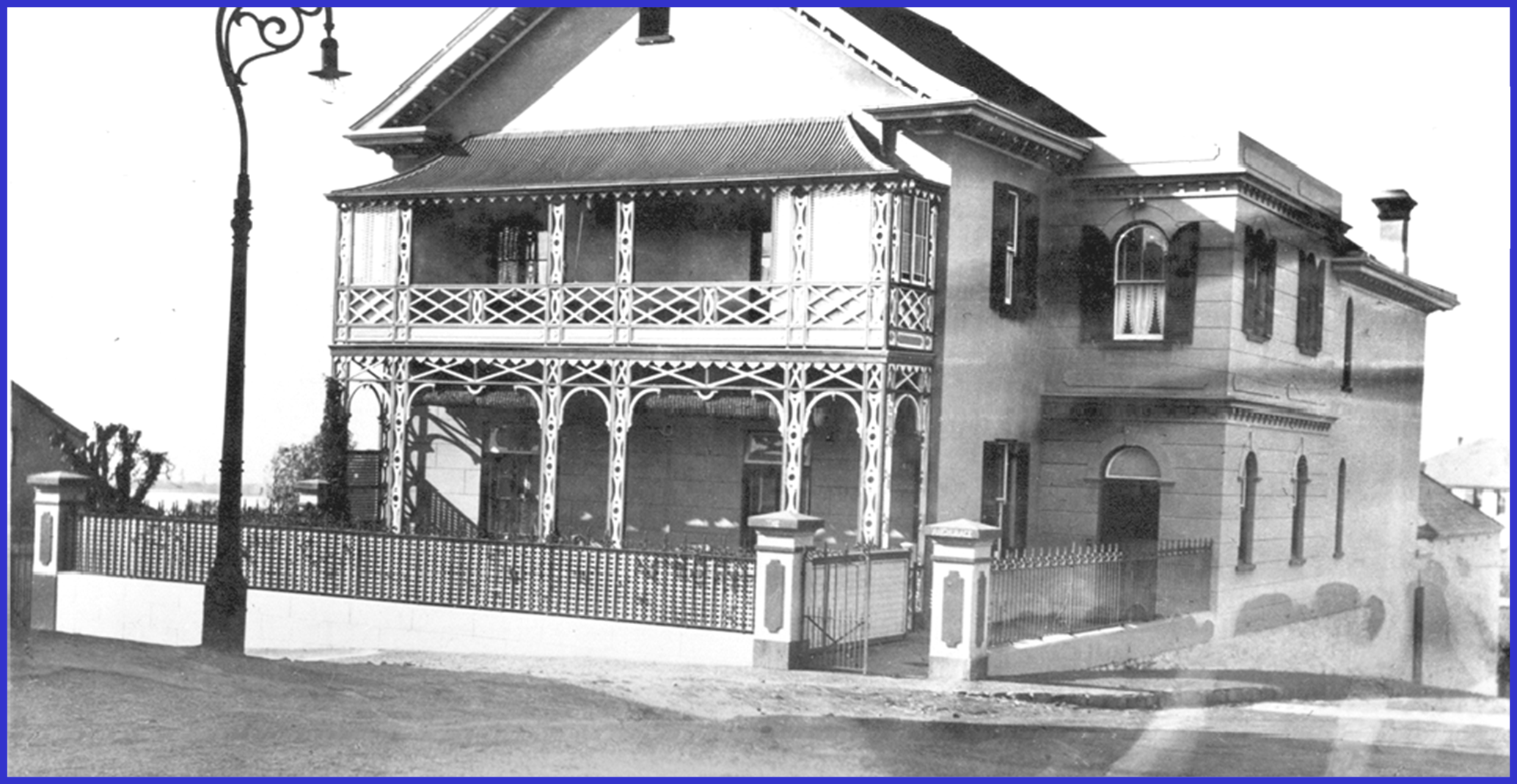
James Searle by all accounts was a modest and unassuming man who never spoke of his personal life nor boasted of his numerous achievements after he left his family home in Twickenham, Middlesex to join the Royal Navy. After serving in the Crimean War, he joined the merchant navy, discovered the potential of the as yet largely undeveloped port at the mouth of the Baakens River on Algoa Bay and made his life there.
Redgrave’s assessment
Mr James Searle, in his practical strong sense, would probably have brushed aside , as too flattering, the estimate of his character and work that many have arrived at, but he took a leading part in the development of the port and the general advancement of town’s interests.
Sources
Algoa Bay – In the Age of Sail (1488 to 1917) – A Maritime Story by Colin Urquhart. Published in Port Elizabeth by Bluecliff Publishing
Port Elizabeth: A Social Chronicle to the End of 1945 by Margaret Harradine
Port Elizabeth-From a Frontier Garrison Town to a Modern Commercial and Industrial City by Ramon Lewis Leigh (Joburg, Felstar Publishers)
Thesis of Jon Inggs, “Liverpool of the Cape: Port Elizabeth Harbour Development 1820-70“, MA thesis, Rhodes University, 1986
Port Elizabeth in Bygone Days by JJ Redgrave M.A. [1947, Rustica Press, Cape Town]