
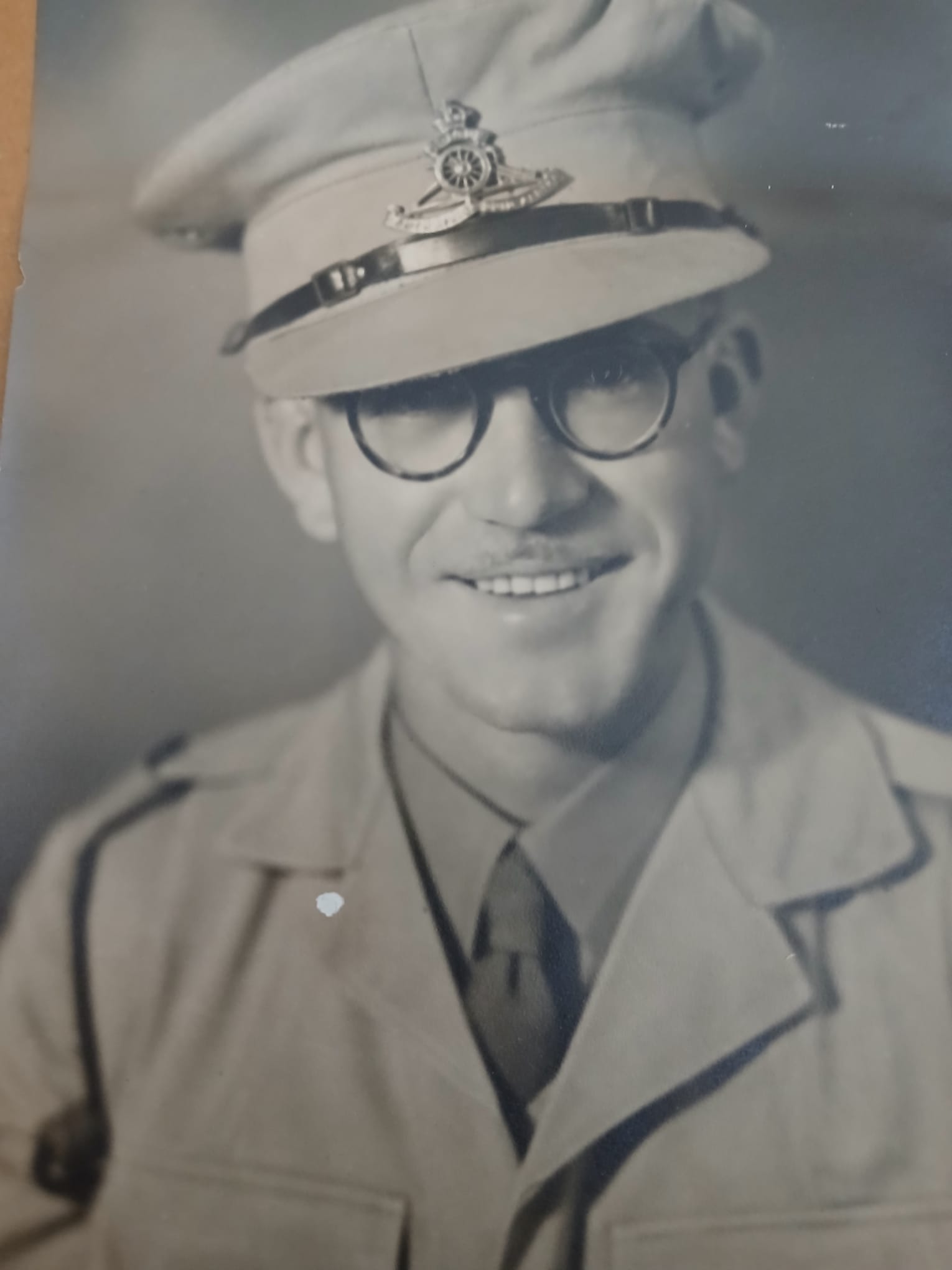
Like his three brothers, Fred, Milton and Harry, Redvers volunteered for military service during WW2. As the last of these volunteers has passed on, nobody can listen to first hand accounts of their experiences during the war. All that remains are the shards of their experiences as related to disinterested children. Even piecing together these pieces, it provides no more than a smidgen of those experiences.
Main picture: Redvers Percival Dix-Peek in military uniform
An idyllic youth
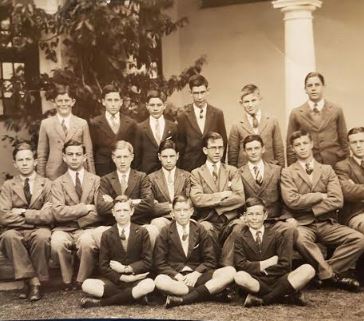
Redvers was the eldest of 6 children – 2 girls and 4 boys. Being born on the 5th March 1917, he was able to attend the Grey High School which had opened two years previously on the 4th June 1915. Instead of walking to the Grey Institute in Belmont Terrace, he could walk up Eastbourne Road, cross Cape Road and he ws at school. Fortunately their father had a good job as a wool sorter with Mosenthal’s. This enabled him to afford a comfortable house at 37 Eastbourne Road. Instead of luxurious fittings and toys, it was the simple things in life such as playing rounders in the street which is fondly remembered.

Off to war he went
Born on the 5t March 1917 placing him squarely in the age cohort who would serve in WW2, he would have to volunteer to enter the army as military service was not compulsory.
After completing his JC, as standard 8 was then known, Redvers followed many other residents to the gold mines on the Witwatersrand where he obtained employment as a reduction worker on the Van Reyneveld gold mine in Benoni. With Port Elizabeth flourishing, the probable magnet which drew him to the golden honey pot must have been the wages.
According to AI ä reduction worker (or reduction operator) on a gold mine operates within the metallurgical plant to convert raw ore into gold-bearing concentrate or bullion. Their work is focused on the physical and chemical breakdown of ore, ensuring consistent efficiency in processing, sampling, and safety, typically within the milling and smelting circuits.
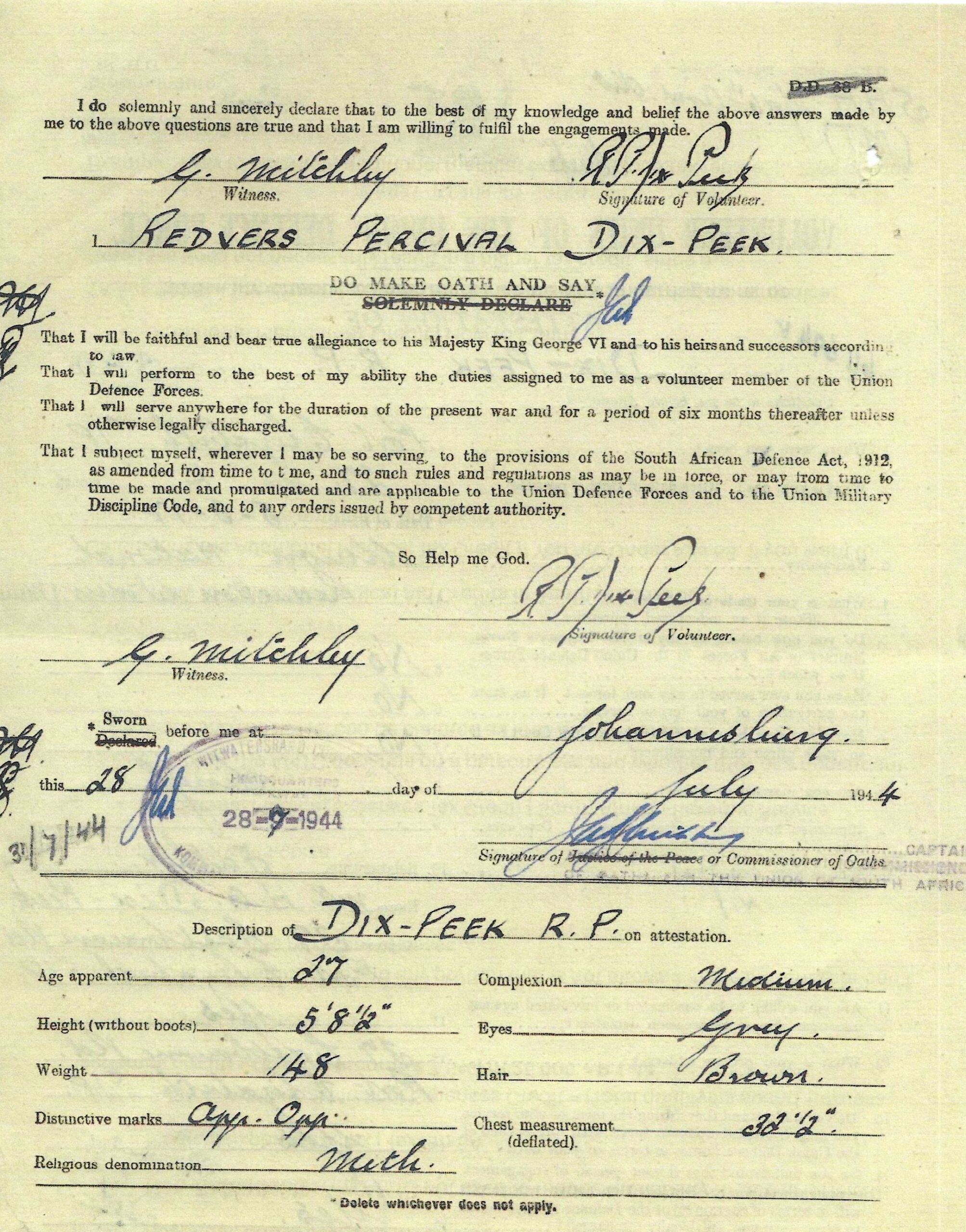
It s noted that Redvers only attested for military service in 1944 when he was 27 years old. Unlike most other men who attested as soon as they completed their schooling, in his case the war had already been in progress for 5 years. I wonder what the reason was for the delayed singing-up? Could it have been a mundane reason such as the quantum of the remuneration or it could have been for medical reason such as poor eyesight. Presumably if this had been the case, by 1944 the standards would have been relaxed as replacement manpower was urgently required.

Military Service
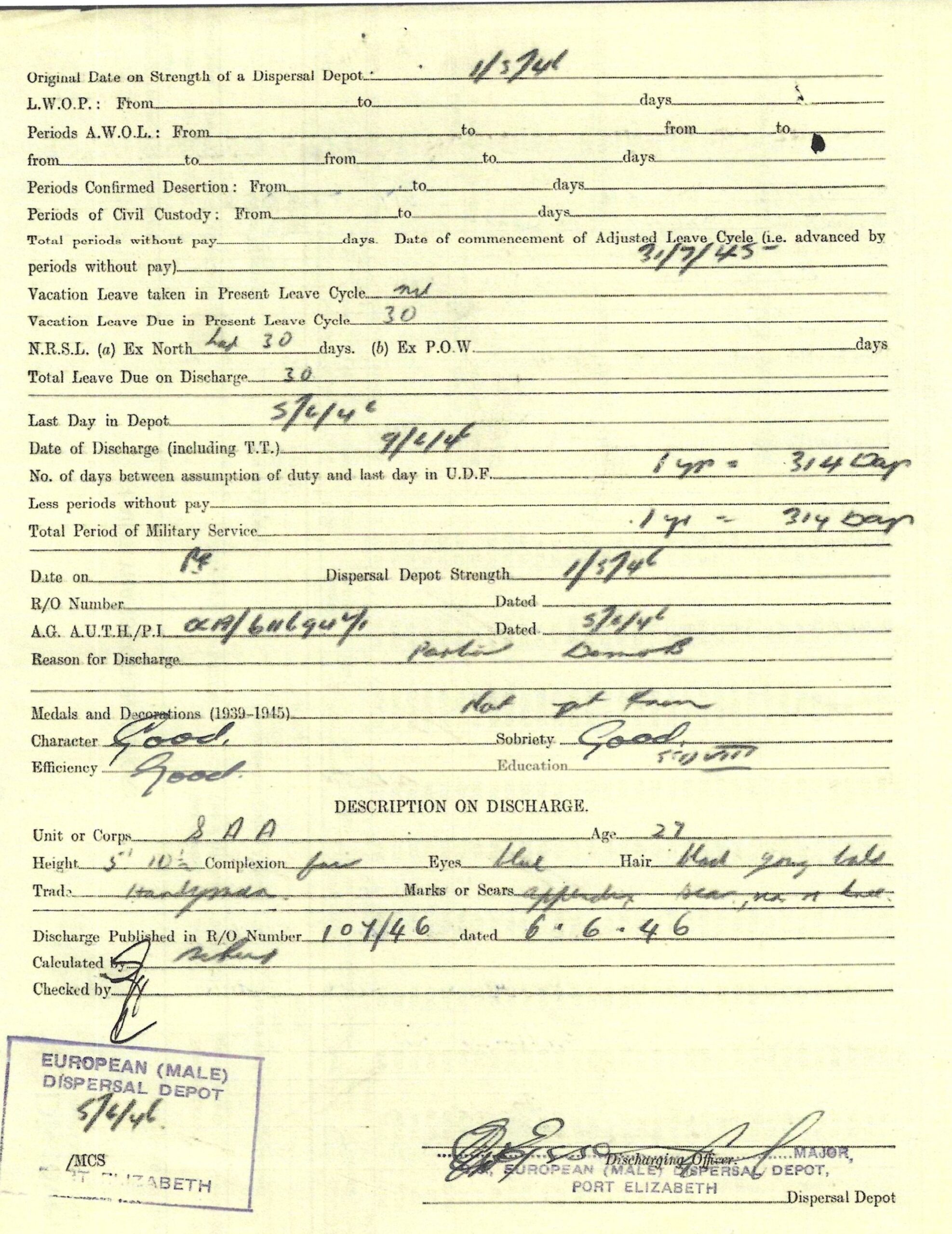
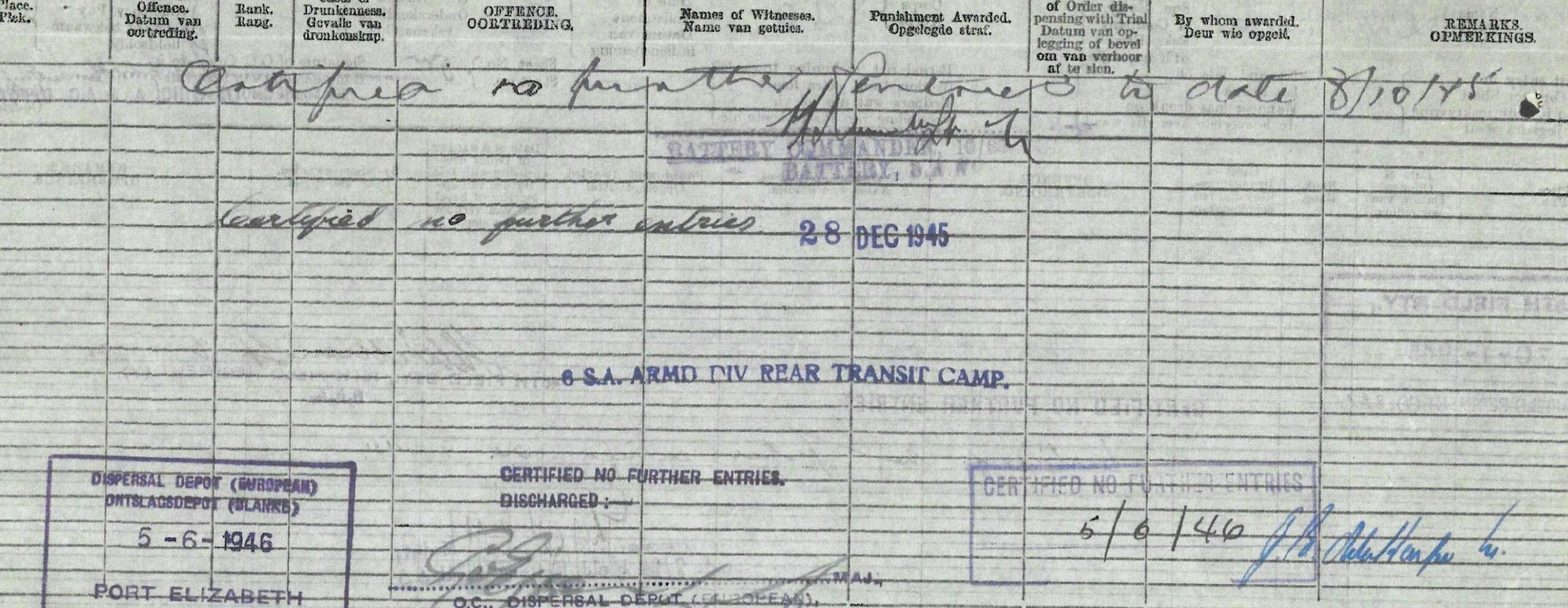
Redvers attested for service on the 28th July 1944 in Johannesburg at the age of 27 years and on the 8th September 1944 he was transferred to Potchefstroom to commence training with the 15th Field Regiment with a posting to Battery no 44 after completion of his training. On the 3rd February 1945, Redvers was transferred to the base depot at Voortrekker Hoogte, and then on the 8th February, Redvers departed for Cairo. A month later he was posted to the 6th Armoured Division, South Africa’s only active unit at the culmination of WW2. On the 7th October 1945 Redvers reported sick, being admitted to hospital 8 days later. Finally he was discharged on the 16th November 1945. Shipped back home, Redvers disembarked at Durban on the 9th March 1945.
On the Application for Campaign Medals, Redvers states that he was a part time member of the Northern Rhodesian Defence Force based at Mufulira.
Back home
After his discharge from service, Redvers obtained employment at Hubert Davies in Port Elizabeth as a handyman.
Medals awarded:
Italy Star
The War Medal (1938-1945)
Africa Service Medal


How wonderful to have these records. Was the ‘Redvers’ from Buller, admiration perhaps? My father signed up with the Artillery when I was less than two but was transferred to the Engineers before he left the Cape where he met a woman dislodged by Rommel from Egypt who became his third (and last) wife. He never returned home to us and my mother’s view of our location in the ‘back of beyond’ (Linden Extension, Jnb). My mother was not best pleased and often remarked, ‘the men had a good war’.
Hi Bernard
I have the military records of my father and grandfather and have written blogs on their service
Dean