
On the 2nd December 1950, Desmond Polack advertised in the E.P. Herald for people interested in joining him in climbing the Cockscomb. Over the period 30th December 1950 to1st January 1951, Desmond Polack, Dennis Moore and Stella Smith spent the weekends climbing the Cockscomb from the south via Waterfall Cave. It was during this weekend that Dennis Moore conceived the idea of forming a club.
Early in 1951 a notice appeared in our local daily newspaper advising that an inaugural meeting to form a Mountain Club would be held in the Athenaeum Club on the 22nd February 1951.
As a result of this meeting, the Eastern Province Mountain Club was formed or more correctly born. Fred (Pop) Magennis was elected President and Desmond Polack as Chairman. The meeting decided that the assembly point for meetings would be the Richardson Building in Market Square, while the Uitenhage members would meet at the Royal Hotel in Uitenhage. The Club badge in the form of a leopard reclining on a bench was chosen because of the many sightings of leopards in the Strydomsberg Mountains behind Uitenhage. It was in June 1954 that the club was accepted as a section of the Mountain Club of South Africa.
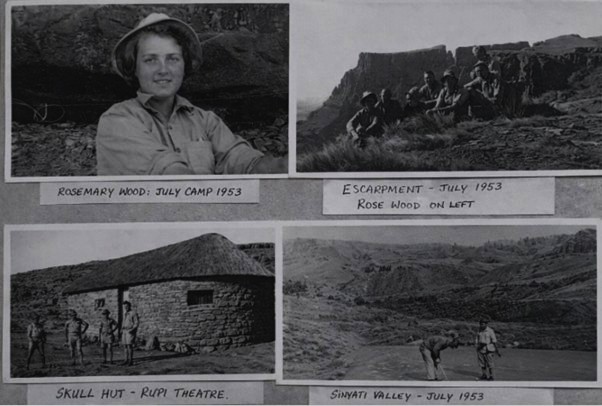
Late in 1952 Arthur Harlow mentioned that he would be going to the Natal Camp in 1953 and invited others to join him, also that he would be going via Sani Pass. Sani Pass? Never heard of it. It is not on our maps, but we all wanted to know more. So it was from a party of about ten of us, but it was only three that eventually left Port Elizabeth late on Sunday 21st June 1953. This party included Erik Manson, Arthur Harlow and Rosemary Sylvia Wood
Planning
Procurement of large scale maps of Eastern Basutoland from the British War Office, London
Requesting and receiving permission from British District Commissioner in Mokhotlong for the proposed hike through territory under his authority.
Catering for self sufficiency during the journey as no rations were available en route except what is carried
Self sufficiency in rations is achieved by using basic commodities of minimum weight being essentially porridge oats, dehydrated vegetables (only supplier in Port Elizabeth was Hustlers Groceries on Queen Street). Oxo cubes, milk powder, tea, coffee, sugar, dried fruit, soup powder, glucose sweets, Provita and jelly powders.
Write to the Natal Mountain Club for information and advice regarding the July Camp and the proposed trip via the Sani Pass.
Memories after 60 years
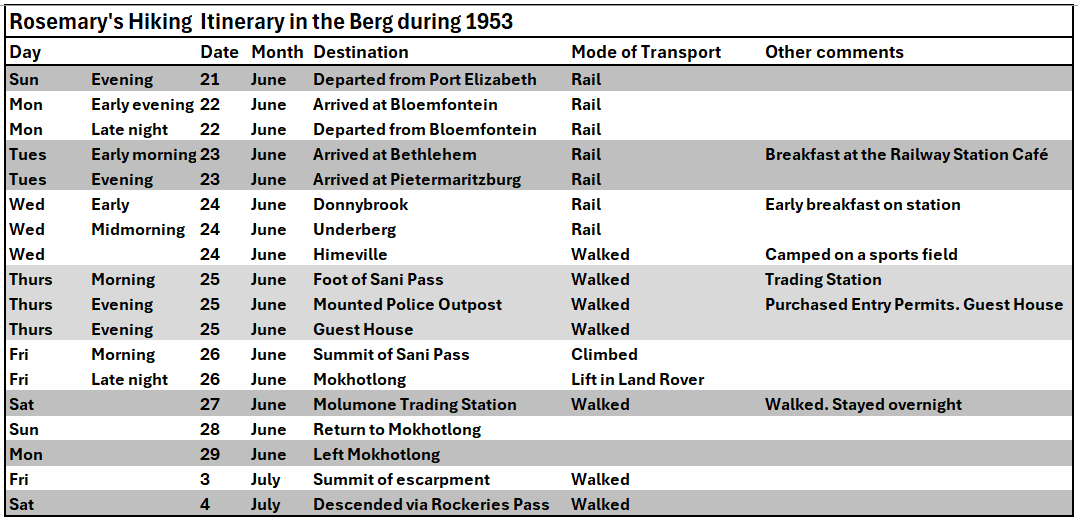
“We left Port Elizabeth on Sunday evening 21st June 1953 by train. Arrived at Bloemfontein early on Monday evening and left late that night for Pietermaritzburg. The train stopped at Bethlehem at 5:30am the following morning (Tuesday) and we were allowed to go for breakfast at the Railway Station Cafe. It was bitterly cold as we stomped up and down the station to keep the circulation going and to stop us from freezing as the Cafe only opened after 6am.
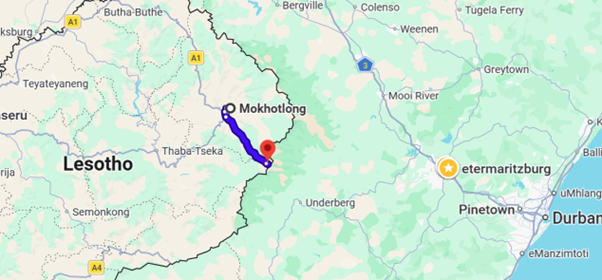
We eventually left Bethlehem after 7am and arrived in Pietermaritzburg eleven hours later. We then changed trains for Donnybrook and arrived there around 6 or 7am, where we had to wait for a train to take us to Underberg which was the end of the line. We made breakfast on Donnybsrook station to the amusement of the local inhabitants arrived at Underberg at midday. We then walked to Himeville and camped overnight on a sports field next to the hotel
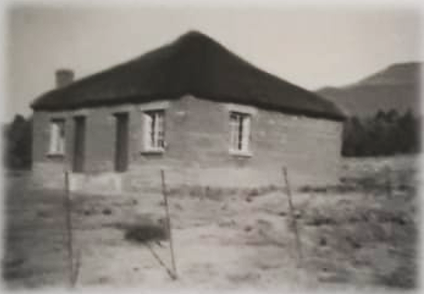
On Thursday morning 25th June 1953 we walked to the Trading Station at the foot of Sani Pass in the hope of hiring a couple of ponies to carry the rucksacks to the summit of the Pass. However there was only one horse available, but due to the weight of the rucksacks and the pass still ahead of us, we were told that the horse could only carry one of our rucksacks, which weighed plus minus 90lbs ie +- 40kgs for the ascent of the Pass. So between the 3 of us, we took turns in carrying the remaining rucksacks.
At first the Pass was fairly wooded although the trees were stunted and the river bed dry , the path was gravel and soon we left the vegetation behind and by the time that we arrived at the Basutoland Mounted Police outpost at approximately 4pm, we realised that we would not be able to pitch our tents as the ground was strewn with large boulders and the ground was as hard as nails.
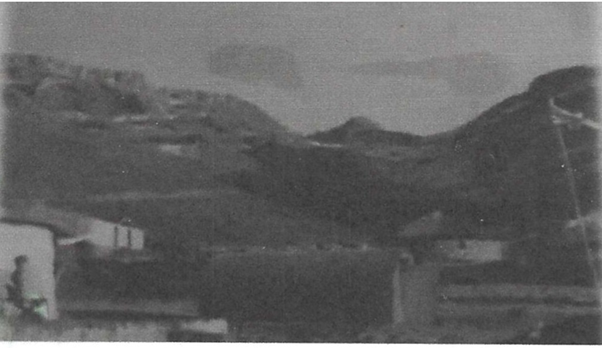
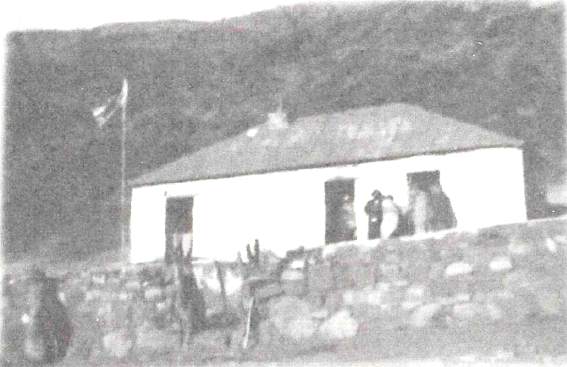
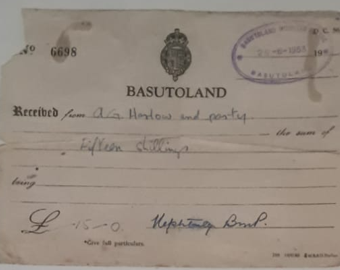
We paid fifteen shillings for our Entry Permit required by the British authorities and were then offered the use of the Guest House. This consisted of one of one habitable room as the roof had caved in over the rest of the house during the winter storms. Not much sleep that night due to a howling wind and a rattling roof. However there were no complaints as we had shelter.
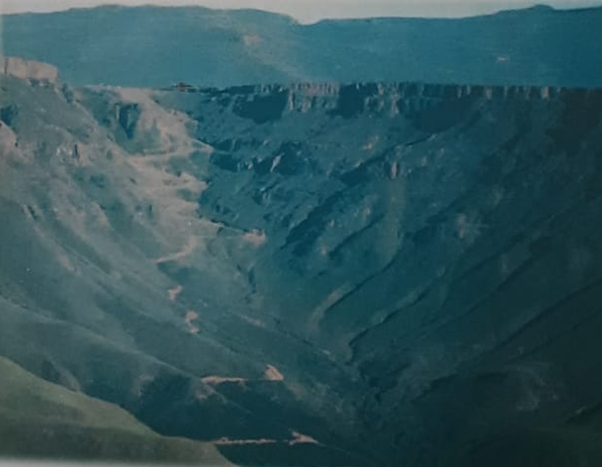
Friday 26 June 1953: We were up at dawn to blue skies and a promise of a fine day. Once again we shared the two rucksacks between the three of us and the horse quite content carrying only one. When we looked up we saw a very narrow stony track, more like a bridal path zigzagging up on ever increasing steepness to the summit of the Pass, and so we set off passing many heavily laden pack animals carrying trade goods into Natal.
From the Police Post to the summit was tough and the Pass at times seemed to fall back on itself and became extremely narrow with loose stone and boulders. Looking over the edge down into the valley, we saw frozen waterfalls and the remnants of someone’s pack train. We reached the summit at midday. It was extremely cold and the Sani River was frozen. There was much slipping and sliding on the river. In the distance we saw a fellow traveller carrying a sewing machine but travelling in a southern direction. We found a sheltered spot and had our lunch, finished it off with strawberries and cream id est (strawberry jam and snow.
Each morning we placed the dehydrated vegetables in a water bottle to soak and at night we cooked them together with Oxo cubes for supper. Our lunch consisted of Provita, Marmite and cheese while breakfast was oats. And of course we were always ready for a “brew-up”. Each of us carried a petrol stove and in this manner we travelled along the Schonghong River valley to Mokhotlong. To he east of us we saw Thabana Ntlenyana, which had recently been proclaimed as the highest mountain in Southern Africa. The weather was bitterly cold but fortunately the wind was not very strong. It was the time before Anoraks, Polar fleece jackets and Hely Hansons. Instead we had our knitted pullovers, Egyptian cotton windproof jackets and itshide soles on our boots and father’s woollen long johns.
We arrived at Mokhotlong late at night having received a lift with the driver in the D.C.’s Landrover who had picked us up some miles out of Mokhotlong. We paid a courtesy call on the British District Commissioner who offered us the use of their guest house which we gladly accepted. All that we remembered of the Mokhotlong was the Post Office, the D.C.’s house and the Guest House.
The next day we visited the Molumong Trading Station which is approximately a 2 to 3 hour walk from Mokhotlong. We received an invitation from the Trader to spend the night in their home, and he suggested the use of pack animals to carry our gear, together with a Basuto attendant. The following morning we arrived back at our base at Mokhotlong with a few luxury items bought at the Trading Station, made possible by the use of the pack animals. Each of us bought a Basuto blanket which was duly posted back home from the Post Office at Mokhotlong. We were later to wish that we had kept them when in a few days we experienced Basutoland winter weather at its worst.
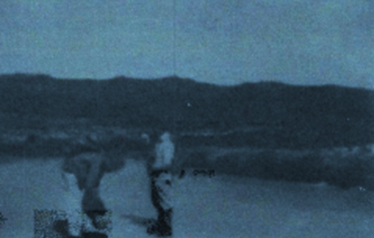
We were told of “Peter”, a pilot who flew into Mokhotlong on regular basis and were shown the landing strip very close to the mountains surrounding Mokhotlong. Peter had to fly into the valley and then had to climb up before being able to land.
On Monday 29th June 1953, we left Mokhotlong and travelled in an easterly direction towards the Drakensberg escarpment. At dusk we arrived at a village and after meeting with the Headman were offered a night’s accommodation in their Guest House together with throughout the night. Needless to say, we all slept well. The following morning our Basuto attendant decided to return home, and once again we had to carry our own rucksacks.
Friday 3rd July was our coldest night when we pitched our tents in the snow and wind and put on all available clothing. I know of one person who even left their boots on. On Saturday 4th July we reached the summit of the Escarpment and after checking our bearings, we headed for the Rockeries Pass and descended into Natal where the weather was kinder. Late that afternoon we arrived at the Natal Mountain Club Camp Site in the Sinyati Valley
During the following week we participated in the N.M.C. activities which included overnight options on the escarpment.
At the conclusion of the camp, we caught the bus at Bergville for Pietermaritzburg, and then the train to Durban. We all had a bath in Durban’ Municipal Baths before embarking that night on the Union Castle ship, Arundle Castle, and arrived back home in Port Elizabeth on Saturday 18th July 1953.
Source
Rosemary Wood