
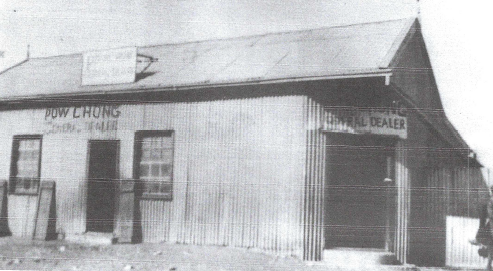
Like all immigrants internationally, their initial priority was to make a living. For most waves of immigration to South Africa this was the least of their concerns as they were part of an organised importation scheme; the Indians in Natal to the sugar cane fields, the Chinese to the underground gold mines on the Witwatersrand and the English Settlers to the Eastern Cape border regions. The Chinese in Port Elizabeth were an exception to that rule. Being overwhelmingly single and without a family they probably initially relied upon the settled Chinese to survive. In a strange land with little understanding of English, they resorted to the time honoured tradition in order to overcome communication barriers viz sign language
Main picture: Chinese general dealers store in Dassiekraal circa 1920
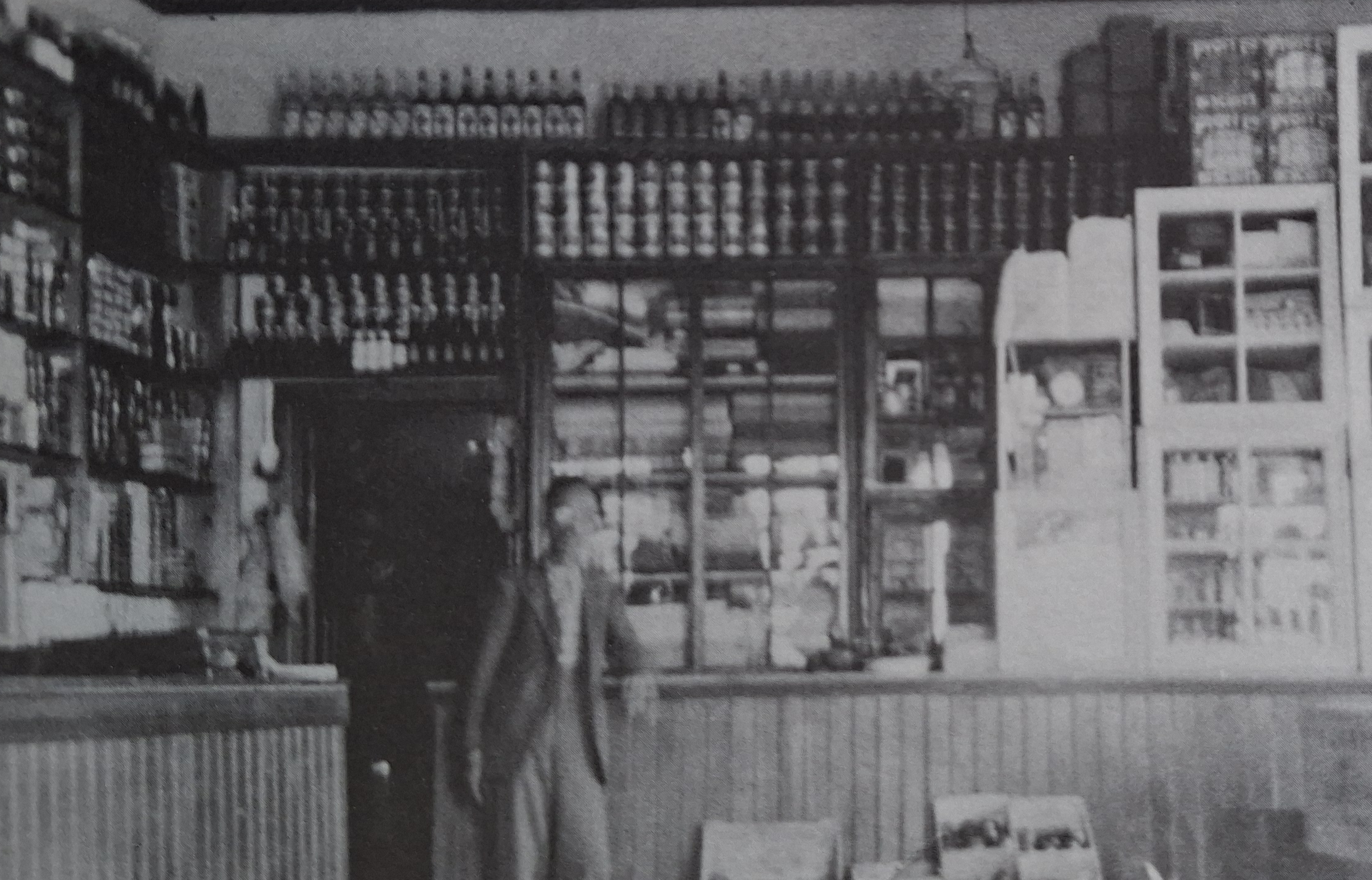
Barred from many industries by Colonial and Apartheid laws, the community turned to small-scale commerce and agriculture.
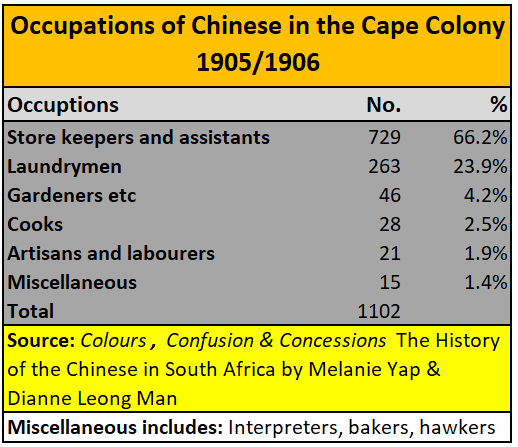
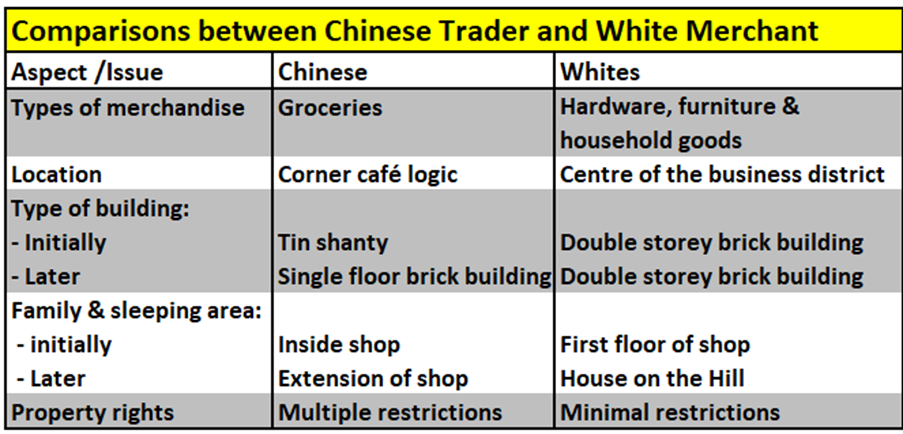
As the initial influx of Chinese originated from rural China, they did not form part of the educated class. With neither a command of the English language nor of the Dutch language they were attracted into occupations such as operating a laundry, growing a market garden or surviving as traders and greengrocers. Whereas the initial White traders in Port Elizabeth might have slept in their shops in Main Street, their living quarters were on the first floor and were not on the ground floor and hence they were not compelled to share the floor of the shop. Alternatively many rented rooms in the Malaikams [CCC Page 193] which in Port Elizabeth’s case was in Evatt Street.
The reason for the divergence in their modus operandi probably related to the financial position of the two communities. Even though many Settlers were from the labouring classes those with money or useful skills were able to swiftly advance up the social rungs.
Overcoming communication barriers in the retail trade
Apart from being diligent workers, starting a business without rudimentary items such shelves and counters would be challenging. But even more formidable was how they communicated to their customers the price of an item or even the total sales amount due. To overcome this obstacle, the shopkeeper required an essential tool of trade – a lowly broom or walking stick. Using this item as a pointer, the customer would indicate what he required and the shopkeeper would point to drawings of coins to indicate what his price was. One item that was never sold was the last packet or tin of an item as the shopkeeper needed to use it as a sample for re-ordering purposes.(CCC Page xx)
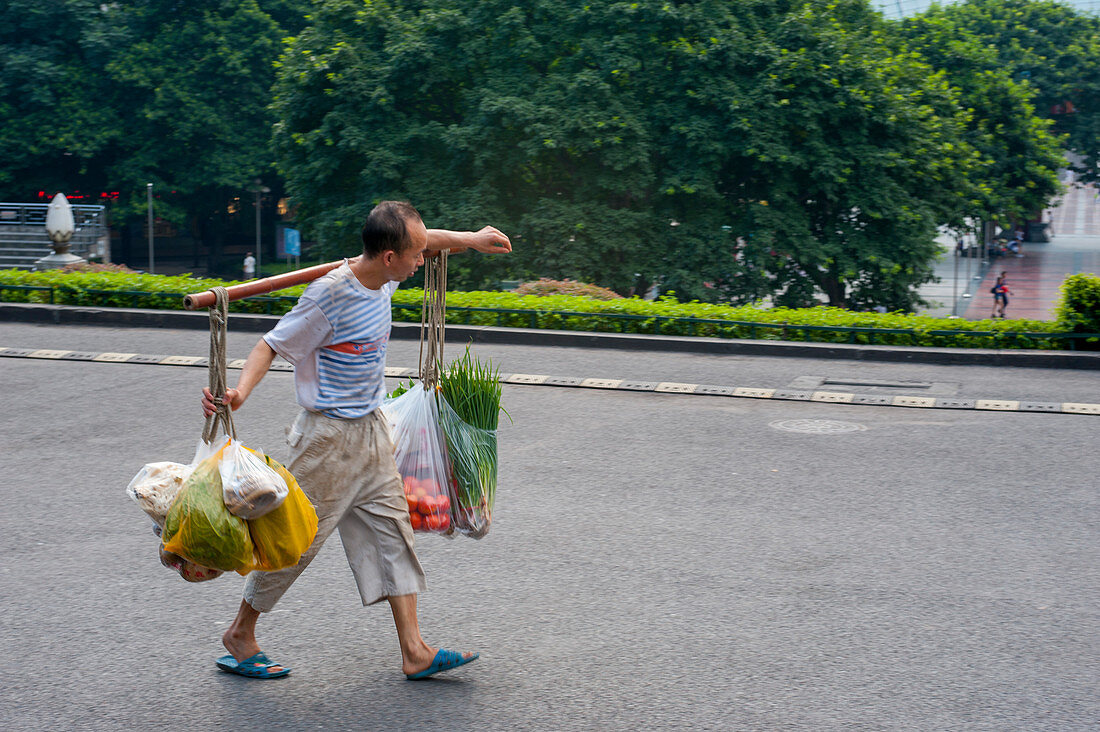
Chinese market gardens
In the book Colour, Confusion and Confessions Melanie Yap quotes Lawrence Green recalling that in 1895 Chinese market gardens existed in the Baakens Valley. Old residents reminisced that “fresh vegetables were to be had at any time”. Market gardens operated at various locations in Port Elizabeth, however the best known market gardens were those in Princes Street North End. Early in the 20th century, Chinese growers were well-known for their market gardens, often selling vegetables door-to-door in pannier baskets.
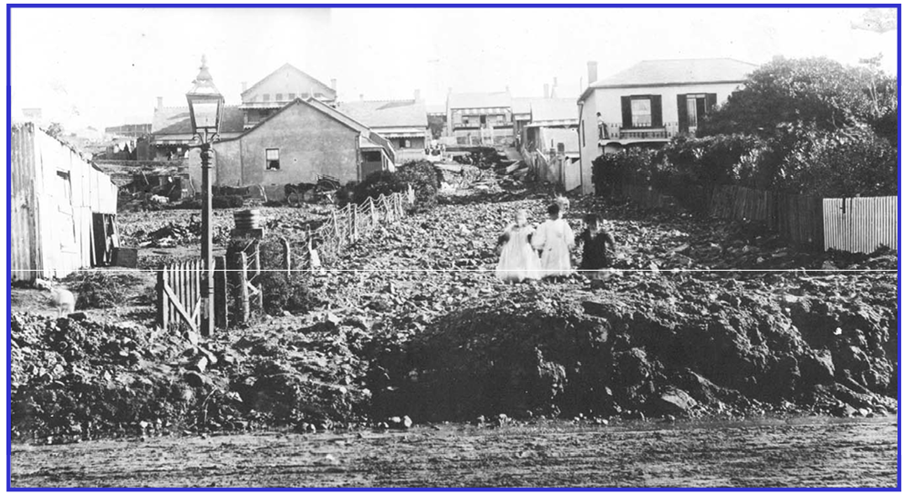
At the turn of the century there were several market gardens here known as ”Chinaman’s Gardens”, the best known being a large site in Princes Street, between Elizabeth Street and Myrtle Avenue.[HCWC]
Chinese laundry businesses
By the turn of the century, the Chinese dominated Port Elizabeth’s laundry business with eight of the city’s eleven laundry businesses being Chinese owned.
1 in Thomas Street, South End,
3 in Evatt Street
1 in Walmer Road, South End
1 in Westbourne Road
1 in Mackay Street, Richmond Hill
1 in Robson Street, the Hill
[CCC Page 60]
Chinese Grocers and Shopkeepers
In 1903 a total of 179 Chinese grocers were recorded in Port Elizabeth. Such levels of competition generated antagonism from their White counterparts. Accusations levelled against the Chinese often took the form of conspiracy theories and unfounded accusations. Amongst the spurious allegations levelled against the Chinese traders were that they were selling short weights and stolen goods. Another more insidious accusation related to the shop owner offering young underage white girls free sweets for various nefarious reasons. [CCC Page XX]. These unsubstantiated allegations were often appended as reasons for the refusal to grant Chinese trading licences. Alternatively they were invoked as a reason to prevent the renewal of a trading licence.
Retail dominance
In any measure, the Chinese dominated in the grocery store business and became household names in suburbs like South End with families such as Date Chong, Forlee and Lee Ching becoming central to local business.
Restrictions on property rights
In the Cape Colony, Chinese were permitted to purchase fixed property relatively freely. However, more importantly, even if a prospective purchaser had sufficient capital accumulated to meet the seller’s price, the sale could only proceed subject to the owner’s approval. This procedure conflicted with the accepted principle of a sale being concluded on the provision of proof that the purchaser was good for the money.
Although there were no statutory prohibitions on the sale of property to Chinese in the Cape Colony, township contracts usually precluded occupations by Coloureds and the Port Elizabeth municipality could and did hinder the transfer of property to Chinese. [CCC Page 193]
The implication of this restriction could be more pervasive than prohibiting one solitary property sale. In the case of the Title Deeds of the Fairview Estate, which included Newton Park and surrounding suburbs to the west, were restriction of a similar ilk. This restriction automatically applied to hundreds of properties irrespective of whether an owner willing to sell their property to a Chinese person. [CCC Page 193]
Sources
Harbours of Memories by LG Green [Cape Town, Timmins,1969]>Colour, Confusion and Concessions The History of the Chinese in South Africa by Melanie Yap & Dianne Leong Man
References
CCC refers to the book means Colour, Confusion and Concessions
HCWC refers to the book Hills covered with Cottages – Port Elizabeth’s Lost Streetscapes by Margaret Harradine
In Walmer we had a wonderful General Dealer named Sing Min’s. This was in the ’60s before the arrival of any of the large supermarkets (I think they were on the corner of 10th Avenue and Main Rd). Without their steady supply of goods (and deliveries from the butcher), precuring the daily loaf would have been a much greater task!
I remember the store well. Early 1950s packed with everything, sacks of produce on the floor – overhead wire cash carriers etc