John Vorster in PE: Three Tumultuous Years

Most of the older South Africans will recall John Vorster being the Prime Minister and later the President of South Africa, yet few residents of Port Elizabeth will be aware of the fact that Vorster resided in Port Elizabeth from 1939 to 1942, a formative period of Afrikaner nationalism which Vorster embodied. As a member of the pro-Nazi organisation, the Ossawabrandwag, during WW2 he was detained and ultimately interned at Koffiefontein in the Orange Free State.

Attached is a verbatim copy of an article by H.O. Terblanche entitled: John Vorster’s Three Years in Port Elizabeth 1939-1942

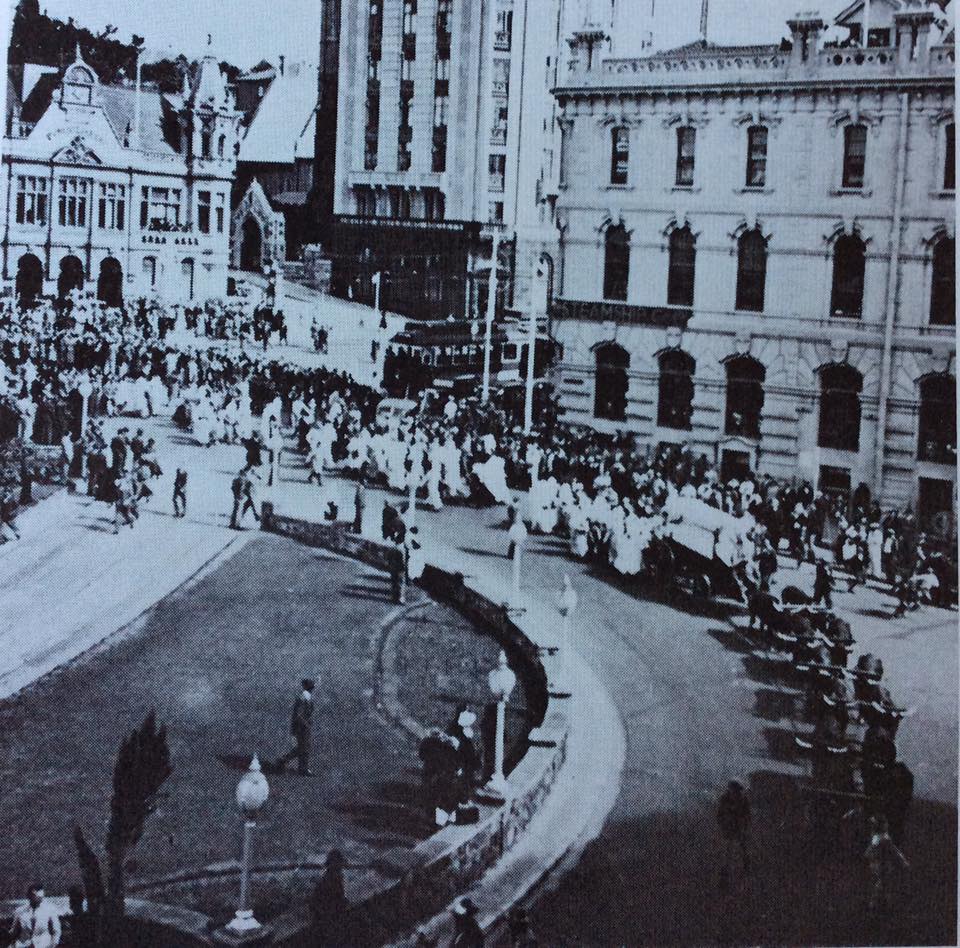
Main picture: Celebrating the centenary of the Great Trek

Continue reading

Port Elizabeth of Yore: The Uitenhage Springs

Unlike Port Elizabeth in which no house had water on tap until the 1880s, Uitenhage never experienced this inconvenience. While Uitenhage was established with a secure water source, the inhabitants of Port Elizabeth had to struggle for an adequate water supply for many years.

This secure water source for the residents of Uitenhage was the Uitenhage Springs. Most of the information used in this blog has been extracted from the book Streams of Life  by David Raymer.

Main picture: Aerial view of the Uitenhage Springs

Continue reading

Port Elizabeth of Yore: The Early Development of Sanitation

In a large measure, the lack of a proper water borne sewerage system symbolised the lack of development in Port Elizabeth as compared with the home country where John Snow had proved that a proper sewerage system was vital from a hygiene perspective especially the prevention of cholera.

This blog covers the development of a proper sanitation system in Port Elizabeth.

Main picture: Sewer being constructed in Rudolph Street South End in 1904.

Continue reading

Port Elizabeth of Yore: The 1968 Flood in Numbers

On Sunday 1st September 1968, a ferocious storm hit Port Elizabeth when more than 40cms of rain fell in just four hours, wreaking havoc, damaging some of the city’s most prominent buildings and infrastructure and killing nine people.

Harrowing accounts of what people endured over four hours on the Sunday morning, 1st September 1968 are recounted, as they should be, every Spring Day on radio and in the local newspapers. Needless to say, they are tragic and terrifying.  To put this flood into perspective, this flood will be interrogated not from a human drama viewpoint but rather from the perspective of rainfall, isohyet charts and comparisons with subsequent floods

Main picture: Flooding in the Baakens Valley

Continue reading

Port Elizabeth of Yore: The Changing Face of Happy Valley and Humewood Beach

Ironically just over a century ago, the puny stream which flowed through Happy Valley was well-known whereas the area through which it flowed, Happy Valley, was unknown to the resident of Port Elizabeth. It was this non-descript trickle which supplied this nascent town with its first piped water albeit that it was only to the low-lying areas as the water was gravity fed. In September 1968, this stream barely a trickle, was transformed into a raging torrent probably about 1 metres deep and 70 metres wide.

From providing a vital commodity it now only serves as an entertainment area. This blog deals with the changing character and importance of this area from necessity to a luxury.

Main picture: Frames’ Reservoir on the Shark River

Continue reading

Port Elizabeth of Yore: The South Jetty

Of all the jetties in Port Elizabeth, only the North Jetty possessed any cachet. Probably a reason for this situation was that the North Jetty was close to the central part of town being at the foot of Jetty Street.  It was also the jetty used by embarking and disembarking passengers.

For this reason hundreds of photographs of this jetty are still extant today whereas only a dozen are available of the South Jetty and perhaps half that number of the Dom Pedro Jetty.

This blog serves to highlight what is known about this jetty

Main picture: South Jetty

Continue reading

Port Elizabeth of Yore: Slavery and the Dom Pedro Jetty

The last of the jetties to be built in Port Elizabeth, before the construction of the harbour in the 1930s, was this jetty. The story of how this jetty obtained its non-English name is fascinating as it conjures up images of an era when the scourge of slavery prevailed and the endeavours to eradicate it were in progress.

Port Elizabeth played its part in its elimination in the person of Captain Francis Evatt, commander of Fort Frederick. But that is another story.

Main picture: Dom Pedro Jetty being used to build the breakwater in 1923

Continue reading

Port Elizabeth of Yore: The Case of the Missing Game Birds

In the 1800s, before New Brighton was transformed into a “Model Native Settlement” by relocating blacks from the inner city locations to this area, this stretch of land between the mouth of the Papenkuils River and the Fishwater Flats abutting the Swartkops River, was known for the New Brighton Hotel and the Outspan, both owned by Matthew Berry.

The awarding of shooting rights to this flat vacant expanse of land and the mystery of the missing game birds would have to be settled in court.

Main picture: A duck hunter in 1890

Continue reading

Port Elizabeth of Yore: The First Inhabitants of Uitenhage

At the risk of stating the obvious, most residents of Port Elizabeth regard Uitenhage as a dirty unpleasant industrial town, the like of which one never needs to visit unless it is on official company business.  Yet 200 years ago, when the hamlet of Port Elizabeth was established, Uitenhage was the district administration centre with Port Elizabeth forming part of Uitenhage. Today the converse is true. In short order, Port Elizabeth surpassed Uitenhage and is now the driving force in the region.

In Port Elizabeth’s hubris, it should never dismiss Uitenhage out of hand but should rather acknowledge it as having an equally interesting history and that it now boasts the largest industrial plant in the Eastern Cape in the form of VW.

Main picture: Trekboers in the Karroo

Continue reading