Animals showing their nurturing side

Some animals display no nurturing actions at all such as turtles. As soon as they have laid their eggs, they abandon them. At the other extreme are bonobo monkeys who nurse their infants for four years while other species fall between these two extremes. In the case of many such as the leopard, it is the arrival of new mating season when the mother abandons their young. Lion cubs have a different set of considerations. If a new male takes over the pride, the incoming male will kill all the cubs as they are not his offspring.

Interspecies nurturing is uncommon in the wild but instances have been noted. With domesticated animals on the other hand, it is more prevalent.

Continue reading

Piercing the Veil: Behind the Greek Debt Tragedy

Like a delinquent wayward child who discovers the keys to the cavernous underground wine cellar, his parents do not notice when a few bottles go missing let alone a few cases. After a while the wine bottles are being replenished by the child. The small matter of culpability by only using water to refill them seems to have escaped the miscreant who ultimately loses track of whether the bottles contain wine or water and where he placed them. When his parents inevitably open one with water instead of wine, the secret is exposed. Instead of blaming the alcoholic delinquent teenager, the parents blame the purveyor, the transporter and even the vineyard & its vintner; anybody but the child. Even the second opinion of an expensive child psychologist concurs with the parents’ viewpoint.

Of course in this case substitute the parents for the government, the child for its citizens, the suppliers for the ECB, the EU, the Germans, Angela Merkl and the IMF. In tow corroborating their story would be the likes of renowned economists such as Joseph Stiglitz.

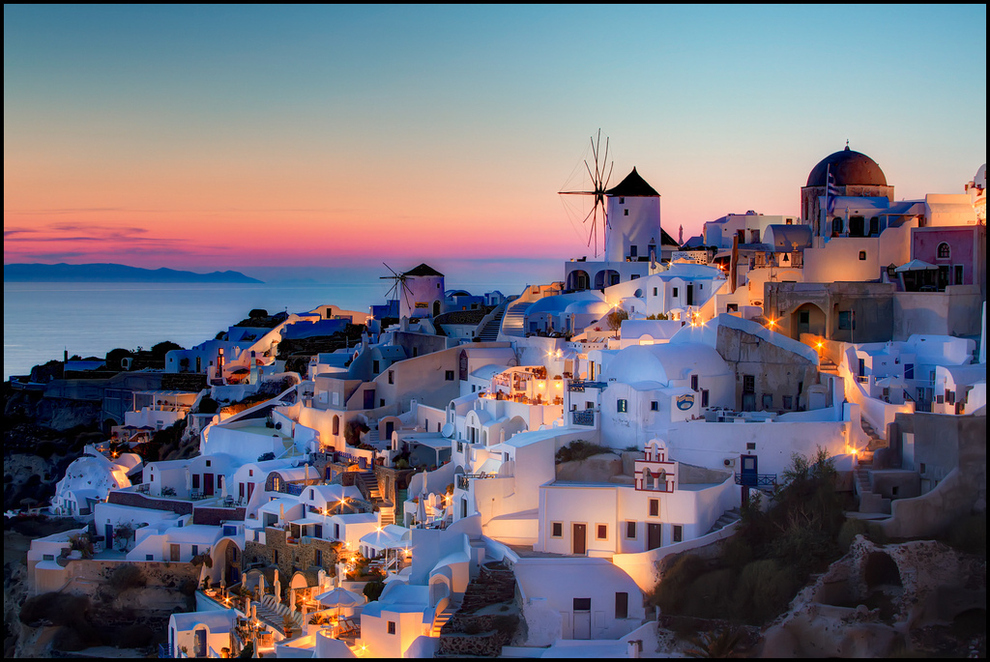
Main picture: Sunset in Oia, Santorini

Continue reading

Did 863 Commonwealth Soldiers really have to die on the last day of WW1?

Nowadays most generals are extravagant in their use of ammunition but parsimonious with the lives of their troops. Not so during WW1. By the end of WW1, the British Commonwealth had suffered more than 1.1million deaths and countless millions more maimed and injured. Most of the deaths on the last day occurred between the Armistice being signed at 5:10am within a railway carriage in Compiegne Wood and the ceasefire coming into effect at 11am that same morning. How could 10 000 soldiers become casualties that day when the Deed of Cessation of hostilities had already been signed?

For those with a conspiratorial disposition, be assured that there was no significance in the fact that the time and date of the cessation of hostilities comprised the number eleven. This was pure happenstance. The German delegation led by a civilian Matthias Erzberger had arrived some days earlier to conclude a peace treaty. In spite of the Allies being aware that the German’s mandate was peace at any cost, the Allies under Marshal Ferdinand Foch was truculent and in no mood to make any concessions to the Germans. This truculence was to delay the peace by three days.

Main picture: Carriage in which the Deed of Armistice was signed
Continue reading

What will Shopping of the Future be Like?

There are two types of shopping. To differentiate them I will classify them as consumables such as groceries, cleaning materials and toiletries and personal and luxury items such as clothing and appliances. To date internet shopping has not superseded personally shopping for one major reason; the cost of the delivery. Secondly should internet shopping become the norm what will the role of physical shops become?

I have been a keen follower of the internet shopping from its exuberant birth in the 1990s. The prognosis was that within 10 years, the demise of physical stores would become a reality. Reality TV shows showcased celebrities attempting to survive without ever entering a shop. Doomsday predictions abounded. Even within the steel industry where I was working at the time, the death of the steel merchant was predicted.
Main picture: A worker is seen in the Amazon.co.uk warehouse in Milton Keynes, north of London

Continue reading

Omar al-Bashir: South Africa sides with the Oppressor

On obtaining power in 1994, there was a wide-spread expectation that South Africa’s foreign policy would confound the trend of realpolitik and support the underdog and oppressed wherever this situation was manifest in the world. Today African Solidarity triumphs over such high-minded ideals. The Omar al-Bashir incident is but the latest example of this trend where the Dalai Lama is banished but a tyrant like al-Bashir is lauded. How far has South Africa fallen from its ideals and sullied its image?

 The democratic South Africa was conceived in a wave of optimism that finally there would be a nation which would buck the international trend and base its international relations on a firm foundation of human rights.

Main picture: Omar al-Bashir attending the AU Summit in Sandton

Continue reading

E-Tolls – The Tale of Two Cities

Normally they just stand on the overpasses with their banners unfurled. “NO TOLLS” they read. Last Friday was different. Instead of a peaceful protest against the iniquities of the e-toll system, the Metropolitan Police descended upon the small bunch of protesting claiming that they were disrupting traffic. Instead it was the 10 police vehicles which were causing the obstruction. A visitor from Dubai then enlightened us what was their experience with toll roads. It could not be more different than Gauteng’s response.

Like all protest action, facts and reasons are lost in the squabble. So it is with e-tolls. Regurgitating the arguments at this juncture is pointless. In his revised proposal, the Deputy President, Cyril Ramaphosa did make two salient points. Firstly, somebody has to pay for the new roads. By converting the e-toll to a fuel levy as advocated by OUTA, the poor would bear portion of the cost as taxis would also be liable for a fuel levy whereas if the cost were split between tolls and other taxes, the effect would be felt mainly by the affluent citizens.

Main picture: E-Toll gantries are now part of the landscape of Gauteng
Continue reading

Vintage Photographs

None of these photographs represent earth shattering events. Rather they are old photographs that provide a view on the minutiae of an older age. That age cannot be accorded the epithet of gracious, rather it should be have the appellation of a bygone age.

All of them are part of the National Geographic Found series

Main picture: A British airman gives a signal to another friendly aircraft, 1918

Continue reading

Trail Run in the Rhenosterspruit Nature Conservancy

Trail Runs are not my favourite form of running for two reasons: Invariably I trip and fall and secondly because, unlike road running, one can never get into a steady stride. As such, it is a case of changing gears all the time which is tiring. However it does have some advantages such as viewing some of the stunning places within less than an hour’s drive from Joburg.

This morning’s 15km trail run was held in the Rhenosterspruit Nature Conservancy just off the R511 to Pretoria. Starting at a drug rehabilitation Centre called Netso Plaas – Just so Farm – the owner must be a Rudyard Kipling fan as Kipling is famous for his Just So stories.

Continue reading

Meeting the Neighbours or How the Other Half Lives

Road Running certainly exposes one to how the other half of South Africa lives. To be more mathematically correct: how most South Africans live. Last Saturday, the Solomon Mahlangu half marathon ran through Mamelodi and today’s race – on Youth Day – was held in Kagiso in the far West Rand.

When I first started running about 31 years ago, running through the black townships was considered life threatening for whites in light of the “antipathy” with which whites were regarded in the townships. Most whites would boycott such races but by participating in the 1000 Km Challenge as well as the Around the World Challenge, certain of us had no option but to participate in all races including those running through these supposed death traps.

Main picture: The township of Kagiso is surprisingly clean. Very few corrugated iron shacks are to be seen. In fact, the township has uplifted itself over the the past two decades to represent a lower middle class black stratum with mainly well-maintained livable houses maybe not with the opulence of Sandton or Steyn City but certainly comfortable.

Continue reading