Port Elizabeth of Yore: Visit by Sir George Grey in October 1858

Visits by dignitaries to Port Elizabeth were always an occasion for celebration and revelry. So, it was with the whistle-stop visit to Port Elizabeth on the 21st October 1858 when the whole town was invited to attend a welcoming parade.

Many of the issues raised during this visit are still of interest today either due their being topical or their casting a light on distant practices. But at the risk of overstatement, the original verbatim reports are somewhat jarring for the reader today, as the level of sycophancy displayed when the residents address the Governor, is cringeworthy.

Main picture: Painting of Sir George Grey by Daniel Louis Mundy in the 1860s

Continue reading

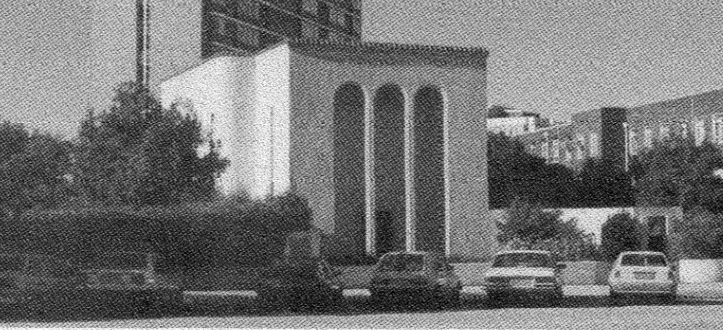
Port Elizabeth of Yore: The Christian Science Church in Park Drive

The beauty of the Christian Science Church is to be found in its external appearance; the strong form of the simplified, lofty three arched entrance and well-proportioned lines of the structure make it one of the finest examples of stylised nee-Gothic churches in this region. It possibly reflects overtones of Californian/ Mediterranean architecture.

In 1995, this structure residing at No 110a Park Drive would be no more.

Main picture: Christian Science Church Port Elizabeth (Restorica 1996)

Continue reading

Port Elizabeth of Yore: Park Lodge of Samuel Bain

The first sale of park lands took place on 16 September 1863. The income from the sale of the lots was to be used for the development and maintenance of the St. George’s Park. The first owners to build on these lots were Samuel Bain and William Pattinson. They were regarded as “living in the country” because their homes were some distance from the town.

This blog and subsequent blogs on houses in this street were supplied by Tennyson Smith Bodill for which I am grateful.

Main picture: This 1907 shows Samuel Bain’s house is on the left of Nazareth House  

Continue reading

Port Elizabeth of Yore: The Architecture of Park Drive – An Overview

As a residential area, Park Drive attracted the well-healed and it was aspirational. If one wanted a villa with spacious grounds close to town, this was it. The area immediate garnered a cachet which it never lost. Given the fact that the plots were extremely large, this would be the undoing and demise of many of these stately homes. Subsequent generations of residents viewed the properties as cash cows and the mansions were demolished to be replaced with insipid blocks of flats.

By now most of the original mansions have been replaced but some have miraculously survived.

Main picture: Kockfierna circa 1900

Continue reading

Port Elizabeth of Yore: The “Aloes”-The House & its Inhabitants

A century ago, Park Drive was akin to Houghton Estate in Joburg, housing the well-heeled of the town in the multitude of stylish and elegant houses lining Park Drive. Amongst them was a house, “The Aloes” at No. 56 Park Drive. Given the large stand sizes, many of these mansions, such as the Matopos of the Frielinghaus’, have already been converted into blocks of flats. Hopefully this one, which is currently on the market, will not be another victim of progress.

Information on the houses in this street were supplied by Tennyson Smith Bodill for which I am grateful.

Main picture: The “Aloes” – No. 56 Park Drive

Continue reading

Port Elizabeth of Yore: The Statue of Queen Victoria : A Popular Regent

Victoria was Queen of the United Kingdom of Great Britain and Ireland from 20 June 1837 until her death on 22 January 1901. Parliament voted her the additional title of Empress of India in 1876. Known as the Victorian era, her reign of 63 years and seven months was longer than that of any of her predecessors. 

After Albert’s death in 1861, Victoria plunged into deep mourning and avoided public appearances. As a result of her seclusion,  republicanism in the United Kingdom temporarily gained strength, but in the latter half of her reign, her popularity recovered. Her Golden and Diamond Jubilees were times of public celebration.

After commemorating her golden jubilee in 1887, the citizens of Port Elizabeth were resolved to erect a tangible object, not as a political statement but as a demonstration of their loyalty and devotion to the queen. This desire ultimately bore fruit in the form of the statute of a mature Queen Victoria outside the Public Library, welcoming visitors to Port Elizabeth.   

Main picture: This Sicilian marble statue was erected and unveiled in 1903 two years after Queen Victoria’s death.

Continue reading

Port Elizabeth of Yore: New Brighton – “A Model Native Settlement”

Located between the Papenkuils and the Swartkops Rivers, New Brighton was established inside the Municipal Boundary of Port Elizabeth in 1901 in order to house the black residents of the inner-city locations such as Stranger’s and Gubb Locations’. The White property owners and ratepayers in these areas close to town had begun a process of were pressurising the Council to relocate the Black inhabitants of the locations from the inner-city areas to the outskirts of the town.

This blog will cover the history of New Brighton from this inflection point in the separation of residential areas.  

Main picture: Semi-detached houses erected in New Brighton in 1912

Continue reading

Prince Alfred’s Guard: Regimental Colour, Battle Honours and Chantry Chapel

In line with the Defence Force’s intention to have the names of the Reserve Force units reflect “the military traditions and history of indigenous African military formations and the liberation armies involved in the freedom struggle”, the name of the Prince Alfred’s Guard will be amended to Chief Maqoma Regiment (MR). As far as I am aware, the PAG has not yet taken decisions on new insignia, including beret/cap badges and flashes as well as colours. However, the existing unit colours, along with battle honours will be laid up during parades over a three-year phasing-in period.

This blog covers certain of those traditions which will be cast aside in this process.

Main picture: Regimental Colours

Continue reading