

Among the multitude of interesting facts that I have uncovered in my investigation of the family history, is that my Granny Mac – Elizabeth Daisy McCleland – was involved in another relationship after the death of her husband, Harry William McCleland on 13th June 1925.
This blog covers that discovery and the sparse facts that I have been able to unearth about him and their relationship.
Main picture: Mr Thomas Henry Clement
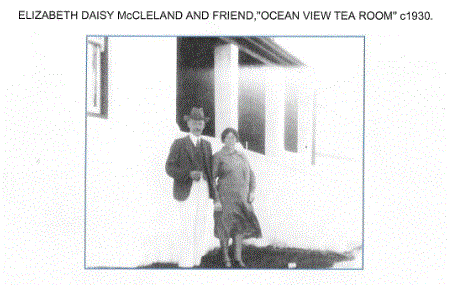
The first time that I became aware of another man in Daisy’s life was two photos that showed Daisy together with another man. The identity of this mysterious unknown person was eventually traced by Robert MacGeoghegan to being a Mr Clement. Then Fay Forbes nee McCleland discovered another photograph of the mystery man stuck behind a photo of her father, Bryce, that Daisy had given to her.
Apparently this had been a long term relationship. Even Rosemary MacGeoghegan at a tender age recalls him.
Thomas Henry Clement
Instead when using his car, Mr Clement would have had three options. Closest for him would have been the New Walmer Road, as Target Kloof was known in those days, or for a change he could have driven down Valley Road or Walmer Road. The Clements’ had three offspring, Edwin, Thomas and Alice. Of these, only Alice was staying at home. This idyll was to be shattered when their mother, Daisy Seymour Clement fell ill. Their medical practitioner, Dr A.J. Patterson, diagnosed three conditions: chronic nephritis, cardiac lymope & uraemia. Based upon her condition, Daisy Seymour was admitted to the St. Joseph’s Hospital. Within less than a week she was dead, passing away on Sunday 1st April 1928.
Elizabeth Daisy McCleland
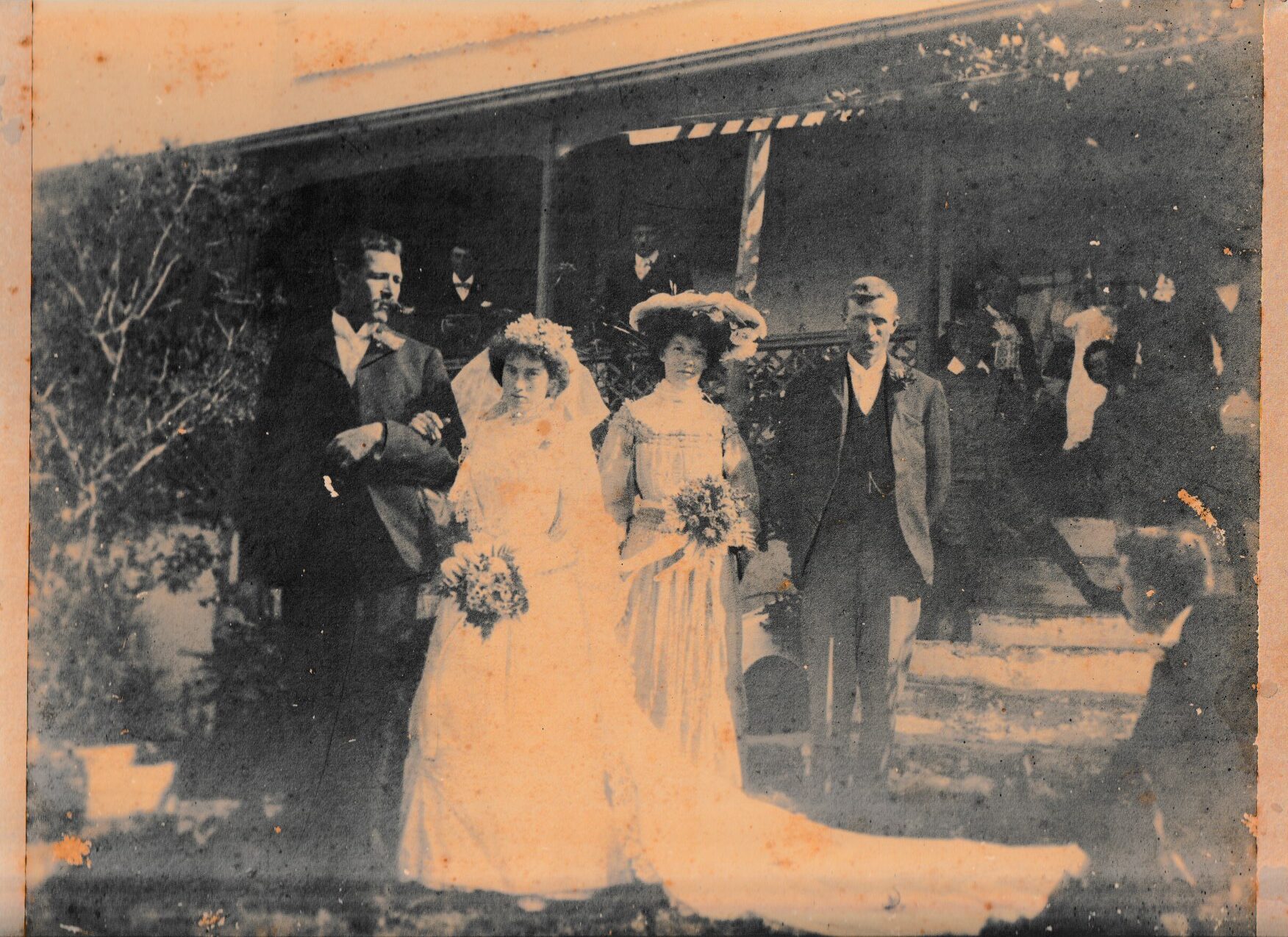
Unlike Thomas, Daisy had led a tumultuous married life. After getting married to Harry William McCleland aged 36 [Daisy was 22] on Saturday 11th June 1904 at the tiny St. Albans’ Church at Draaifontein, the first betrothal at this church, the difficulties mounted almost immediately.

Harry’s career choice, whether due to a lack of any other opportunities or not, or whether it was the default option at the time, was to be a farmer. He would join other members of the McCleland family on the fertile banks of the Gamtoos River farming vegetables. Similar to the Nile River, the periodic flooding of the river would cover the adjacent land with a thick layer of rich virgin soil. Two years later the negative consequence of this phenomenon would wreak havoc with the young married couples life. They were bankrupted when extensive flooding in the Gamtoos Valley destroyed their crops. Their first child, Thelma, born nine and a half months after their marriage and shortly another child, Kathleen, would be born, adding to their woes.
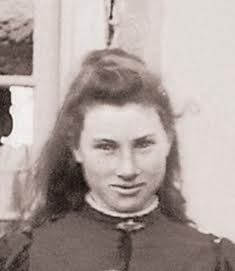
Harry’s changed tack. Instead of vegetables, he would attempt to earn a living in dairy farming. For this they would relocate to De Stades. I speculate that this plot was chosen as it was close to Draaifontein where Daisy had been raised. As their luck would have it, the Rinderpest struck in 1912 killing all their cattle. Left with one cow, Harry William stacked his future on Schoenmakerskop.
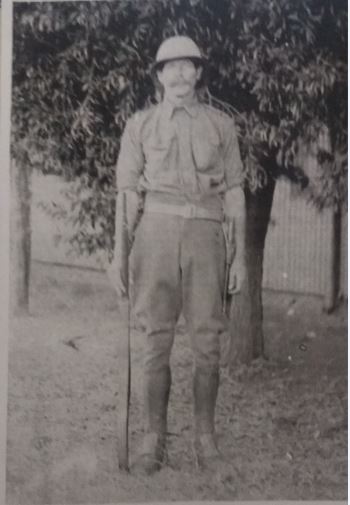
The next tragedy to befall the family was Harry’s decision to enlist in the Union Army. Being already 47 years old and thus under no compulsion to enlist, why would he have done so. Given their precarious financial situation, in all likelihood the motivating factor was the prospect of a regular income. As luck would have it, Harry was assigned to the S.A.M.C – the South African Medical Corps. From there he was posted to German East Africa where he contracted black water fever. Shipped back home invalid, he finally arrived back at Schoenmakerskop only in 1919 having been treated first at Addington Hospital in Durban and then in Wynberg, Cape Town.
Harry applied for a military disability pension. This application was deliberated on at a meeting of The Imperial Pensions Board on 14th October 1919. It was duly gazetted in the Government Gazette on the 31st October 1919. The quantum of this award is unknown but whatever it was would assist this destitute couple.
Finally with their youngest child, Bryce Beckley not yet two years, Harry lungs ultimately could no longer support life. On Saturday 13th June 1925 Harry passed away at the age of 57 leaving the 44 year old Daisy to support six children. Per the Death Certificate, the official cause of death was recorded as Phithisis Pulmonalis, a form of pulmonary tuberculosis. One can only assume that the debilitating effects of the black water fever was the wellspring of this other ailment.
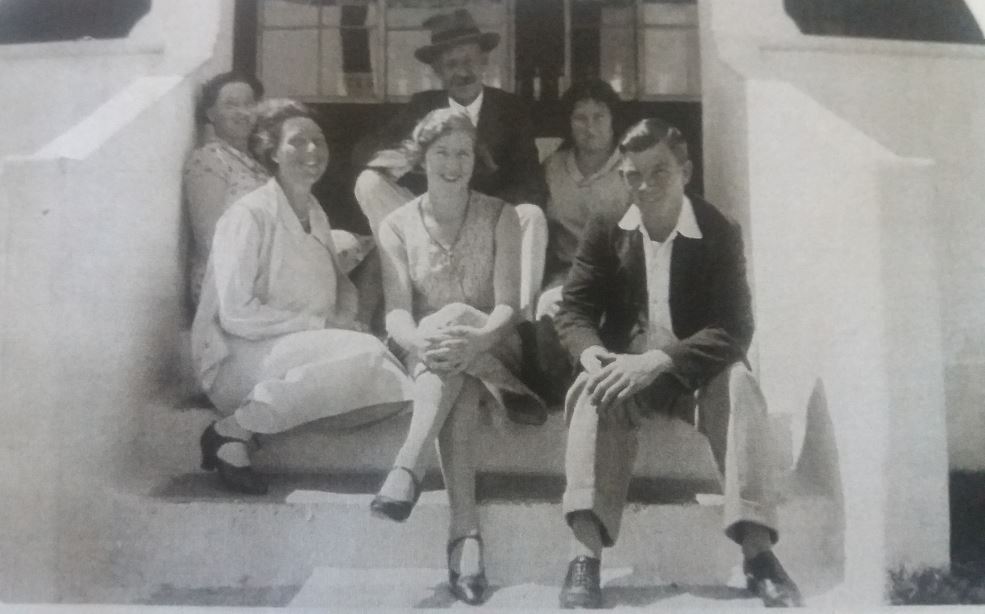
Unfortunately for Daisy, Harry was not able to work. This meant that the full burden of raising what was ultimately to be six children combined with running the tea room would be devolved onto her tiny shoulders. In addition to these responsibilities, Daisy had additional duties. Being a sickly man, Harry required required constant nursing. Nonetheless, Daisy bore all these trials and tribulations with equinimity.
Thomas enters Daisy’s Life
Even though they got engaged, the marriage never occurred. One the ostensible reasons for them never getting married was that one party was an unrehabilitated insolvent. However the veracity of this assertion has not been confirmed. What is equally possible is that the traumatic death of Francis, her son, during the following year had a bearing on her reluctance. Furthermore it might been something as mundane as the loss of Harry’s disability pension, contingent on her remaining unmarried, was the deciding factor. Whatever the underlying reason was, Henry never did marry Daisy.
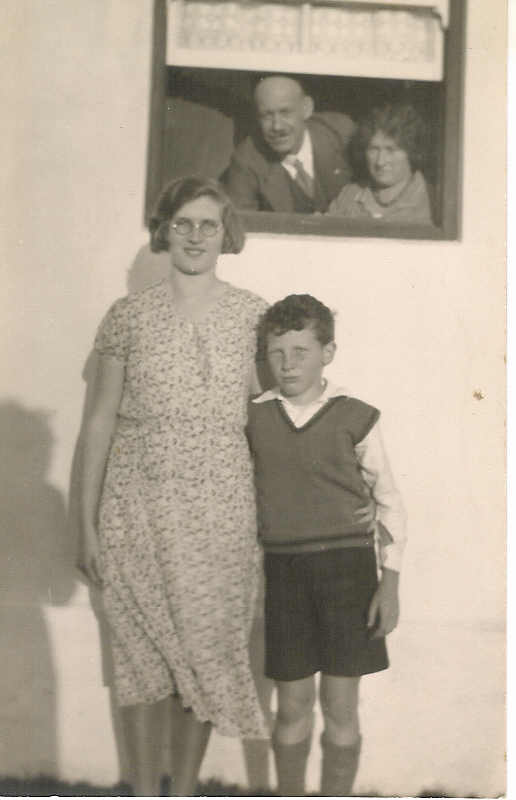
Mr Clemence was to meet his maker in a most tragic way. Sometime during Thursday 6th October 1938, while Henry was motoring alone between Sidbury and Alicedale, he suffered a fatal heart attack. His death certificate records the cause of death as Angina pectoris, commonly known as angina. This is the sensation of chest pain, pressure, or squeezing, often due to not enough blood flow to the heart muscle as a result of obstruction or spasm of the coronary arteries. Apparently after experiencing the angina, Henry’s vehicle had rolled into a ditch.
Daisy’s second chance at love was over.
In spite of living another 39 years, Daisy never did find another suitor and experience love again.
Maureen McCleland’s Notes
The Death Notice [of Harry William McCleland] was signed several years after his death by his widow [Elizabeth Daisy McCleland] at Port Elizabeth on 21 August 1929. When she wanted to draw up her own will in 1929 because she was going to remarry in the following year, she consulted an attorney who informed her that her late husband’s death should have been registered.

Emails from Maureen McCleland
Civil Death Notice of Thomas Henry Clemence who died in 1938:
https://familysearch.org/ark:/61903/3:1:9Q97-Y3QH-WNM?mode=g&i=620&cc=1779109
Estate file for Thomas Henry Clemence who died on the road between Sidbury and Alicedale when he suffered a heart attack: menuhttps://familysearch.org/ark:/61903/3:1:3Q9M-C91Q-WSZD-K?mode=g&i=80&cat=331262I When you look at the estate file, continue with the NEXT image button beyond the death notice; there is his will and his business contract, etc.
Death Notice of Daisy Clemence who died on 1 April 1929:
https://familysearch.org/ark:/61903/3:1:3Q9M-C9BK-Y978-T?mode=g&i=311&cat=331262
Link to Daisy Clemence death registration PE 1929 img 646