

These are the reminiscences of Denis Glendinning, one of the first pilots posted to 6 Squadron RAF based at 42 Air School, Port Elizabeth. Denis is well known in Port Elizabeth having served as a City Councillor. Apart from being a war story, it highlights the fundamental difference in the martial activities of the Allies and their German opponents whereby the SAAF placed its members in extreme danger in order to rescue the crew of a U-Boat after it had been sunk.
This depiction of a flight in atrocious weather encapsulates the pathos of the situation. This is his personal story in Glendinning’s own words.
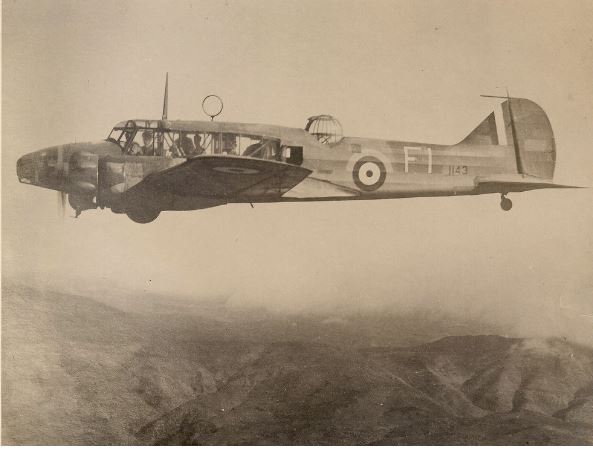
Main picture: Avro Anson over Cape Recife in November 1942
While Operations Officer at the Air Force Station, Driftsands, an enemy submarine was reported 240 miles south of Port Elizabeth. The Royal Navy, South Atlantic Command, signalled for urgent air support action. The reality of WW2 submarine warfare had come to Algoa Bay. Many tons of shipping, with supplies for our armies up North, were sunk in our coastal waters. The signal received from Naval Operations, Brooklyn, was an instruction to sink an enemy submarine, 240 miles due south of Cape Recife.
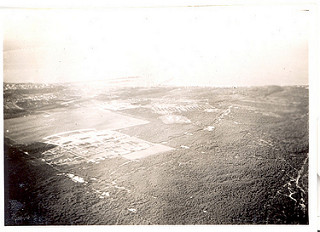
Assistance was required for the finding and the rescue of enemy survivors in exceptionally high seas and stormy weather. As I was the only available instructor and pilot, a non-flying replacement for operations was found, and by super human engineering work by the ground-crew, Avro Anson No 3241 was ready to fly within the hour. Depth charges were collected from the secure Naval Stores. So scarce were they, that unless used for a certain direct hit, these precious stores items had to be returned. A special cradle was constructed for the for the Anson to carry these last two depth charges. Another last minute hazard was that they were only suited for naval craft and thus could only be primed and fused at the end of the runway, immediately prior to take-off.

Extra inflatable rescue dinghies, survival kits and life support equipment were jammed on board up to the aircraft’s maximum capacity. These items could be required for ourselves in case of an emergency. A special briefing was held to make certain that functions of each person were properly understood. Flight plans and equipment were fully prepared and checked. At 8:25, in glorious weather, we set course to intercept the search course of the naval destroyers, looking for the enemy submarine. Looming directly ahead, were menacing thick black cloud banks of a deep cold front, which the Met. Office warned would be passing south of our coast.

Shortly afterwards, we were hit by drenching rain, lightning and even worse, hailstones that pierced the aircraft fabric. Water penetrated the aircraft. Conditions for the wet crew were atrocious. The navigator pupil placed a soggy ball of wet paper pulp that had once been a navigation plotting chart, in my hand, and gave up navigating. Earlier adjustments made for wind direction and speed changes indicated by the whitehorse trails, were rendered impossible. Mountainous seas frothed and churned breaking waves in all directions. Our ETA was approaching with fading hopes of finding any survivors.
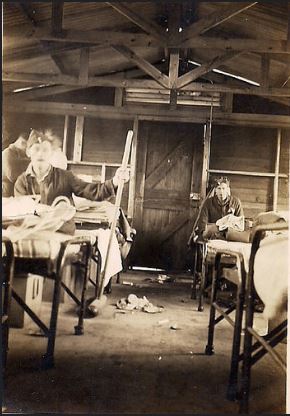
Three minutes before our calculated interception time, crew members identified, straight ahead and directly in course, a low black outline submerged but vaguely discernible through misty rain and rising swell. Our crew were convinced that it was our enemy target. They had doubted our ability to navigate successfully and reach our target. Now they cheered. But these brief glimpses of a long dark hull had led to our overconfidence. While the bomb aimer set up his bombing sights and levels, the crew were on look-out for hints of floating rescue dinghies, floats or whatever. In such a storm, it was apparent that no evidence of victims or of the Navy’s depth charge attack would be found that day.

Periodically a superstructure was revealed as funnel and mast or the coning tower of a submarine. We were already on approach. In deadly attack, the bomb aimer called “right, left, left, now steady. Hold on course. On target. Ready to drop depth charges,” when suddenly through misty cloud and rain came flashing signal lights giving the Royal Navy’s identification for that day!
As if in a dream, the attack was aborted and consciousness returned with shocked clarity. War is a simple matter of life or death, for one or the other. We replied by Aldis lamp and circled the destroyer without success. Finally we set course for home, content in the knowledge that every effort had been made to save lives of our enemies, if there had been survivors.
Attention was then focused on our own survival at the extreme limit of our flying range. Unbelievably, the wind had reversed direction. A full load of equipment was repacked for return to base with the depth charges. The cabin’s fabric covering, soggy and wet, increasingly began to hang down in strips, dripping water. We were awash. The new course was set by calculator strapped to the pilot’s knee and we began to climb in order to get above the cloud and rain. Soon it was obvious that we could not gain further height. To get above the cloud was impossible. Next the flying instruments began failing, beginning with the air speed. Next the artificial horizon collapsed. The altimeter was stuck at 33 000 feet. Even the turn and bank indicator failed. The situation was now dire and very dangerous. A crew member quickly produced a pocket watch suspended on a piece of string. He was applauded by the crew. We had a pendulum to show the flying attitude of the aircraft.

With no altimeter, the next danger was to avoid an unnoticeable slow descent and ultimate crash into the sea below. All the crew were alerted to open the windows in order to keep watch regardless of rain entering. So dense was the fog that it was only when we a few feet above sea level, did the hysterical shrieks of alarm come from the bomb aimer’s hatch – just in time.
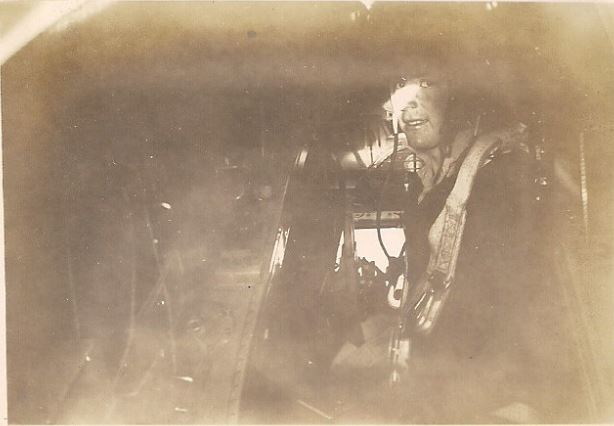
Looking out of an open window in pouring rain, with one eye on the sea below, and the other on the watch dangling on a string, as our only flying instrument, we flew, seemingly for hours. Our fuel situation was by now critical. The crew were again briefed for emergency action. They acted impressively when the first engine cut. Simultaneously we crossed the coastline. The undercarriage was lowered so smartly. As the second engine also ran out of petrol, it was now clear skies. But as it was too far to reach the aerodrome, our Anson was turned to port and landed on a south-westerly fairway, well bunkered, and facing toward the Humewood Golf Clubhouse. Our final danger was that the bumpy landing would cause a depth charge to explode.
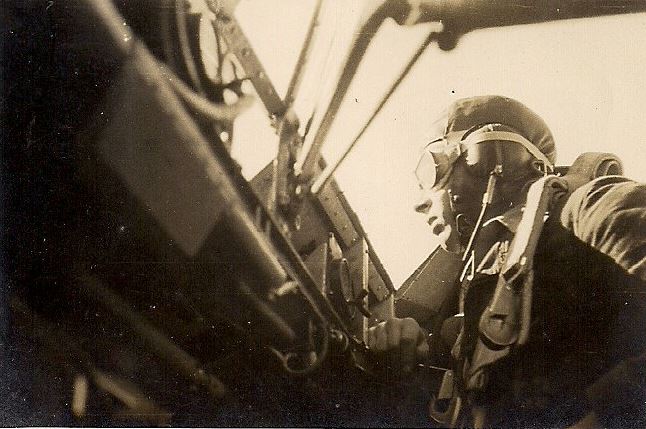
Denis Glendinning was later posted to 31 Squadron in Italy where he participated in operations over Europe flying Liberators.
The U-Boat Scourge

During WW2 the trade route between Europe and the Far East became vital to the Allies to enable merchant shipping to deliver goods, equipment and manpower to aid the war effort. The Cape Town to Freetown (Sierra Leone) convoy route was strategically important and the High Command of the German U-boats recognised the significance of the route and set out to attack and destroy the merchant vessels that used it.
The database records that 66 allied merchant vessels were attacked and destroyed by enemy submarines in or just outside of South African waters during WW2. German U-boats were responsible for 66 of these sinkings, Italian submarines sank4 ships and 1 vessel was sunk by a Japanese submarine. A single German submarine U-179 was lost during this period when it was attacked by HMS Active to the west of Saldanha Bay and was destroyed using depth charges.
By far the deadliest period of attacks came in October 1942 when 24 vessels were torpedoed off our coast. The most prolific U-boat was the U177 which destroyed 9 vessels between November 1942 and July 1943
Source
We will Remember Them by Colin J.J. Trader
The U-Boat Scourge on the SAHR Facebook page