
Takeover
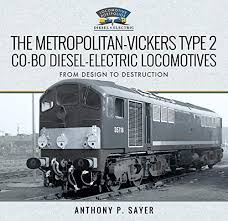
When Norman Crawford Smith was invited to join Metropolitan-Vickers in 1949 he could hardly believe his good luck. In his final year at U.C.T. many of his lectures were delivered by Prof. Goodlet. He was a brilliant man and an excellent teacher. When asked by a student how a particular operation was performed he would consider for a moment and then say that you could do it this way or that way “But at Metrovick we always did it this way”. (He had received much of his training and engineering experience at M-V) So he came to understand that as far as electrical engineering is concerned, Metro-Vick was the Rolls-Royce of the profession.
In this blog, Norman Crawford Smith opens a window on what life was like in the maelstrom of corporations where sometimes idiosyncratic management styles and behavior created resentment and anxiety.
Continue readingInternational Relationships

At the end of his “brainwashing tour” for the Company in 1963 Norman Crawford Smith and his wife departed on their own own “Grand Tour of Europe“. They left London in an Air France aircraft and, after a smooth and uneventful flight, landed at Orly Airport just outside Paris. Cleared through Customs, they chartered a taxi to take them to their hotel. It was a “first” for both of them so they sat like a pair of country bumpkins, soaking up the passing scene.
Norman Smith provides a melange of episodes that comprise and define an overseas trip. Partly the issues that arise are a consequence of misunderstanding of different cultures but they can also arise due to not having a lingua franca.
Continue readingWartime Memories
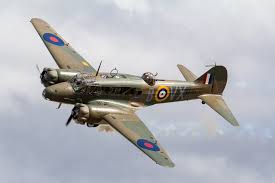
Having narrowly escaped death in London during the Blitz, Norman Smith and his family were homesick for the sunnier climes of the Union [South Africa]. Little did he foresee being attacked when embarking onto the ship home in Liverpool. This is their story as narrated by Norman Smith.
Main picture: Avro Anson
Continue readingJellicoe
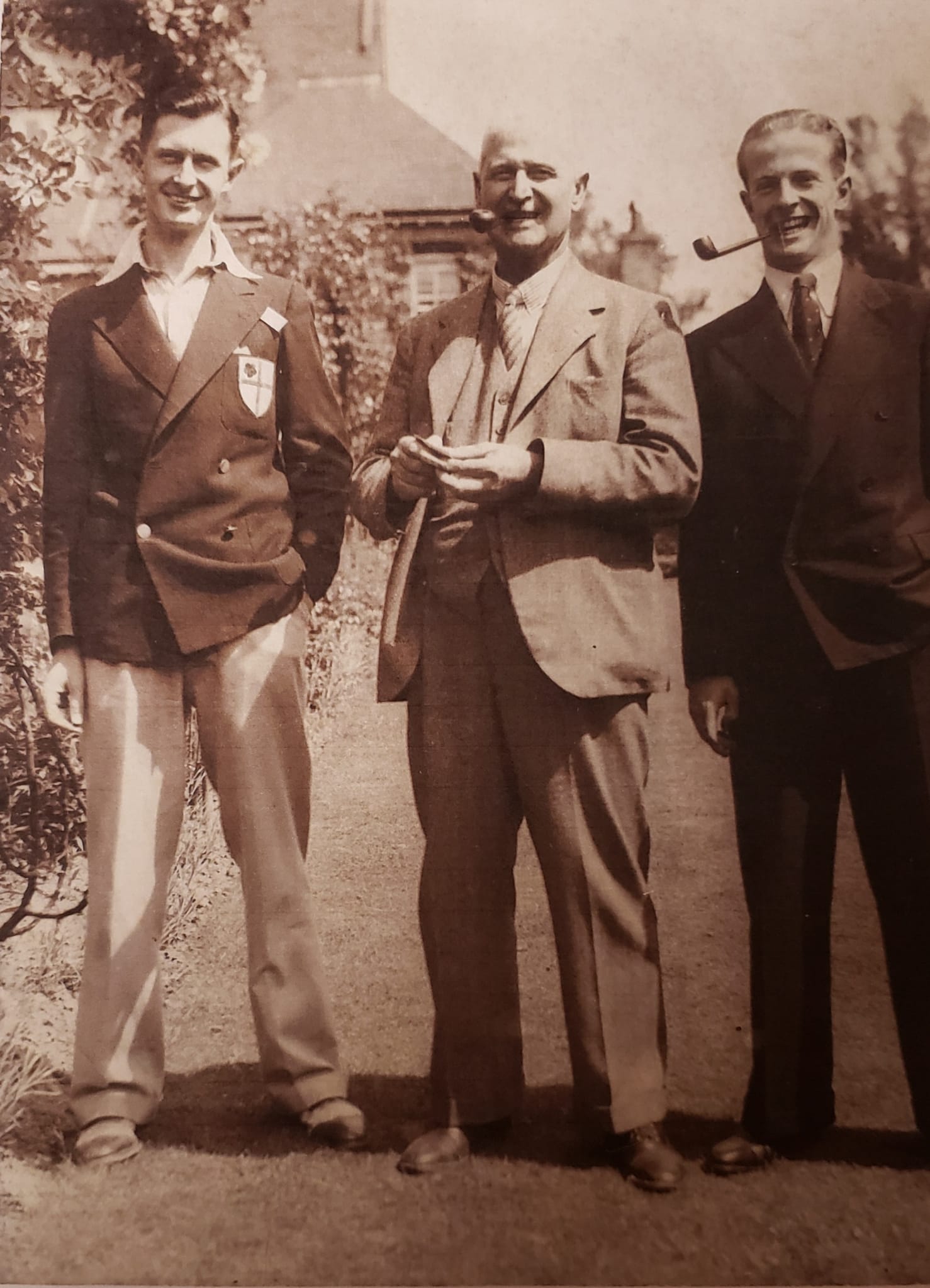
In this blog, Norman Smith describes the nautical and naval careers of his family. What none of them would anticipate would be the tragedy and trauma arising from this choice of hobby or career.
Main picture: HB Smith with Norman (left), and Matthew (right) at Bembridge, Isle of Wight c1937
Continue readingThe Forgotten Sketch
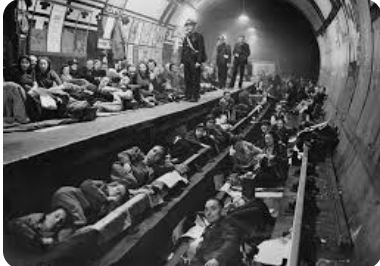
Norman was standing at his study window, gazing idly at the peaceful scene across the valley. On the far side, the airport slumbered in the dusk. A very thin mist hung over the runways. An aircraft on short final approach. its headlights probing the gloom. made an interesting picture. Suddenly his memory jerked back fifty-odd years….
Main picture: London during the Blitz
Continue readingPort Elizabeth of Yore: The Age of the Backyard Mechanic

I can vividly recall my father fixing, servicing and repairing his own vehicle, a Vauxhall Victor during the 1960s. He was probably the final tranche of backyard mechanics who would never admit to using a qualified mechanic to service or repair his vehicle. What enabled home repairs was the fact that the vehicles possessed no electronics as everything was mechanical. I recall in the ’60s bleeding my Beetle’s brakes and setting the engine’s timing. Today I battle to find the lever to open the bonnet!
In this blog Norman Smith recounts the idiosyncratic methods used by him to keep his Morris Ten on the road.
Main picture: Morris 10 of Norman Smith
We could at last afford a cheap second car. I sniffed around and eventually located a 1948 Morris Ten, re-sprayed in a fair imitation of “British Racing Green” and with passable seat covers. At £275 and with 33000 miles on the “clock” it seemed reasonable, so I took it for a test run. It battled manfully in 2nd gear up Albany Road (gradient about l in 10) while the salesman assured me that “She just needs to warm up”. On the level along Cape Road, with the accelerator flat on the floor she managed to get up to just over 30 miles per hour – the warming-up period seemed excessive. I said that although my wife was not a hell-driver she would need something a little more vigorous. He suggested that we stop and check to see if there was anything wrong.
With the bonnet open, we regarded the engine. I observed one sparking-plug lead hanging dismally down alongside the engine- and waited for him to re-unite it with its colleague. A nasty little imp on my shoulder prevented me from reaching out to do the job myself. He muttered something about not understanding, and then I suggested that we return to the showroom and forget about the sad machine.
Back in the showroom he excused himself for a moment. He returned with a hopeful look on his face and asked whether £250 would interest me. We agreed on the new price and in due course I took delivery and headed for home with my lame duck. Once clear of the premises, I stopped and opened the bonnet. Seconds later, with the offending lead back on the plug top we set off up Albany Road as if Beelzebub were determined to demand his ransom from me.

He got his own back a couple of years later when Sheila rang me at work to ask for help. Her car started OK but wouldn’t move an inch. Inspection revealed that one of the half-shafts in the back axle had sheared as a result of historical over-exertion. It also became apparent from the excessive “play” in the crown-wheel and pinion that the mileage reflected on the speedometer could have been accurate if one accepted that it was “second time round”.
After many thousands of miles (in those days kilometres were just funny things beloved by queer types like Continentals!) she began to burn unacceptable quantities of oil. At a little over 40 years old, I had no qualms about replacing the piston rings. I’ll draw a veil over the details of the stripping-down process. Experience in Electrical Engineering proved a poor substitute for a motor mechanic. However, the new rings having been purchased, they proved to be a few microns too large for the bores. Many laborious hours with a carborundum file later reduced their diameter just enough to admit them to the bores.
As I re-assembled the parts it became apparent that I might have a fairly tight engine on my hands, but with hope and liberal quantities of colloidal graphited oil I pressed on and completed the assembly. When I tried to turn the engine with the starting handle it wouldn’t budge. I tried again with Sheila operating the starter. Solid as a rock! We pushed her out into the road and coupled up a tow-rope from the Vauxhall, which Sheila drove slowly down Water Road. When I tried to engage the clutch in top gear there was a fearsome juddering but no sign of the engine turning. I had disconnected the ignition because the last thing we needed at this juncture was heat on those pistons, and now I played my last card. I operated the starter while engaging the clutch. It worked! I let the Vauxhall drag the re-vitalised Lena for a couple of hundred yards down the road, stopped and re-connected the ignition and switched on. Praise be – she started! She never again burnt a drop of oil up to the day we parted.
Leapin’ Lena had many endearing characteristics and the kids loved her. ( In fact, when we replaced her some years later in 1960 with a spanking new Vauxhall Victor station wagon there were many dewy eyes and not a little grizzling to bid her farewell.) One of her idiosyncrasies was her movement along roads with a little waviness. She adopted an up-and down motion combined with a charming roll. This was due to only one shock-absorber functioning.. The other three had long since given up the unequal struggle against anno domini and we couldn’t afford to replace them.
On another occasion I had to drive out to Lovemore Park to retrieve Sheila. She drove the Vauxhall back to Walmer while I struggled after her with Lena. The problem was a broken throttle linkage. I replaced it with a temporary jury-rig consisting of strings to control throttle opening and closing, not unlike a puppeteer’s controller, with the strings passing out through a gap in the bonnet and in through the driver’s window. This arrangement called for some very precise anticipation of traffic situations! Needless to say, proper repairs were conducted without delay.
One could continue ad infinitum, as on the occasion when ” the chimney went on fire” – this was after the great piston-ring replacement, when the running-in process was complete. Driving briskly down the Schoenies road in the dusk I became aware of a strange shower of sparks appearing in the rear-view mirror. It transpired that in her oil-guzzling days much of the oil that remained unburnt simply passed out of the engine and was deposited in the exhaust system. On this interesting evening, with my enthusiasm pushing the revs up a bit, the resulting heat set fire to the oily deposits!
As already mentioned, the children briefly mourned her passing but I think Sheila was not quite so unhappy. Our finances had improved somewhat by 1960 and I was able to negotiate a satisfactory deal with the salesman at Williams Hunt regarding the Victor. When he offered me £50, I said sorrowfully “£50? My dear chap, you’re looking at a dying breed. They don’t make them like this any more!”. With a sardonic smile, he said “L75?”. I said “Done!”.
So ended my relationship with one of the most interesting cars I have ever owned. But now, in 1999, much of what she taught me is useless. Everything under the bonnet is either sealed or incomprehensible. Verily, they don’t “make them like that any more”. Perhaps it’s just as well!
Note:
The Morris was called Lea for short. Harold named all of his cars with girls’ names). This one was Leaping Lena because of her rather less than smooth drive! I think Dad chose Lena for alliteration with the L in leaping. He enjoyed playing with language! Also the name would have to have 2 syllables to balance with ‘Leaping. X
Source:
Article entitled Leapin’ Lena by Norman Smith
Port Elizabeth of Yore: George William Smith -Architect and Surveyor

George William Smith was the doyen of local architects and Government Surveyors, and a senior partner in the well-known firm of Smith Sons and Dewar.
Main picture: George William Smith
Continue readingPort Elizabeth of Yore: When Mill Park was in the Country

In a series of articles, Norman Smith, the son of HB Smith, records events of his life in Port Elizabeth. In this one, he records what life was like in early Mill Park shortly after it became the suburb in the country. This is a lightly redacted copy of that article.
Main picture: 18 Woodeville Avenue, Mill Park
Continue readingPort Elizabeth of Yore: HB Smith of No. 22 Bird Street

Norman Smith, the son of Harold Bayldon Smith, a well-known local architect and surveyor, recalls the houses in which he lived. In this blog he describes living in No. 22 Bird Street. In doing so, he provides us with a peep into what life in Port Elizabeth was like in that era.
Main picture: No 22 Bird Street
Continue reading