Port Elizabeth of Yore: Hanover House in Bird Street

Lots 13 & 14, 34 Bird Street, originally formed part of the Hospital Lands. In 1880, this house was constructed for George Wedekind  and soon afterwards in 1883, he sold it to H.W. Dalldorf, who named it “Hanover House”.  In 1948, the M.O.T.H purchased the building and only sold it circa 2005 to old Mutual which uses it as offices.

Main picture: Hanover House in Bird Street

Continue reading

Port Elizabeth of Yore: Where would pilots from 42 Air School Celebrate?

During WW2, South Africa was requested to train Allied aircrew in the Union. In terms of the JATS – the Joint Air Training Scheme – South Africa would train 33,347 aircrew which included 12,221 SAAF personnel. Amongst the 37 South African based air schools, No. 42 was based in Port Elizabeth, south of the main civilian airport.

Included amongst the 21,126 foreigners who were trained in South Africa over the 5 years of WW2, was one who came from Tasmania in Australia, Pierce Joseph Keating.

Main picture: Sergeant PJ Keating

Continue reading

What happened to the Union Defence Force after 1948?

1948 was a defining moment in South Africa’s history. The advent of National Party rule on the 26th May 1948 and the defeat of the United Party under the venerable leader, Jan Smuts, who had served with distinction with the Boer forces in the Second Anglo-Boer War (1899 – 1902), would open a veritable Pandora’s Box of ill-considered measures such as the segregation of the Union into tribes.

Most notable was the effect on the Union Defence Force which had fought with great distinction against the Nazi forces arrayed against the Allied nations. What they did to this once brave and proud force in the name of Afrikaner Nationalism was a far cry from what one expects of nation building.

Main picture: Frans Christiaan Erasmus, National Party politician and Minister of Defence from June 1948 to 1959, who was at the forefront of efforts to remove English speakers members of the Union Defence Force

Continue reading

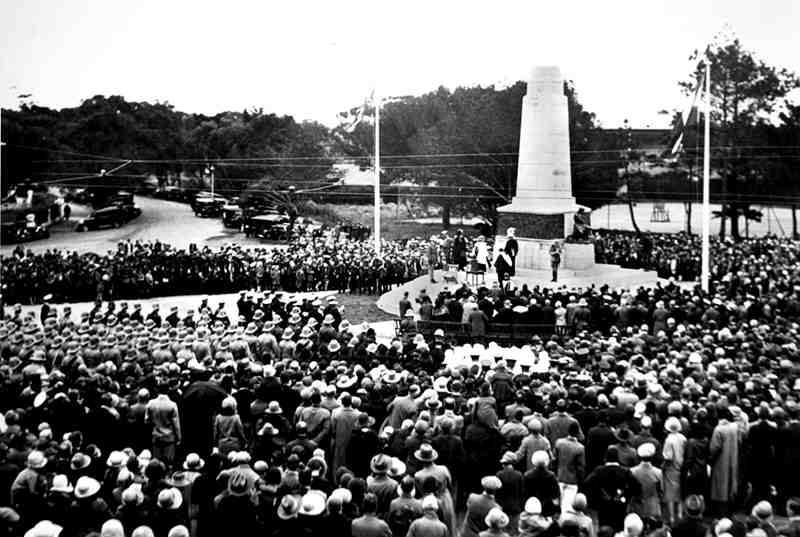
Cenotaph: A Memorial to The Missing and The Dead

I’ve heard of the word cenotaph and was aware that one existed at the corner of Rink Street and Park Drive.  Apart from merely noting its presence whilst driving hither and thither to Varsity, I never pondered the meaning of the word.  The odd ph letter grouping gives the hint that it has a Greek origin but that was about as far my thinking went.  After all, there were far more important things to ponder as a young man.  The truth is more revealing or shocking or startling, depending on how you look at it.  

Main picture: Unveiling of the Cenotaph on the 10th November 1929

Continue reading

Port Elizabeth of Yore: When Mohair was a Major Industry

Port Elizabeth was at the centre of the burgeoning mohair industry in the 1800s. It still is except that the industry is no longer flourishing. Before the motor vehicle assembly industry was established in Port Elizabeth during the 1920s, wool as well as mohair were the mainstays of the local economy.

This is the long-forgotten story of the rise of this industry off the back of the Angora goat and its fall in the twentieth century.

Main picture:  One of the last batches of Angoras imported from Turkey by Adolph Mosenthals & Co. in 1895. Mr.& Mrs. W. Mosenthal are seated in the buggy with Mr. H. Goldschmidt standing in the background. In the foreground are three Turkish goat handlers who accompanied the animals on the ship.

Continue reading

Port Elizabeth of Yore: A Family’s History through a Writing Desk

This desk was more than a piece of inanimate wood reposed in the study of the house “Swiss Villa”, situated at number 20 Cape Road. In an age prior to instant communication via the phone, this writing desk was the connection between the far-flung family – the Rose-Innes, the Fehrsen’s and the Frielinghaus’ – whether in German East Africa during WW1 or Sidi Rezegh in North Africa during WW2.

Through this central hub or focal point, Harry Rose-Innes relates the family history as well as the secret of the piece of furniture. Written in 1987, the story was entitled “The Writing Desk”.

Main picture:  Tram in Cape Road in the 1920s

Continue reading

Port Elizabeth of Yore: An Act of Kindness in a Heartless War

This is the story of a woman who, without consideration of the consequences, assisted Afrikaner women, the “enemy”, who were incarcerated in the concentration camp at Kemsley Park, near the top of Mount Round during the Boer War.

This is an extract of the account by Harry William Rose-Innes of “Miemie” Frielinghaus’ actions entitled “The Face of Destiny”. This is blog is faithful to Rose-Innes original account except that irrelevant information has been omitted.

Main picture: Concentration Camp Memorial in Lennox Road, Glendinningvale

Continue reading

Port Elizabeth of Yore: The Tin Hat on the Humewood Promenade

What is the significance of this roof structure which looks like a soldier’s helmet? Does it have any connection  to the organisation known as the MOTHS – Memorable Order of Tin Hats? This Promenade Dome is commonly known as “The Tin Hat” from its resemblance to a First World War helmet but could not have had any connection to the Moth order as it was only founded in 1927 whereas this structure was built in 1923.

Main picture: Humewood promenade in 1909

Continue reading