

My first reaction was incredulity. It must be a scam against a profitable company. Many people have voiced similar concerns. To say that I was dumbfounded would be an understatement. Knowing Nigeria’s reputation as the epicentre of scams such as the notorious 419 extortion racket, the imposition of a fine amounting USD 5.2 billion is out of all proportion to the crime committed. This nightmare scenario for MTN would not be out of character – morally and financially – for a bankrupt government.
The financial scam
By linking the imposition of the fine to the recent kidnapping of a senior government official by Boko Haram, the explanation was designed to provide a ring of plausibility. This is a common political stratagem to deflect attention from the real reason for an action being taken. Despite MTN pleading mea culpa to the transgression, the disparity between crime and punishment is extortion in its most pernicious modern form.
The quantum of the fine is such that it is an existential threat to MTN’s continued existence. Whether this is a game of bluff where the Nigerian government desires to appropriate a large slice of MTN’s earnings for the next few years or whether it is another way to plug the hole in Nigeria’s finances is neither here nor there. Whatever the motives are, it is double-edged sword. In the short term that might well be paid most of the amount – now reduced by 25% – but the message that it conveys to all potential foreign investors is to avoid Nigeria like the plague.
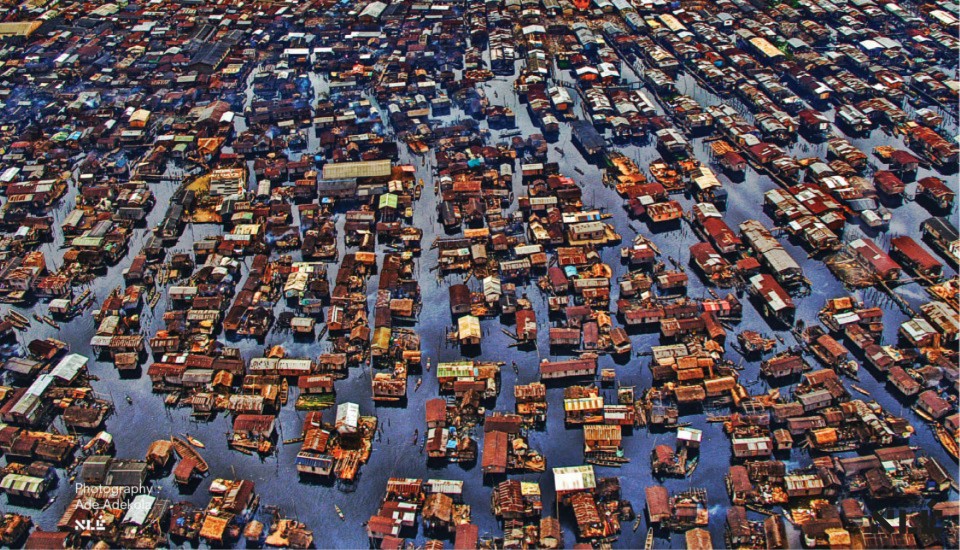
Lagos’s water communities
That is one scenario.
Here is another.
Anti-Corruption / Good governance
Ever since Nigeria’s independence from Britain on 1st October 1960, corruption has become endemic. The fact that for most of its time as an independent state it has been governed by the military has aided and abetted that tendency.
Under public pressure, the Obasanjo government created a corruption fighting body known as the E&FCC – the Economic and Financial Crimes Commission – to address this issue. This Agency was then subverted by the Obasanjo Regime to persecute the enemies of the regime. By doing so the image of the agency was tarnished as it was widely – and probably correctly – viewed as the handmaiden of Obasanjo.
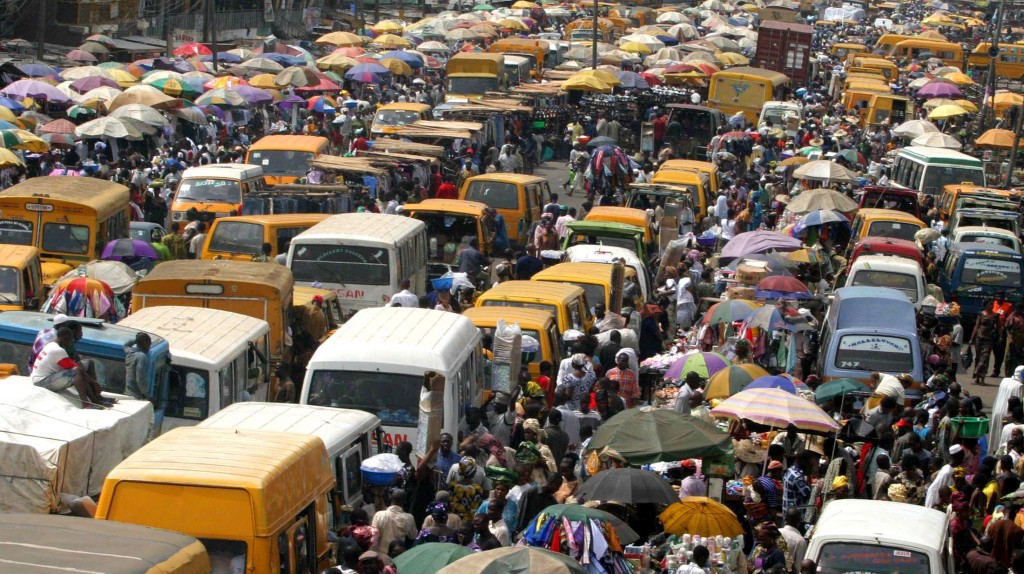
Lagos’s crowded streets teeming with people
President Goodluck Jonathan did little to ameliorate that situation. First, but not necessarily foremost, was his presupposition that incarcerating offenders would not assist in combating corruption. By doing so it clearly indicated that the commission of fraudulent activities was without consequences apart from having to repay the looted money. Impunity at its finest. By all accounts, the logic for this decision arose due to the fact that Jonathan’s closest advisors were heavily implicated in criminal activity.
The net effect was that the E&FCC was perceived as being a toothless bulldog.
Enter Buhari from the left stage
Like its predecessors, the new administration of the 72 year old President Muhammadu Buhari, announced that they would tackle the scourge of corruption with renewed vigour.
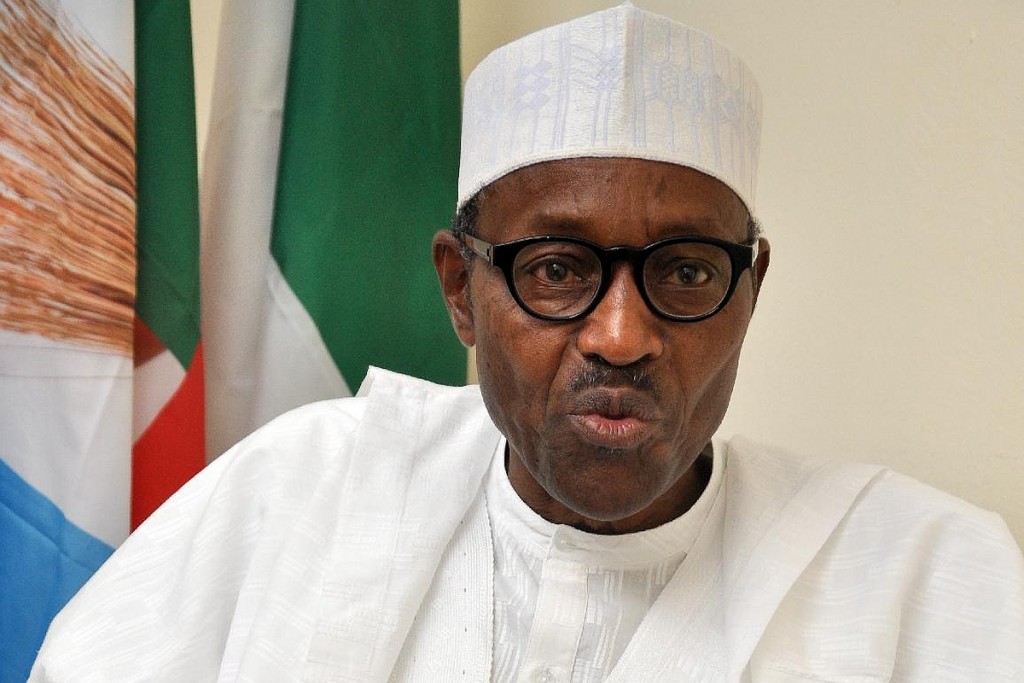
Muhammadu Buhari
I did not hold my breath!
Another politician.
Another promise.
Another platitude.
Well so far so good but is it is early days as any pundit will attest.
But the signs are promising. Unlike South Africa’s bloated Cabinet of 42 ministers, he has only appointed five. And he restricted their perks! I would love to hear that in South Africa. But politicians have this tiresome habit of succumbing to the trappings of office.
So far Buhari has not. Herein lies a glimmer of hope.
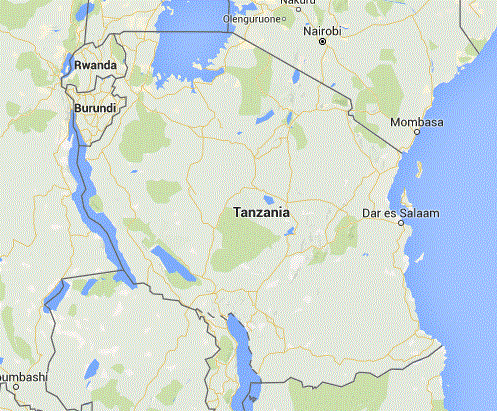
Tanzania as exemplar
So far another recently appointed African President with staunch anti-corruption credentials has been flying under the radar; John Magufuli of Tanzania.
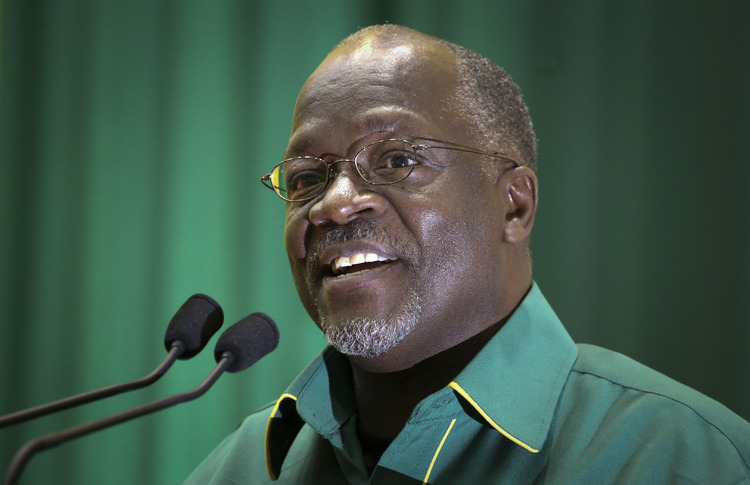
Magufuli
It is a sure sign that Magufuli means business when the sobriquet awarded when he was Minister of Public Works was Bulldozer. Errant, corrupt and indolent officials were quickly shown the door. His reputation has preceded himself.
Peter Fabricius is a recent article in the Star newspaper catalogues some of the measures that Magufuri had adopted during this first three weeks in office. [He was only elected about a month ago.] Most I daresay, would be viewed with befuddlement by the previous corrupt administration of Jakaya Kikwete.
According to Fabricius he:
- Cancelled the celebration of Independence Day on 9th December diverting the money that would have been spent on it to street cleaning as part of a National Day of Cleanliness
- After visiting Muhimbili National Hospital and after seeing the awful state that it was in – including many patients being forced to sleep on the floor or share beds – he diverted 200 million shillings budgeted for “parliamentary parties” to buying 300 hospital beds
- He also replaced the Governing Board [of the hospital] and he slashed the spending on his inauguration from $100 000 [R1.4 m] to $7 000 and gave the difference to the hospital
- Just three days into office, he announced a ban on foreign travel by ministers and officials saying that diplomats already in place could do the work instead
- He has banned all first class and business class travel for government officials except for the President, vice-President and Prime Minister
- Instead of flying, he drove the 600kms from Dar-es-Salam to the political capital Dodoma to open parliament
- He told Parliamentary Leaders that he would continue to slash public spending, fight corruption and enhance accountability and public service
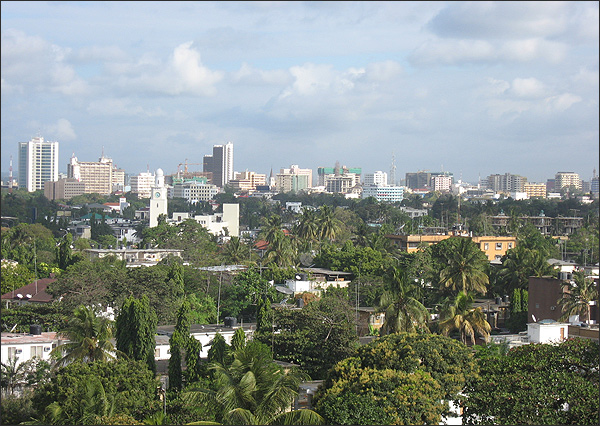
Dar-es-Salam
By all accounts, Magufuri has made the eradication of corruption as the first order of business. Instead of the usual platitudes about being tough on corruption and malfeasance, Magufuri has instituted concrete measures which are highlighted a slew of public examples that he has ordered. He has walked the talk. In stark contrast to other African leaders he has not followed the Nigerian example and established a toothless corruption commission. This would be a meaningless farce and the voters are not so stupid to be unaware of it. In Nigeria no prominent high profile figures are netted in their quest for clean government. Instead it is the minnows, the sprats, the gofers which take the fall.
Furthermore by publicly announcing these measures, he has displayed a sense of conviction and not merely regurgitated some fanciful electioneering vote-catching slogan.
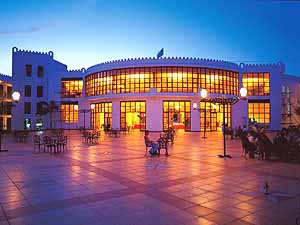
The Golden Tulip in Dar-es-Salam
My hope
Maybe the Pollyanna in me is too sanguine, but just maybe Buhari could follow Magufuli’s lead and both could become the embodiment of the new incorruptible African leader than Africa so desperately requires.
Lastly Buhari should reflect on the gargantuan fine imposed on MTN. Nobody is disputing the need for some form of sanction for their blatant breach of their regulatory obligations, but a fine of that magnitude is grotesque and will surely ultimately harm the economic prospects of Nigeria.
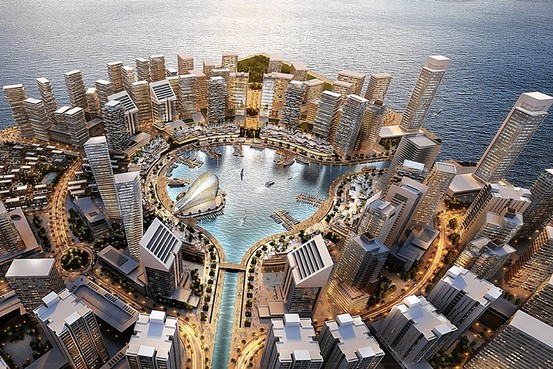
Lagos
Like in acts of bribery & corruption, the ultimate sufferer is the average person and not the rich.
For their short term gain, the Nigerians will surely reap the whirlwind.
Source: Article in the Star entitled Beacon of Hope amid Gloom of Africa shines in Tanzania by Peter Fabricius.