Note: This is not one of my usual commentaries on life but rather a short story which was written about 25 years ago
The pain and sorrow of unrequited love – even 45 years later
“Bye Fred. See you tomorrow night.”
“Yeah, Tom, go well!” the barman replied.
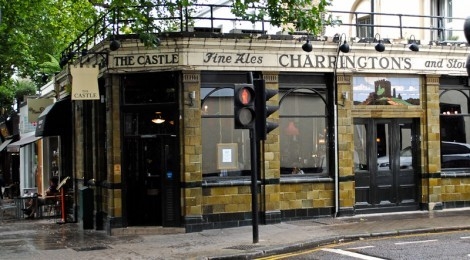
Tom staggered uneasily out on his feet. It was exactly ten thirty. It had to be, as Tom was a creature of habit. Every night he would come into the Rose and Quail – as he had done for the last forty-five years – straight from work, order an ale, have supper at seven sharp and leave promptly at 22h30. One could set one’s watch by Tom’s actions.

Lately he had seemed less talkative than normal. Not that he was the talkative type, but he certainly seemed troubled and a touch maudlin, and almost morose. Fred, the barman, had tried coaxing the problem out of him, but all he got for his efforts were disjointed unintelligible sentences like, “What am I supposed to do now?” or more troubling, “Is this all there is to life?” Nothing made any sense. Nothing at all.
When Tom did talk, it was about the one and only topic that he spoke about, and his favourite – the Second World War. Over the years, every patron of the Rose and Quail had had to endure the tedious details of his involvement in the war, right from the landing in Normandy, to the end of the war in Germany. The first telling was slightly interesting, mainly from a historical perspective, but by the tenth or twentieth, it was boring, to put it mildly. No matter how little interest the listener showed, Tom would nevertheless gaily regale them with his no doubt vital, but insignificant part, in defeating the German war machine.

Unlike the other combatants whose experiences had faded like old magenta photographs, Tom’s memories of the war were still sharp and vivid – as if they had happened yesterday. The daily recounting had helped to etch them deep into his mind, like an indelible imprint.
Just when everybody thought that there was definitely nothing more that Tom could add to his war stories, he suddenly added the word Maggie. As far as everybody knew, Tom’s life consisted of work, the pub and the Second World War. No mention had ever been made of a wife, a girlfriend, a lover or in fact a female of whatever shape or form. In fact, nothing was known of whether he had any immediate family or not. Apart from the war, Tom’s life was a blank. The war was Tom’s life.

From the initial cryptic statement, Tom gradually opened up over the weeks and months. First that she had been his girlfriend, and later that they had planned to get married after the war. After being based in the UK since his call-up in 1940, his chance for action suddenly arose in June 1944. Not only was he going to be part of the Allied invasion of Europe, but he was also going to be amongst the vanguard. Even though his role as an ordinary soldier was a limited one, Tom felt honoured to have been selected. In reality his unit had been selected and not him, but to Tom this didn’t count. All that mattered was that he would be landing with the first wave of troops.
The landing on the beach at Normandy was a chaotic, nerve-wracking experience. The whole beachfront was swept by German cannon fire as the enemy guns were excellently sited. They had a panoramic view of the beach below, and with it, an unobstructed field of fire. In spite of continuous fighter and bomber attacks, the guns were still intact 12 hours later. After the initial shock of seeing his friends being killed, he received another shock. Maggie had eloped with an American pilot.

Throughout the war he bore a grudge. To him all American soldiers were not worthy as Allies and were subjected to his ire whenever he encountered them. As far as he was concerned, no Americans could be trusted. When one’s back was turned, they would take advantage of the situation. On his return to the UK after the war, he spent all his waking hours cajoling her family to give him her address in America. In desperation they relented and did so. He immediately wrote to her and begged her to come back to him. Before she had a chance to receive the first one, he had written the second. Eventually he received a reply. It was terse and to the point. She was happily married to William and would not be returning to England. Not that her rejection discouraged him. In fact, it had the opposite effect; it spurred him on. His letters became more strident and eventually when he sensed that she would not change her mind, he threatened to commit suicide. Up until that point he had at least received a number of letters in reply, even if they were a rejection. But now there was nothing. Her lack of response did not deter him. Every Monday morning, Tom would religiously post her a letter telling her what his week had been like. For forty five years he sent her a weekly letter and for forty five years they were returned “Address Unknown.”

Then suddenly after all those years, she had replied. His heart skipped a beat. His faith had been vindicated. Like a little schoolboy he tore open the letter not daring what to think. He quickly scanned it. After a brief hello, he came to the crux of the letter. Maggie was dying of cancer and had six months to live. Tom was shattered. Instead of a possible reunion, and an apology for not writing sooner, what he did receive instead was a brief matter-of-fact note, blandly stating the facts. After the initial quick read, he reread it again and again, each time trying to find some hope in every word, but there was none. Nothing but the bald facts. He couldn’t believe it. After a lifetime spent dreaming of being together with his Maggie, all he received was a final goodbye, the ultimate heartless rejection.

Poor Tom could not sleep that night. All this thoughts were of a lifetime of schemes and dreams now unsentimentally swept away by this one letter. Tom knew that he had to see her, even if it was for the last time, but he didn’t know how. The first problem was that he didn’t have the money to travel to America. Apart from that he was scared, petrified of the unknown – leaving Birmingham, travelling to London, flying to America. It was all so overwhelming, beyond his limited world of work, home and the pub. The prospect made his moods even gloomier and he became depressed.
Apart from his journeys during WW2, he had lived in the same council house, had the same job and gone to the same pub for his whole life. These were his life and he knew nothing else but them. What terrified him even more was that Maggie’s letter revealed a different world, one that he couldn’t comprehend. It was beyond the confines of his parochial isolated little existence. Her husband was a successful businessman, her eldest son a doctor, while her youngest son was studying engineering at Harvard. The contrast between their lifestyles was like chalk and cheese. Tom just couldn’t imagine Maggie in this world. It wasn’t his Maggie, his little sweetheart. No wonder Maggie had not returned his letters! Whereas he had promised her the moon, what could he have given her? In reality nothing but grinding poverty and his love.

When Tom’s plight became generally known at the pub, one of the sympathetic patrons broke the story to the local newspaper and radio station. The story of a man pining away his whole lifetime for his loved one captured the imagination of the local community. In his own way, Tom became a minor celebrity. Sufficient money was quickly raised to fly him to America to see his beloved Maggie before it was too late. What gave the story an extra human-interest angle was his total inability to undertake the journey himself. As part of the assistance, he was thoroughly coached on all aspects of what to do. Amongst them were how to catch a plane, how and what to eat in a restaurant, and many others.
Finally Tom was off. By now Maggie was in the terminal stage and sinking fast. As her husband, William John Hardy, the second, could no longer cope with her at home, Maggie was taken to the local hospital. Her final days would be spent at the Methodist Memorial hospital in Maine.

Tom was met at the John F. Kennedy airport in New York and driven by William himself in his Mercedes 450 SLC, directly through to see Maggie. En route, William gaily jabbered away about his new plant in Sacramento, California, a new agency agreement with the Japanese, and the imminent partnership with a German consortium. All the details were above Tom – the IPO, the tax implications, and the SEC requirements for listing on the New York Stock Exchange. William was either oblivious to the fact that Tom didn’t understand a word that he was saying, or else it was as if he was rehearsing his speech for the forthcoming stockholders meeting.
From Tom’s point of view, it was fortunate that William was the type of person that wouldn’t let anybody get a word in edgeways. As the words went over his head, Tom just glumly nodded his head in agreement while William kept up his monologue. What Tom couldn’t understand was that not once did William even mention Maggie. It was as if she was a non-entity, and unimportant in his life. Not a spark of sorrow, regret, or unhappiness was shown, even with her on her deathbed. To Tom this was most puzzling.

As William had some business to attend to, he had arranged for Tom to be with Maggie for one hour, and then a chauffeur would pick him up and drive him to his hotel. Thereafter a supper in a posh five-star hotel had been arranged.
Tom was apprehensive as the Mercedes swept through the hospital gates. The speech, which he had rehearsed for 45 years before falling asleep, was clearly inappropriate now under the circumstances. He had planned to tell her how much he still loved her after all these years, that he would forgive her for eloping with William, and that they should start a new life together.
Tom was in turmoil. A lifetime of hopes and dreams were slowly being crumpled like a used tissue the further the journey progressed. His life and Maggie’s life were, to be brutally honest, world’s apart, hers a fairytale success and his a failure. He saw that clearly now. He had nothing to show for his 68 years. Not a thing. Nothing but hopes, dreams and plans for him and Maggie. A tear slowly slid down his cheek. It was all Maggie’s fault. If she had been there, his life would have been different. Why did she have to run off with a foreigner? What was wrong with him and Britain?

He walked into the hospital. A huge expanse of people and things and noise greeted him. He was overwhelmed. How was he going to find his Maggie? People scurried past him, not noticing the timid, uncertain man standing there. Each had a purpose, a mission. Whether to attend to a patient or to visit a sick relation, they knew what they wanted and they did it. Finally he plucked up the courage and went across to reception. The neat, efficient woman dressed in white, tapped at the keyboard. Yes, a Mrs. Hardy had been booked in and, by the way she was in the hospice as there was nothing they could do for her, so efficient, so cold and so clinical. To them Maggie wasn’t a person with feelings and emotions, but a number.
Tom stood uncertainly in front of the elevator. He pressed the button, but when the lift arrived and the door opened, he was too scared to climb in. He patiently waited for it to close then wandered around to find the stairs. He didn’t want to show his ignorance on how to use one of these contraptions, as nobody else seemed to have the same problem. They just knew what to do, and where to go – all the time. So he set off. He trudged around for ten minutes before he found the stairs, then slowly climbed up – step by slow step, up all five floors.
He stood silently at the foot of her bed but Maggie appeared to be asleep. It was not the young 18-year-old with sparkling eyes and long auburn hair that he remembered, but a frail, bald, old lady lying crumpled on the bed. Tom’s mental picture of Maggie was still that of the 45-year-old photograph at his bedside, the photograph that he took just before he left for war, the photograph that he had kissed goodnight to for all these years. This wasn’t the woman that he had come so far to meet. This wasn’t his Maggie, but a stranger, somebody that he didn’t know.
As he turned around and left the room, he didn’t hear her softly call out his name. He went to the waiting room and sat slumped with his head in his hands. The tears rolled down his checks and into his cupped hands, slowly filling them up. Suddenly he didn’t want to be in America anymore. He wanted to be in his familiar environment, where he felt safe and secure in his little dream world.

A nurse tapped him on the shoulder. Startled by the intrusion, he sat bolt upright.
“Mrs. Hardy would like to speak to you Tom!” she said.
Torn between his dreams and the real Maggie lying in the bed, he was undecided.
“Please come and see her. She needs you. She’s been waiting patiently for you to arrive. We wouldn’t want to disappoint her, would we? She’s told me all about you. How you were engaged to be married. Everything! She needs you now. She doesn’t have long to live.”
Tom buried his head in his hands and wept uncontrollably again.
Finally he spoke. “If Maggie wants me,” he sobbed, “I’ll see her,” as he slowly rose and ambled with shoulders bent towards her ward.
The nurse put her arm around his and led him across. He entered the ward. Without looking at her face, he sat down beside her, the tears still streaming down his face. When he finally looked up, he saw that Maggie was crying too. She unsteadily stretched her trembling hand across and took his hand in hers.

“Tom, will you forgive me,” she sobbed in a thin weak voice.
“I will. It’s difficult. The pain, the hopes, the d……. All gone now. All gone!”
She squeezed his hand. “I know.”
“NO, you don’t,” he shot back, “You’ll never know! I loved you so much. More than you will ever know. Maybe I loved you too much. I never should have. I know it now. But it’s too late. My whole life, my whole goddamn life wasted on what? Hopes and dreams. Nothing to show for it. No wife to love me in my old age, no children or grandchildren to worry about. Nothing!”
“What can I say Tom. I’m sorry. I told you not to write, to forget about me, to get on with your life. You must do that now. Mine’s nearly over, but yours……. Enjoy it, forget about me. I saw you standing there looking at me. You were shocked. I’m no longer the young girl that you remember. Losing my hair from the treatment didn’t help. I purposely took my wig off to shock you, to show you that I am not the same Maggie that you remember.”

Tom sat there silently. She was right, but he had at least expected something different but he didn’t know what. His fantasies clashed with the realities. She had apologised but it wasn’t heart-felt or sincere. Nor was there true remorse.
Sensing his pain and hurt, she gently pulled him closer.
“Just so that you know,” she said in a soft quivering voice, “I always wondered what it would have been like living with you. I have everything that I could wish for, a great house, two lovely boys, but there is one thing that I don’t have – love. William is a great provider, but his work has always come first, second and third in his life, then the kids. Not me – ever!”
A man in a smart grey suit gently tapped Tom on the shoulder. “Excuse me Sir! Ready when you are. I’ll be waiting outside.”

Without a word, Tom got up and followed the man out. Behind him he heard the raspy words, “Goodbye Tom. Thanks for coming,” but Tom didn’t look around. He kept on going – out of the ward, down the passage and out of the hospital.
As the limousine pulled out of the parking lot, the chauffeur turned to Tom and said, “Would you like to see the Statue of Liberty or the Empire State Building before I take you to your hotel?”
“No thanks. I would like to go straight to the airport.”
“Oh!” the chauffeur said in surprise, “Anything you want Sir!”
“I would like to fly to England on the first available flight.”

Tom can still be seen in the Rose and Quail every night. But instead of recounting his war stories as he used to do, he now stares blankly at the wall while sipping his beer. Instead of the clockwork precision of his movements, he is erratic now. Sometimes he will be the first patron in at opening time and the last one out at closing time. Nobody ever tries to speak to Tom anymore, as he never utters a word, apart from ordering another ale. The former spark in his eyes is now gone, replaced by a dull blank unseeing stare.
Maggie died within ten minutes of Tom leaving her ward. To this day the nurses maintain that Maggie should have been dead weeks before Tom arrived. According to them, Maggie only held on sufficiently long enough to see Tom. Then she gave up the struggle, at peace with herself and the world.

But there was something that Tom could never understand; he never spoke about it, and never told a soul. Every one of those letters that he had sent to Maggie had been opened some quite crudely and all had been pasted back together again. That was not all. Every one had been inscribed on the face of the letter “Return to Sender, Address Unknown” in Maggie’s neat rounded handwriting!


