
Of all the areas comprising Port Elizabeth, none has experienced such a demographic upheaval over 350 years as this locality. Arising not from some colonial diktat but for the most part these movements comprise the almost voluntary but clumsy rotation and migration of population groups each seeking their own futures. These clans comprised three disparate population groups; the khoikhoi the original inhabitants of this area, secondly the trekboere seeking their independence from the chokehold of the VOC and lastly came the English settlers.
This blog will briefly touch on the first two groups; the khoikhoi and the proto Afrikaner in the disguise of a Trekboer. Then the spotlight will be shone on the third and final cohort of residents of Buffelsfontein and the Clark family in particular.
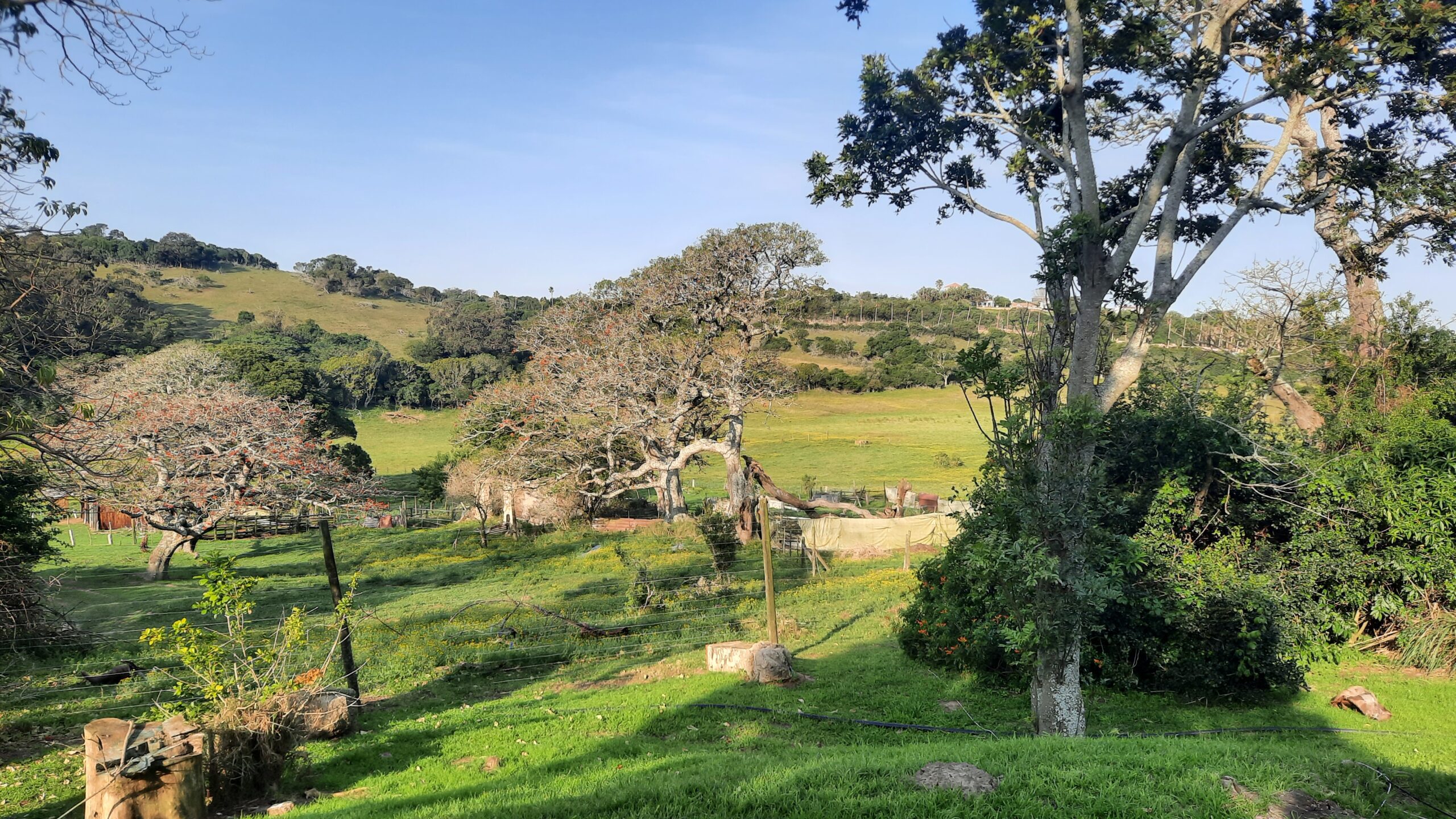
Main picture: View of Buffelsfontein from the main house
The khoikhoi
Until approximately 1750, the masters of this land were the Khoikhoi whose territory stretched along the coast to the Outeniqua Mountains. From the west another race plodded toward them. In the sporadic encounters with this white race, they were soon on the backfoot. These were the Trekboere, a tough non-compromising people of pallid complexion. Their modus operandi was to select a new farming area further eastwards every few years and then to relocate their encampment together with their livestock. At their predetermined new farming area, they would decamp and proclaim the area their farm. Here they would live until the soil was no longer viable for farming. In this manner they would trek ever eastward making only fleeting encounters with the skittish khoikhoi.
Khoikhoi reconnaissance parties periodically brought the news from the east that a suitable camping area lay just ahead in an area which future generations would come to know as Botha’s Place or Buffelsfontein. From prior experience they accepted that their occupation would last a decade at most. As the Khoikhoi predicted, the pallid men with their booming pipes were approaching. Their scouts had reached the Gamtoos River and the Khoikhoi were fleeing to the east.
The Trekboere
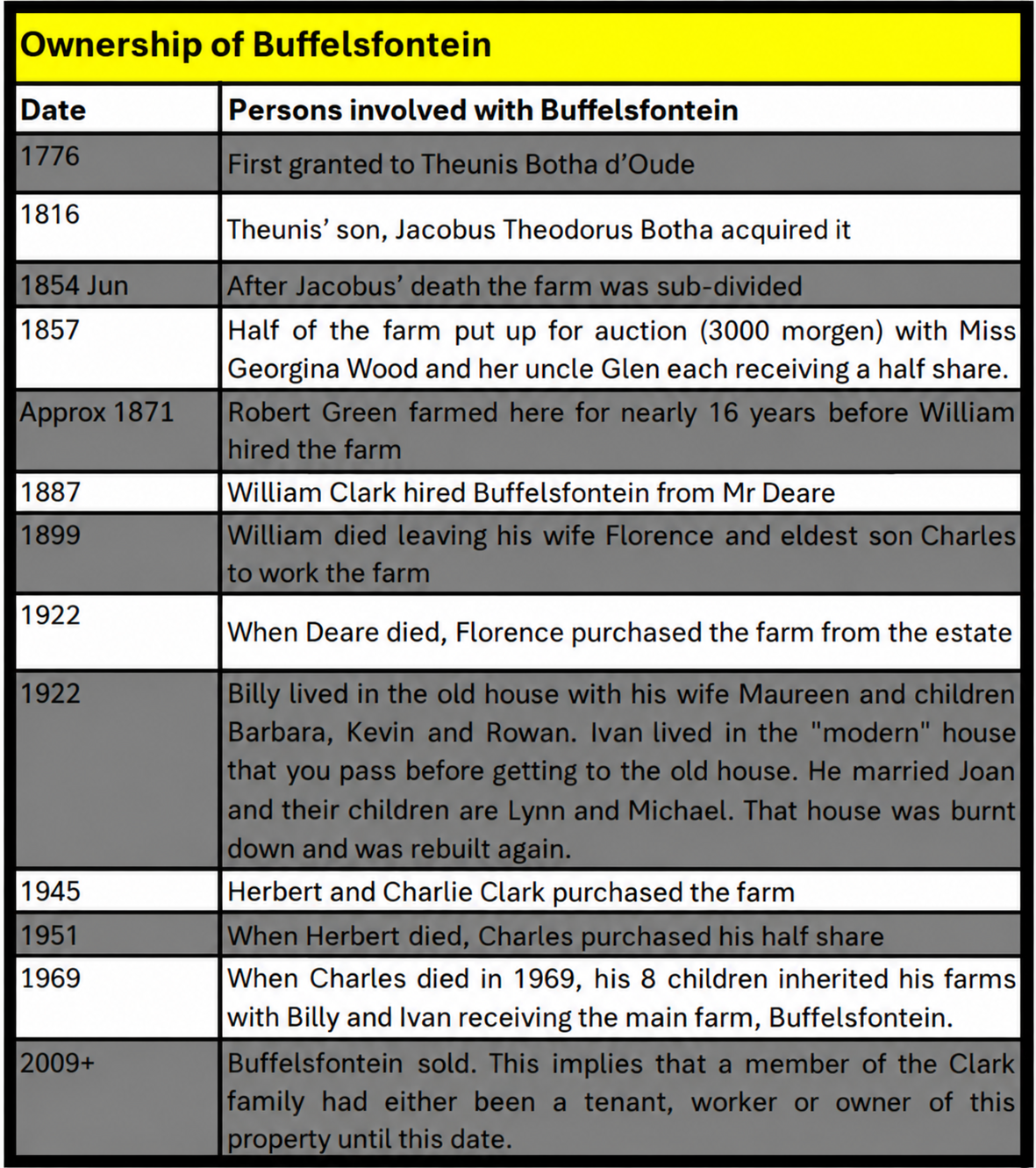
The farm Buffelsfontein is recorded as being first farmed by Theunis Botha in 1776 and is listed on a map of Port Elizabeth farms in 1790. Buffelsfontein was acquired in 1816 by his son, Jacobus Theodorus, who was born on 17th March 1776. He married Maria van Rooyen in October 1800 and died in June 1854. After his death the farm ws subdivided and half (approx. 3000 morgen) was put up for auction in 1857. According to Margaret Harradine, their homestead is probably the oldest existing building in the area. Theunis Jacobus Botha was a Dutch immigrant who lived at Buffelsfontein and is buried on the farm. He married Miss Stone of Grahamstown whose daughter Eliza Botha was born in 1839 and died at Glen Thorn, Adelaide.
In 1797 Theunis Botha was one of the four main accused in the Van Jaarsveld Affair at Graaff Reinet. They were tried and imprisoned for treason for conspiring to overthrow the English Government. They were sentenced to be hanged but the sentence was not carried out. Theunis later died in prison at the Castle. Van Jaarsveld was hanged and the others released when the Batavian Government took over in 1803.
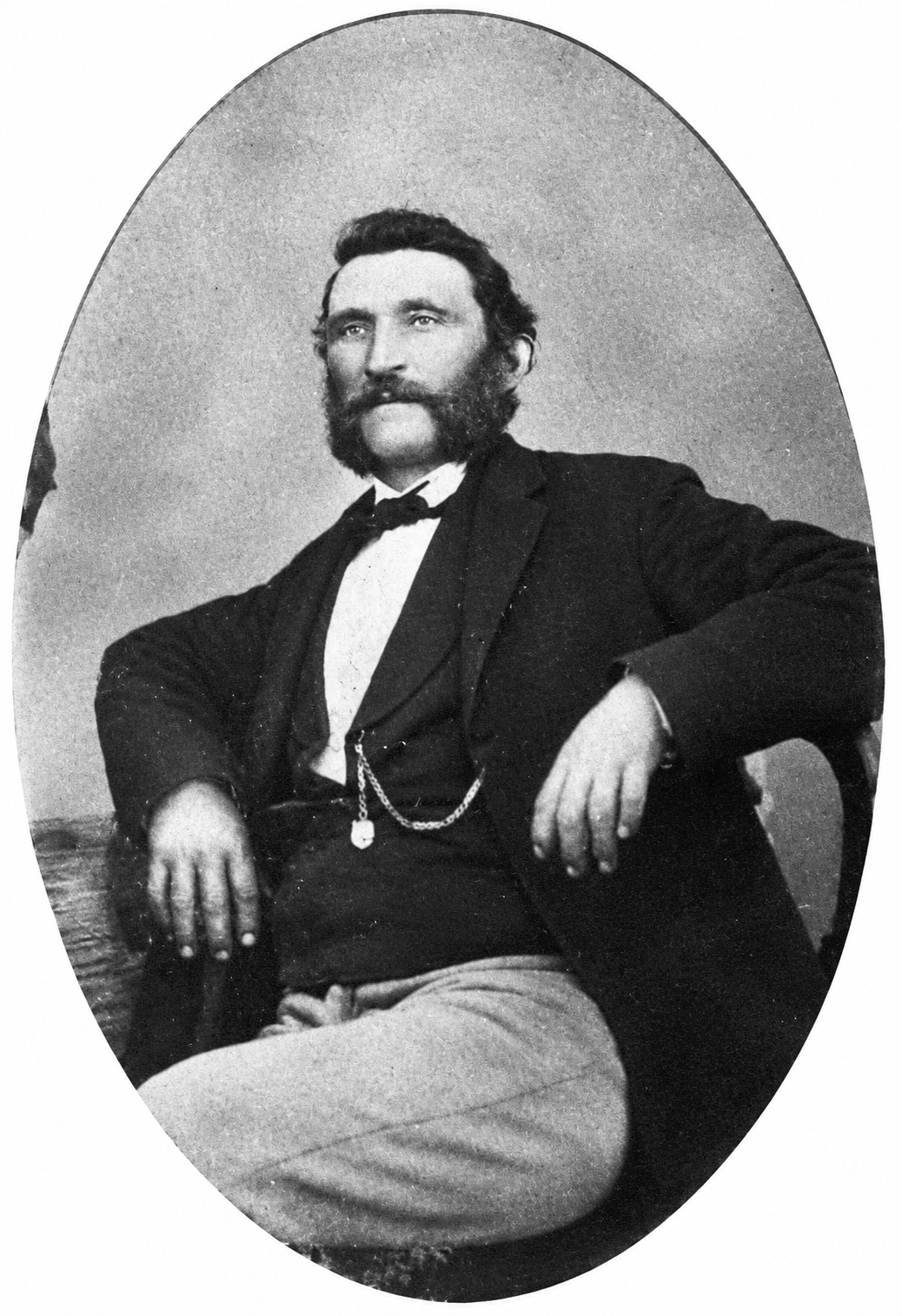
Left: Adriaan Willem Jacobus van Jaarsveld
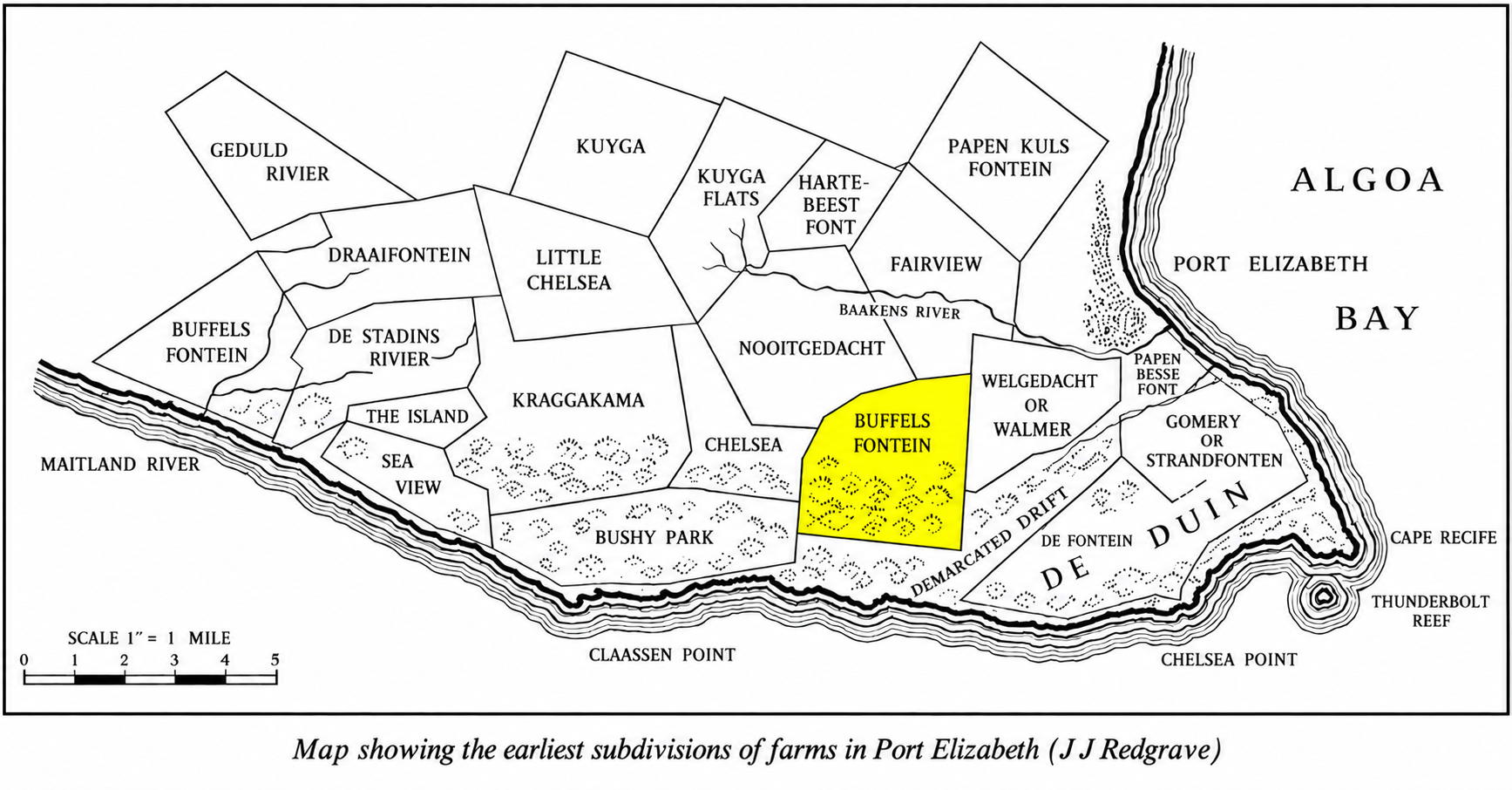
At this time the farm was one of three joining each other: Welbedaght, Buffelsfontein and Bushy Park with Welbedaght becoming Walmer [SC 01] . [FH]
William Clark [1859 – 1899]
William Clark came from Cambridge England to work for H.B. Christian of Kragga Kamma. In 1886 he married Florence McMullen and a year later in 1887 they hired the farm Buffelsfontein from a Mr. Deare. William died in 1899 leaving his wife Florence and his eldest son Charles aged 13 to work the farm. When Mr. Deare died in 1922, Florence purchased the farm from his estate. Charlie and his brother, Herbert, purchased the farm in 1945 and when he died in 1951, Emmi purchased her brother’s half share.
The Clark family have worked and lived on this farm from 1887 until after 2009 after which both Ivan’s and Billy’s portions were sold.
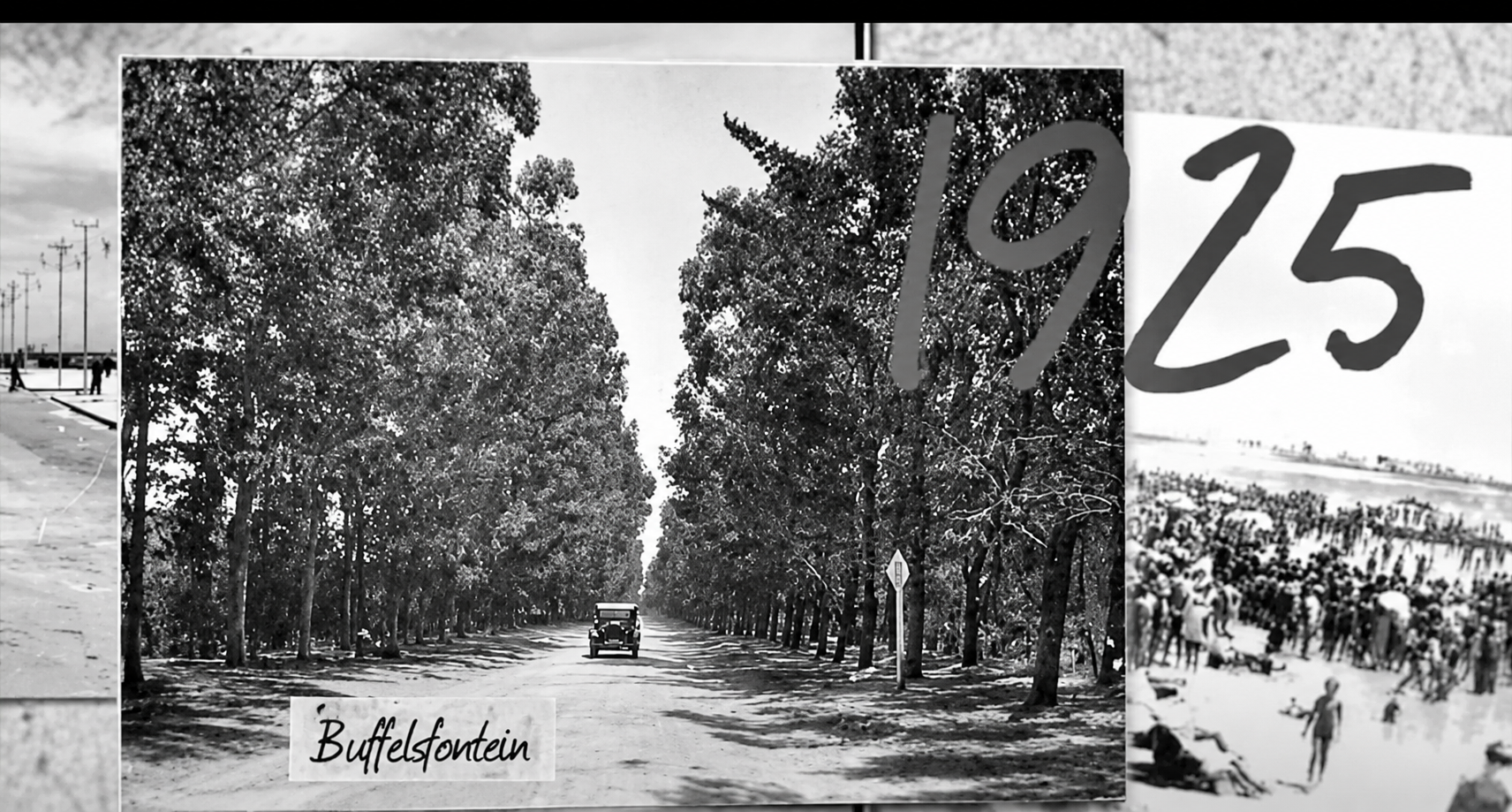
Charlie, Billy and Ivan
When Charle’s father, William, died in 1899, Charlie was only 13 years old. Even at that age, he was given no option but to assist his mother, Ethel Beckley, run the farm. Ethel formed part of the Beckley clan of Draaifontein of which my grandmother, Elizabeth Daisy Beckley, was a member. As such Ethel and Daisy were sisters. Charles was the archetypal entrepreneur and a such owned many farms in the Port Elizabeth area. This meant that upon his death there was not a dearth of property to award family members. Amongst the farms that he purchased was The Gums on22 October 1932.
Billy Clark lived in the old house with his wife Maureen and children Barbara, Kevin and Rowan whereas Ivan lived in the “modern” house that one passes before arriving at the old house. He married Joan and their children are Lynn and Michael. That house burnt down (date unknown) but was rebuilt again.
Life on Buffelsfontein
Two old Mulberry trees and Bayleaf trees were originally planted by Botha and are over 100 years old. The large Kaffirbooms, now known as a Coastal Coral Tree, planted in front of the homestead were also planted by Botha. The hill in front of the homestead was used by Botha to thrash the grain. The old floor can still be seen today. The cottage behind the homestead has a galvanised roof which is over 100 years old.
Miss Georgina Wood mentioned that her father only cut Olive Wood in the bush for firewood as the Malays would only purchase that type of wood for ironing purposes.
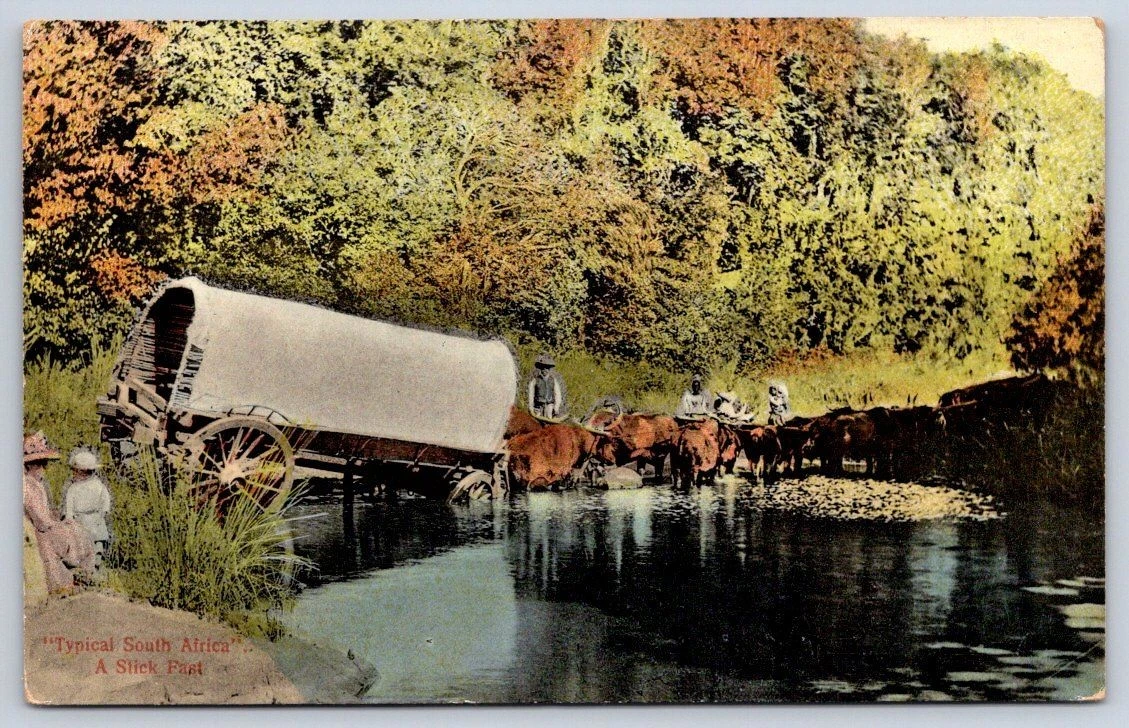
The Wood’s European ox-wagon driver met with an accident after a heavy downpour had washed a large hole in the road. The driver fell in front of the wagon and the wheel went over his head, killing him instantly. He is buried in the Buffelsfontein Cemetery.
Emmie also recalled Georgina Wood recounting Buffelsfontein being used as a recuperation centre for sailors from the sailing boats suffering from scurvy. Instead of hard ships’ biscuits they were fed a diet of milk and fresh vegetables. These men were housed in an old dwelling on the plot which has subsequently fallen down. Miss Wood surmised that all the coins picked up on the farm were lost by these sailors.
Willaim Clark arranged for a European worker, a Mr Beard, to be shipped out to work for him. The cost of his passage from England was very low being in the region of £15. His wages were about £4.10 per month.
Bushy Park
The farm Bushy Park which lies to the west of Buffelsfontein was originally called Claas Kraal by the Khoikhoi who resided there. On acquiring it in1820, Henry Lovemore renamed it Bushy Park. In the marriage stakes, Henry was a serial “nuptualiser” getting married four times:
- Sarah Jones 10 Feb 1803 (his age 26)
- Ann Way 4 Nov 1825 (his age 48)
- Mary Way 6 Dec 1831 (his age 54)
- Sarah Hudson 6 Sept 1848 (his age 71)
In March 1823 the Dutch warship, the Zeepaard, was wrecked in Sardinia Bay. Being in close proximity to the incapacitated vessel, Henry Lovemore offered his services in every way possible. The survivors were taken on ox-wagons to his farmstead. The Commander of Fort Frederick, Captain Evatt, also unconditionally offered his services to the stricken survivors.
Welbedacht Farm – Well Planned
The farm Welbedacht Farm was originally granted to Johannes Potgieter in the 1700s. In 1815 Anthonie Michael Muller, the son-law of Johannes became the owner. He sold it off in one morgen lots and renamed it Walmer after the seat of the Duke of Wellington.
Sources
William Clark (1859-1899) by Family Historian
Charles Clark (1887-1969) by Family Historian
Colourful history of a family farm by Helene Scott – East London Daily Despatch 9 April 1966
Newspaper clipping: New interest in history of Strandlopers
Newspaper clipping: Information Relating to Buffelsfontein
Articles produced by Bernard Johnston:
Part 1: Botha’s Place, 1776 to 1850
Part 2: The Botha Family Sells and Consortia Buy
Part 3: Ownership Widens
Part 4: Into More Settled Times
[SC 01] PE: A Social Chronicle to the end of 1945, Page 39
[FH] The source on the original master is merely recorded as family historian