Reminiscences of the Kruger Park of Yore

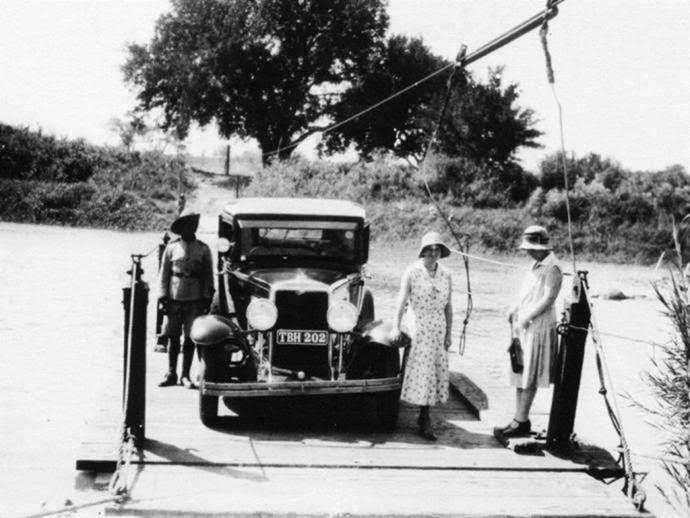
To celebrate the 90th birthday of the Kruger National Park (KNP) on May 31, management encouraged guests and staff to share memories on various social-media platforms. Visitors and Kruger lovers eagerly responded to this call and shared various memories. Some have been visiting the Kruger since the ‘60s.

Main picture: With a paucity of bridges, pontoons were the only way to cross the many rivers
Continue reading

Royal Divorce down the Ages

At the dawn of humanity, marriage was deemed to be sacrosanct. Divorce in most societies – especially at the instigation of a female – was not permitted. Royalty – men only – were usually entitled to have a lover as their wife was usually married for political and not affection reasons. In these circumstances, divorce was never considered as the wife was the baby production machine whereas romantic love was reserved for their mistress. What happened when the wife could not deliver a male heir or, like in more modern times, when mistresses were no longer tolerated, how did the king or the royalty get their divorce? 

This blog dissects four vastly different royal divorces each of which exposes much about the milieu in which each occurred. Included in this blog will be the vignette on how [Bessiewallis] Wallis Simpson obtained her divorce from her second husband in order to marry King Edward VIII.

Main picture: Anne Boleyn in the Tower awaiting execution by Edouard Cibot (1799–1877)

Continue reading

Brilliant but Low Tech Ideas

Whenever one hears of innovations, computers, cellphones, GPS and other high tech gadgets come to the fore. Whilst these inventions undoubtedly have made life convenient and more pleasurable, one must not only be captivated by technology. 

These photographs illustrate an array of low tech solutions to everyday problems that would also enhance our lives.

 Main picture: This holder for McDonald’s fries will resolve my problem when eating and driving. Naturally not eating while driving would be another solution but who wants to eat while parked at a McDonald’s

Continue reading

After the War was over

Victory in Europe Day, generally known as VE Day, was the public holiday celebrated on 8 May 1945 to mark the formal acceptance by the Allies of World War II of Nazi Germany’s unconditional surrender of its armed forces.

The war might have been over, the rebuilding of shattered lives, buildings and infrastructure could only now commence. Finally, it was a time of retribution for the vile deeds of the Axis countries both in Europe and in the East.

This blog is a pictorial representation of the issues that had to be addressed in this brave new world.

Main picture: A Japanese man amid the scorched wreckage and rubble that was once his home in Yokohama, Japan

Continue reading

Even the Nazis could not prevent a Rugby “International” from being Played

White South Africans are addicted to rugby. Whether it is as a player or a spectator, through trying experiences I have learnt that this relationship may not be tampered with, as these rugby addicts cannot resist the lure of the game. Soccer might be endowed with the sobriquet “The Beautiful Game” but rugby is definitely the macho man’s game. This fact is attested to when the South African POWs during WW2 arranged an “International” Rugby game in a German POW Camp. It is a matter of record that in spite of most of the items required to hold an authentic rugby match were not readily available, ingenuity and improvisation were the mothers of invention. 

As if to confound their critics, this game was held in Stalag IV-B conforming to the dress code and rules of the games. It was that spirit that embodies the game.

Main picture: Springbok Rugby Team at Stalag IV-B in 1944. Back row, left to right: Oehley, Van Huyssteen, Kaplan, Timm, Coetzee, N. Hinds, Boet Wessels, Heydenrych, Youngleson, Foster, Chapman, Rahl. Middle row: Fabricius, Moore, Ackermann, Major Ochse (medical officer), Fiks van der Merwe (captain), Katzeff, Van der Westhuizen, Ritchie, Hultzer, Zietsman. Front row: Marais, R. Hinds, Sephton.

Continue reading

Only in South Africa

None of these photos require a caption as they are all self-explanatory. Not all of them were taken in South Africa as some were taken north of our borders. Once one leaves the metropolises, the real Africa intrudes. The target audience of this blog is those who never leave the malls or their housing estates as these photos capture the essence of what is means to an African as we all are.

Perhaps this blog should have been entitled, “Getting to know one’s fellow Africans”, or maybe not.

Continue reading

Should South Africa still drive on the Left Hand Side of the Road?

In the latest edition of the Heritage Portal, Peter Ball presents a concise, lucid and fascinating account of the history of why and how the various countries in the world elected to drive on which side of the road. 

With the majority of the countries driving on the right – 161 – versus 75 on the left, would or should there be standardisation to driving on the right. 

Main picture: Map of the world indicating which side every country drives on

  Continue reading

Port Elizabeth of Yore: Russell Road Methodist Church – 1872 to 1966

Russell Road Church, though not the original home of Methodism in Port Elizabeth, is the Mother Church of those now extant. The first Methodist Church was erected in Queen Street in 1841, on the spot where the settlers had pitched their tents, and where the Reverend William Shaw, standing upon a rock, had preached in the open air.

Main picture: Russell Road Methodist Church

Continue reading