The Military Mind

The SADF process, that so many white South Africans endured against their will, wasn’t such an aberration after all.  The military mind is the same no matter where you find yourself.  What made me rediscover this?  It was this article on the coup d’etat in Myanmar.  I am not talking about the coup itself, although I believe most Generals have wet dreams above usurping power, it was the picture that invoked suppressed memories from 40 years ago.

I’m talking about the distinctly non-military white wall tyres on this APC (Armoured Personnel Carrier) in Myanmar.

Continue reading

Prince Alfred’s Guards: In the Line of Fire

Up until 1942, Prince Alfred’s Guards had always been an infantry unit. This was to change after the Battle of Alamein when it was converted into an armoured unit forming part of the 6th Armoured Division. It was at this juncture that Lt. Arnold (Coley) Colenbrander was posted into this Port Elizabeth unit as a tank commander. This blog covers the miraculous escape by Coley when his tank, an M4 Sherman, was destroyed by a German 75mm anti-tank gun outside Celleno in northern Italy, killing three of his crew.

Main picture: Coley’s Sherman after the battle at Cellano on 10th June 1944. Coley was in the turret when the shell struck the tank

Continue reading

Schoenmakerskop: From Mrs. Mac’s Tearoom to the Sacramento

This tearoom has formed the focal point of this hamlet for a century, its centennial being celebrated in 2018. From a rambunctious start as The Hut Tearoom in 1918, the tearoom has also experienced its lean time with the war years probably being the most difficult. The post war years were just as lean but the decision to renovate and rebrand the restaurant as the Sacramento revived its fortunes. On a macabre note, this establishment has witnessed two murders, one being of my uncle, Francis McCleland.    

Main picture: The crowds gather for tea at The-Hut-Tearoom-in-Schoenmakerskop in December 1922

Continue reading

Port Elizabeth of Yore: Visit by Sir George Grey in October 1858

Visits by dignitaries to Port Elizabeth were always an occasion for celebration and revelry. So, it was with the whistle-stop visit to Port Elizabeth on the 21st October 1858 when the whole town was invited to attend a welcoming parade.

Many of the issues raised during this visit are still of interest today either due their being topical or their casting a light on distant practices. But at the risk of overstatement, the original verbatim reports are somewhat jarring for the reader today, as the level of sycophancy displayed when the residents address the Governor, is cringeworthy.

Main picture: Painting of Sir George Grey by Daniel Louis Mundy in the 1860s

Continue reading

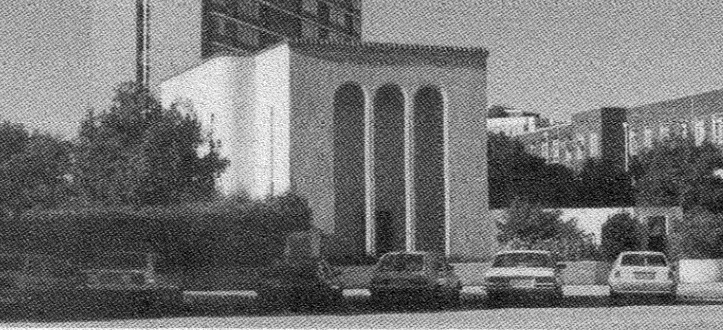
Port Elizabeth of Yore: The Christian Science Church in Park Drive

The beauty of the Christian Science Church is to be found in its external appearance; the strong form of the simplified, lofty three –arched entrance and well-proportioned lines of the structure make it one of the finest examples of stylised nee-Gothic churches in this region. It possibly reflects overtones of Californian/ Mediterranean architecture.

In 1995, this structure residing at No 110a Park Drive would be no more.

Main picture: Christian Science Church Port Elizabeth (Restorica 1996)

Continue reading

Port Elizabeth of Yore: Park Lodge of Samuel Bain

The first sale of park lands took place on 16 September 1863. The income from the sale of the lots was to be used for the development and maintenance of the St. George’s Park. The first owners to build on these lots were Samuel Bain and William Pattinson. They were regarded as “living in the country” because their homes were some distance from the town.

This blog and subsequent blogs on houses in this street were supplied by Tennyson Smith Bodill for which I am grateful.

Main picture: This 1907 shows Samuel Bain’s house is on the left of Nazareth House  

Continue reading