

Most of us have only recently acquired HD TVs when a vastly improved new standard UHD – Ultra High Definition – was announced. This new standard offered double the resolution of HD – 3849 x 2160 pixels. The picture quality of these TVs is so stunning that even if one stands less than a metre from the screen, no pixilation can be seen. In fact I have stood less than a centimetre away and no pixels are visible. Just when I promised myself to indulge in one if I ever had to win the Lotto – the US’s version has a prize of $430 million this week – I read the following headline: Samsung vs LG: the battle of fake and true UHD TVs. What does that mean for us?
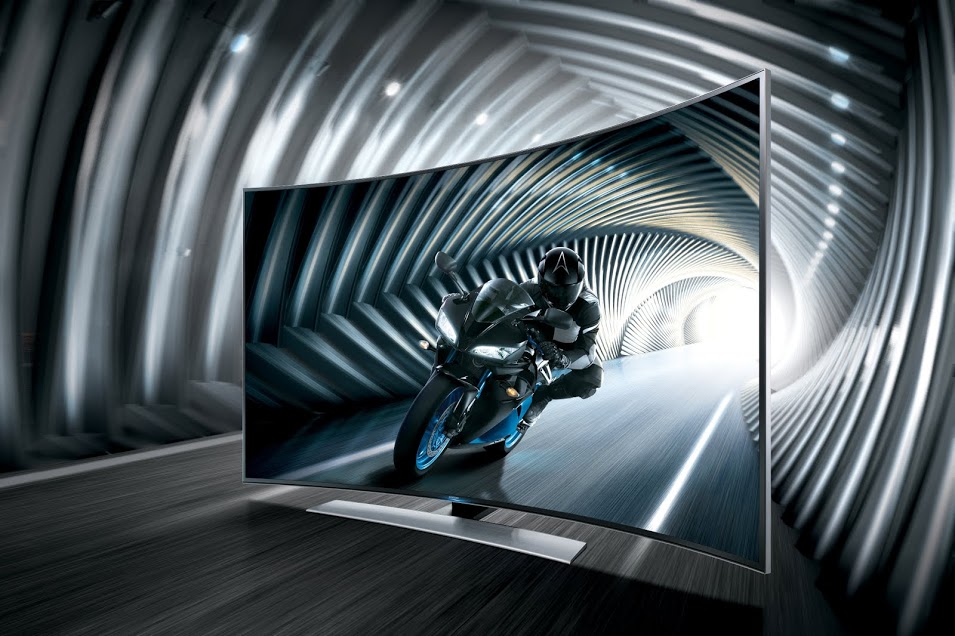
Main picture: A Samsung 105in curved UHD TV currently retailing for R 285 000
Having being stung by other technology wars such as the Beta versus VHS imbroglio, I am wary to embrace a new technology unless I am sure what the outcome will be. Generally I am an early adopter as far as electronics is concerned. Nevertheless I am cautious. In the case of the DVD, I elected to purchase a DVD player even before no more than two dozen DVD titles were available. In that case the decision was clear-cut. All of the major film studios had agreed to the format. Furthermore they had given the green light to releasing all their future films on DVDs together with their back catalogues.
The 65in Samsung UHD, the smaller cousin of the 105in TV
In this case, the differences do not imply that either type of technology will not be able to play all the TV channels or Blu-ray disks but rather which specification produces the best quality picture. Does this quality war imply that there is no universally agreed standard so that one manufacturer can claim that an inferior product is the Real McCoy or is it merely as a consequence of different interpretations of that specification?
The Fight gets Personal
According to Broadband Samsung issued a new warning regarding fake ultra-high definition (UHD) televisions. Samsung warned that a true UHD or 4K TV will have a screen resolution of 3,840 × 2,160 pixels. Pedlars of pseudo-UHD technology were purposefully misinterpreting the original measurement specifications as outlined by the International Committee for Display Metrology (ICDM), it said.
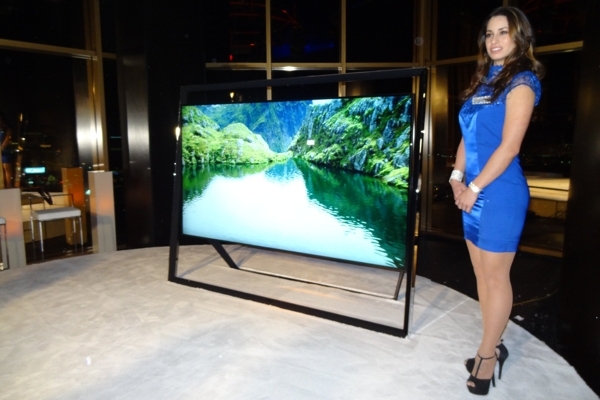
I understand the apart from the Samsung 110in UHD TV everything is an optional extra
That sounds serious.
Which manufacturer is Samsung referring to?
It is an open secret that Samsung is alluding to LG.
In response LG claims that its RGBW technology meets the requirements of the Display Measurement Standard’s (IDMS) definition of 4K [UHD] resolution. These requirements are based on the 4K resolution standard set by the International Organisation for Standardisation (ISO).
Interesting.
So the issue relates to one of interpretation of the standard or does it?
The technical issues
At the heart of the issue are the sub-pixel arrangements that different manufacturers use in their TVs. An RGB arrangement of Samsung uses only red, green, and blue subpixels, while the RGBW panel used by LG adds a white sub-pixel, effectively reducing the total number of vertical lines of the display.

RBGW subpixel arrangement on a UHD TV used by LG
Where a UHD panel using RGB technology has a resolution of 3,840 × 2,160 pixels, a television using RGBW only has a resolution of 2,880 × 2,160 pixels.
However, LG argues that in the end both types of displays have the same number of subpixels –
2,880 × 4 [RGBW] × 2,160 = 3,840 × 3[RGB] × 2,160
LG conceded that RGBW panels are cheaper to make, but said this was a good thing.
“TVs using the RGBW technology have an enhanced brightness and energy efficiency, while costing less,” said LG.

RGB subpixel arrangement on a UHD TV
“That’s because a conventional RGB UHD panel needs more LEDs to emit an adequate amount of light, which ends up costing more to produce. By saving on production costs, UHD TVs are now much more affordable in both the short term and the long term.”
So it was a cost issue!
Is this a case of the pot calling the kettle black?
Not too long ago Samsung was embroiled in a similar controversy over its PenTile subpixel arrangement used in the displays of smartphones such as the Galaxy S6, and Galaxy S6 Edge.
PenTile is a trademark of Samsung, and uses a RGBG subpixel scheme where green pixels are interleaved with alternating red and blue pixels.
It certainly appears so.

PenTile matrix subpixel arrangement on the Nexus One
From what I can understand, it appears that by interleaving white into the red/green/blue palette, the quality of LG’s TVs are lower than those of Samsung.
What has sparked this outrage from Samsung – I would surmise – is the price differential between the two companies products. I can attest to that fact as a casual perusal of the prices will confirm this supposition.
If all else fails, look at the specification
- Image Resolution: 3,840 x 2,160
- Colour Bit Depth: 10-bit signal
- Colour Palette(Wide Colour Gamut)
- Signal Input: BT.2020 colour representation
- Display Reproduction: More than 90% of P3 colours
- High Dynamic Range: SMPTE ST2084 EOTF
- More than 1,000 nits peak brightness and less than 0.05 nits black level (or)
- More than 540 nits peak brightness and less than 0.0005 nits black level
So at face value, both manufacturers are meeting the UHD standard
Perhaps to differentiate their interpretation of the standard and to justify higher prices, Samsung is marketing their UHD as SUHD or am I normally so bewildered by these marketing ploys?
SUHD does appear to be UHD on steroids.
Just to throw another curved ball at the consumer is the consideration of whether to purchase a flat or a curved screen.
Curved is preferable but at a handsome price.
Once one has digested all of the complications regarding specifications here comes the real problem apart from the price due to the weak Rand and – well – the high prices, is the fact that there is no content available locally. No UHD compatible players are available, no UHD Blu-ray disks, no TV channels on DSTV, no Netflix downloads.
So why stress about the quality standards on UHD TVs?
Wait until the Rand strengthens and competition reduces prices.
Then I will be first to purchase one whether or not I have won the Lotto in South Africa.
And so will thousands of others too!
But by then the latest standard 8k will be on the horizon