

Because the ultimate point of departure of the Irish Settlers was Cork, or more accurately a hamlet some 10 kilometres east thereof called Passage West, most of Francis’ South African descendants have assumed that the family was in fact resident in Cork or its environs when in fact this is fallacious. Frederick McCleland, Francis’s father was a merchant in Longford. As a consequence, Francis was in fact born and raised in Longford Town in Longford County which is situated in central Ireland.
This blog which commences the life story of the Reverend Francis McCleland, the progenitor of the extensive McCleland clan in South Africa, deals with the period from his birth, through his varsity years until his voyage aboard the East Indian from Deptford London to Passage West in Ireland to pick up the Irish Settlers.
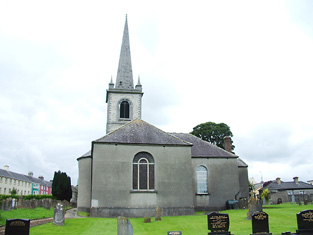
Main picture: St. John’s Church of Ireland Church, Church Street, Battery Road, Longford Town, County Longford of which Francis was appointed as a Deacon
Early Life
Longford Town in the County of Longford was the birthplace of Francis McCleland in 1793. After completing his schooling on 7th October 1811, his father’s business as a mercator or merchant was prospering sufficiently for Frederick McCleland to allow his son Francis McCleland to attend Trinity College, Dublin University as an ordinary fee paying student. It was here that he gained his bachelor’s degree – a BA in Divinity – in the summer of 1817.

According to Gabrielle Churchouse, “Francis McCleland was born in Longford [Ireland]. His father, Frederick McCleland, had married Margaret Beatty in Longford on the 3rd February 1785. Five sons and a daughter Margaret were born to them including Francis, born in 1793.
In reality, the exact date of Francis’ birth is unknown. Instead, his birth date has been determined from the records of Trinity College, Dublin. These state that Francis matriculated on 7th Oct. 1811 aged 18. This means that he is most likely to have been born in 1793 but he could possibly have been born in late 1792. For these purposes, his year of birth will be taken throughout as 1793.
University
Gabrielle continues: “Four of his five sons obtained degrees at Dublin University, 76 miles away. Frederick McCleland was a merchant and, although as his children grew up his financial circumstances steadily improved, in 1809 he was in sufficiently straightened economic circumstances for his eldest son, Thomas, to qualify for a Sizarship – a scholarship open to clever boys whose fathers could not meet the university fees. Thomas obtained his bachelor’s degree from Trinity College, Dublin University in 1811.

However, Francis entered Trinity College as a pensioner – an ordinary fee paying student – and gained his bachelor’s degree in 1817.
One of the sources claims that Francis in fact was awarded an A.M. id est Artium Magister, which is abbreviated as A.M. or AM which is a type of master’s degree awarded by universities in many countries.
Churchouse continues: “Frederick’s means only stretched to university fees for two younger sons, William (B.A., M.A.) and George (B.A.) who attended Trinity College in the 1820’s. Only one son did not attend university.”

Unlike most families of that period, four of the McCleland children attended university, all of whom obtained a B.A. and one, William even obtained an M.A. Like the majority of females of that era, Francis’ sister, Margaret did not attend university and it is doubtful whether given the straightened financial circumstances that she would have attended university in any event.
Of the five sons, two left Ireland. The eldest son, Thomas, became Attorney General for Van Diemen’s Land, the former name of the Colony of New South Wales, Australia. Francis came to the Cape having been made deacon in June 1819 and ordained priest by the Bishop of Limerick on 7th November 1819.
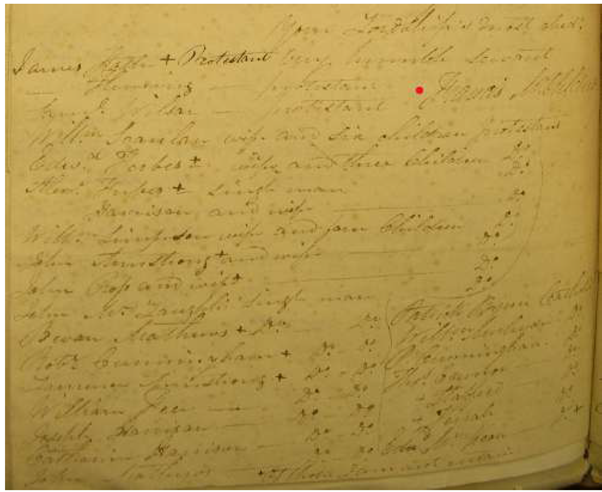
The Reverend Francis McCleland was one of approximately 4000 British settlers who came to the Cape in 1820. He was a member of the Irish party of Settlers headed by William Parker. Also Irish, he came from the town of Longford in County Longford, a central Lowland county bordered on the west by the Shannon River.
Record of attendance at Trinity College
The actual record per Trinity College states as follows: McCLELAND, FRANCIS, Pen. (Mr Irwin) Oct 7, 1811, aged 18; son of Frederick, Mercator; b Longford B.A. Vern 1817

Mercator = Merchant. In fact Frederick was a hosier and stationer
Vern = Summer
Longford Town
Per Wikipedia: The town is built on the banks of the River Camlin (from Irish: Camlinn, meaning “crooked pool”), which is a tributary of the River Shannon. The name Longford is an anglicisation of the Irish Longphort, from long (meaning “ship”) and port (meaning “port” or “dock”). This name was applied to many Irish settlements of Viking origin and eventually came to mean fort or camp in the Irish language, and so Longfort the modern Irish spelling, is the name of this town, which was one of the only Gaelic Irish market towns to arise without first being founded by Vikings or Normans.

The area came under the sway of the local clan which controlled the south and middle of the County of Longford (historically called Anghaile or Annaly) and hence, the town is sometimes called Longfort Uí Fhearghail (fort/stronghold of O’Farrell).
Appointment as a Lay Reader at Templemichael Parish Church in Longford Town
It was during Francis’ “interregnum” between studying Divinity at Dublin University and setting sail for South Africa from Passage West on 12th February 1820 in the ship, the East Indian, when Francis became a Deacon or Lay Reader to a local church in Longford Town during June 1819.
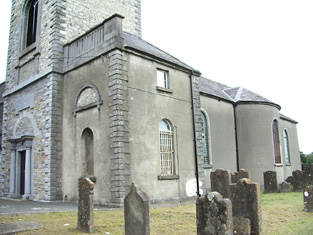
In those days, this church was known as the Templemichael Parish Church whereas today it is called the St. John’s Church of Ireland. It is interesting to record that another McCleland, presumably a close relative due to the spelling of the name, who was operating as an architect in Longford at the time, was involved in designing the alterations to the church in 1812.

Infected with emigration fever
The period of eight months after his appointment in June 1819 as a Lay Reader at Temple Michael in Longford Town and his departure to the Cape Colony on the 12th February 1820, was extremely hectic for young Francis.
It was during this period that the focus and direction of Francis’ life changed immeasurably. Like many of the people of Ireland, the future for the youth of Ireland was particularly bleak. Ireland was poverty stricken and the return of 300,000 soldiers from the Napoleonic wars had exacerbated the situation. Crime was rife & life expectancy had declined precipitately. Over the ensuing century, more than a quarter of the Irish population emigrated. Their destination was mainly the Land of the Free, America, but many relocated to England with some moving to the colonies.

To alleviate this situation, the English government had proposed a voluntary Emigration Scheme to the Cape Colony in return for which the selected candidates would be donated a parcel of land on the Eastern Border adjacent to the Xhosa tribal lands.
The rationale of this Government sponsored emigration scheme was twofold: provide a white buffer on the Eastern Border against the marauding Xhosa tribes but, equally importantly, to alleviate the overcrowding and poverty in the English towns.
Exactly how Francis had met the presumptive leader of the Irish Party, William Parker, is unknown. As Parker was a native of Passage West and had until recently been employed on a sugar estate in Barbados, he probably had not met him in Longford. Where the link might be is through Thomas Pakenham, the Second Earl of Longford, through whom Parker held leasehold lands in Longford County. What provides credence to this assumption is that on his return to Ireland after a stint in London, Parker had obsequiously ingratiated himself with certain of the aristocracy and ruling powers in Ireland by espousing a virulent Protestantism.

In his fevered imagination, William Parker dreamed singular dreams, megalomaniac fantasies of building ships in Knysna, establishing a sister town also to be named Cork and at a later stage, operating a gold mine in Namaqualand. The Colonial Office in London was flooded with the puerile and increasingly megalomaniac plans of Parker, most of which they summarily rejected or studiously ignored but they did accede to one of his requests viz to be nominated as a Party Leader.

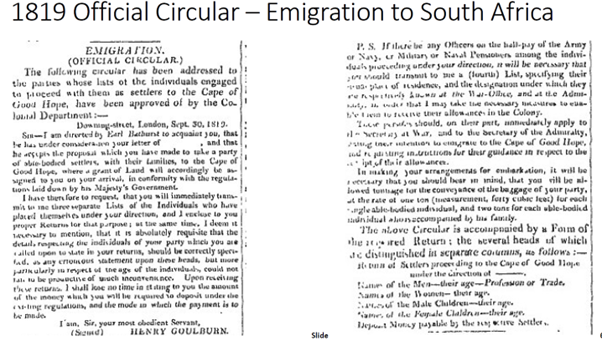
On 23rd August 1819, while still residing in Longford Town, Francis enquired of the Colonial Office in London the following, “Now when the rage for emigration has in a great degree subsided, and allowed you to enjoy a little rest, I beg to apply to you to know what are the inducements which Government holds out to such of the established clergy as the emigrants may be willing to take out with them: and whether, in case they do not make any application for pastors, it is the intention of government to send out any themselves.”
On the 16th September Francis sent yet another epistle to the Colonial Office London in which he states that “As I have taken some pains to make the individuals who intend emigrating from this country be acquainted with the conditions as specified in the circular letter (a copy of which I had the honour of receiving from Mr. Goulburn) under which the Government would be willing to grant them their passage, ……”

Continuing, Francis requests details of the deposit required in the case of infants, pensioners, and young adults without their parents. Interestingly he states that his brother is residing at 18 Georges Street, Adelphi, London. This detail is supplied with the express intention to obtain additional information. Surprisingly he does not inform the reader the name of his brother.
Finally on the 7th November 1819, Francis is ordained as a Priest by the Bishop of Limerick, Charles Tuohy at a salary of £20 per annum. Francis now possesses a skill that would be useful in the Cape Colony.

It now appears evident that Francis must have met William Parker personally or been in correspondence with him as Francis moves to London with the express purpose of escorting the English settlers in the Parker contingent from London to Cork. Francis takes the inexpensive option and stays with his brother who is residing at 18 Georges Street in Adelphi, London.
Francis takes the opportunity of personally confirming whether his participation in the Emigration Scheme had been approved. Finally, after numerous unsuccessful attempts, Francis meets Mr Goulburn at the Colonial Office in Downing Street on the 22nd November only to be informed that his eligibility is suspect as the Settlers accompanying him are English and not Irish.

In a panic, the next day the 23rd November 1819, Francis drafts a letter Mr Goulburn’s superiors at the Colonial Office informing them of the state of affairs and begging their indulgence in accepting his bona fides.
Once the requisite permission had been acquired, Francis set sail in the East Indian from Deptford on the River Thames in London in late December 1819. The ships destination was Passage West which lay six miles to the east of Cork. Together with him, was the contingent of English Settlers who would ultimately form part of William Parker’s contingent number 52.

It was during this passage, that Francis would reveal his true colours. This would be the first and definitely not the last time that this young Irish preacher would ruffle a few feathers.

Machinations of William Parker
No. 52 on the Colonial Department list, led by William Parker, a merchant of Cork, Ireland, who had at various times been engaged in the sugar trade in the West Indies, farmed in Ireland and held a government post in London. A virulent anti-Papist, Parker managed by outrageous impertinence and importunity to obtain the patronage of Charles Grant, the Secretary for Ireland; Sir Nicholas Colthurst, the Member of Parliament for Cork; and the Earl of Rosse and Viscount Ennismore. He even approached the Prince Regent for approval of his schemes. His ‘exorbitant demands and absurd pretensions’, backed up by threats of the influence he could bring to bear in high places, created major difficulties for the Colonial Department and, later on, the Cape authorities, and more than justified the Acting Governor’s opinion ‘that this Individual is suffering under a degree of mental derangement’.

Parker first proposed to undertake the supervision of the entire body of emigrants, and when that suggestion was turned down, he offered to take 500 ‘starving Irish poor’ to the Cape under his direction, in return for a grant of land at Knysna and various official appointments, both civil and military. The Colonial Department showed exemplary patience under a wordy bombardment of letters and personal visits from Parker, and courteously reiterated that he would be allowed to take a party of 100 families from Ireland according to the conditions laid down for the emigration scheme, but no special arrangements could be made for him. In spite of that, Parker’s demands continued; he asked for and was refused, among other things, 500 hammocks and seven and a half tons of old sails for his settlers, and a full supply of arms and ammunition, including 100 000 musket balls. Since the scheme made provision for a clergyman to accompany a group of 100 or more settlers, he informed the Colonial Department that he had engaged the Rev Francis McCleland to minister to his party.
By late October 1819, however, Parker had not yet provided a detailed list of the party, and had fallen out with his Irish agent who was responsible for recruiting labourers. He was told that his place in the emigration scheme could not be reserved for him indefinitely, as there were many other applicants ‘perfectly prepared and equally anxious’ to go.

In mid-November, a list of the proposed party was finally submitted, and the sorely-tried Colonial Department lost patience at last when it was seen that nearly two-thirds of Parker’s prospective settlers were from London, not Ireland. This not only disrupted shipping arrangements but defeated the Department’s intention to devote a substantial share of the emigration grant to Irish poor relief. Parker was told that his English contingent – ‘a body of persons hastily collected in London of whom you can know but little, and who are in many cases the very persons whose proposals to emigrate have already been considered and rejected by Lord Bathurst’ – might proceed to the Cape, but would be treated as a separate party. (In the event this threat was not carried out: the English and Irish sections of the party were embarked separately at Deptford and Cork, on the transport East Indian, but were otherwise administered as one unit.)
Permission was withdrawn and then grudgingly reinstated for the Rev Francis McCleland to accompany the Irish settlers and ‘receive a moderate stipend for the discharge of clerical duties‘.
There was a further hitch over Parker’s belated payment of the deposit money before the East Indian finally left Deptford for Cork late in December 1819 with 48 men of the party and their families on board, under the temporary direction of DP Francis.
Details of Temple Michael in Longford Town

On the website of Buildings of Ireland, this building is described as follows:
St. John’s Church of Ireland Church, Church Street, Battery Road, Longford Town
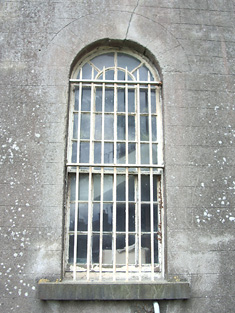
In those days, this church was known as the Templemichael Parish Church whereas today it is called the St. John’s Church of Ireland. It is interesting to record that another McCleland, presumably a close relative due to the spelling of the name, who was operating as an architect in Longford at the time, was involved in designing the alterations to the church in 1812.

On the website of Buildings of Ireland, this building is described as follows:
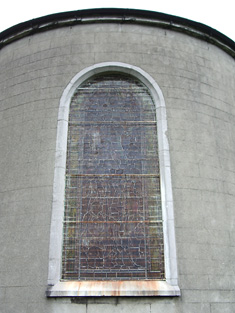
St. John’s Church of Ireland Church, Church Street, Battery Road, Longford Town, County Longford
| ||||||||||||||||||||||||||||||||||||

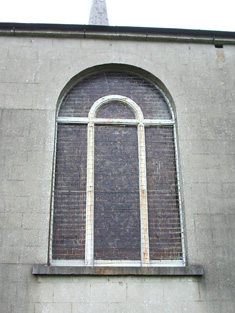


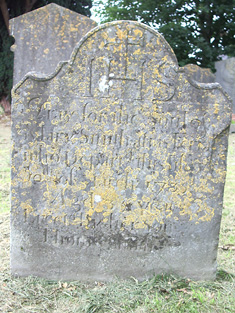


Blogs on the Life of Reverend Francis McCleland:
Kirkcudbright Document: Establishing the McCleland’s Right to Peerage
Correspondence regarding Rev Francis McCleland with Colonial Office in London
Port Elizabeth of Yore: The Parsonage House at No. 7 Castle Hill
Sources:
Books:
Irish Settlers to the Cape by Graham Brian Dickason
The Reverend Francis McCleland: Colonial Chaplain to Port Elizabeth 1825 – 1853 by Gabrielle Churchouse
Internet:
Internet: http://www.buildingsofireland.ie/niah/search.jsp?type=record&county=LF®no=13002006
http://webgis.buildingsofireland.ie/HistoricEnvironment/?REG_NO=13002006
Correspondence with the former colonies is now stored in the National Archives in Kew. Details can be found on the following websites:
http://www.eggsa.org/1820-settlers/index.php/smart-search?q=McCleland&Search=
Also: http://www.eggsa.org/documents/main.php?g2_itemId=54

Books:
The Irish Settlers to the Cape by Graham Dickason
The Reverend Francis McCleland: Colonial Chaplain to Port Elizabeth 1825 – 1853 by Gabrielle Churchouse

Determining McCleland’s Date of Birth
His birthdate has been determined from the records of Trinity College, Dublin. These state that Francis matriculated on 7th Oct. 1811 aged 18. This means that he is most likely to have been born in 1793 but he could possibly have been born in late 1792.
Additional photographs of the church


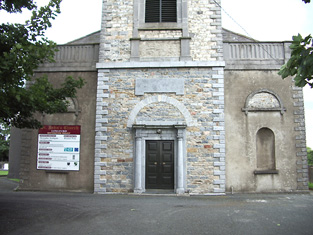

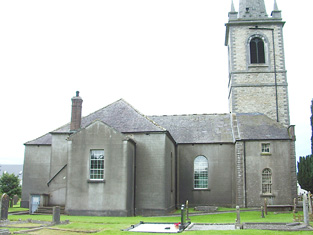


According to his death notice [KAB Ref 2075/1953] Rev Francis McCleland’s age at death on 10 Jul 1853 was 61 years 7 months. If this is correct he would have been born in Dec 1791. Link to the online death notice which is very light but age is legible: https://familysearch.org/ark:/61903/3:1:S3HY-DB5S-CC7?mode=g&i=2089&cat=331262
Hi Maureen, Please contact me on deanm@orangedotdesigns.co.za or 082-801-5446 or provide me with your contact details & I will contact you. I would like to explain what I am busy doing. It seems like you would be of invaluable assistance to me
Regards
Dean McCleland
I find this totally fascinating!I am giving a 2nd talk to the Cork Genealogical Society about my gg-grandfather Dr Tancred (2018 covered life in Europe), May this year will cover life and times at the Cape. Tancred was born in Cork in 1804 and went to the Cape in 1842, he died in 1867 in Cape Town, a member of the first Cape Parliament. I am writing a book about him. In my talk next month I will briefly mention the settler party under Parker, also the connection with Ireland, the name Clanwilliam and the settler party. There seem to be many parallels between Tancred and McCleland. Thank you for sharing, wonderful! Bernard